
Medication Storage: How to Keep Your Pills Safe, Effective, and Ready to Use
When you buy medicine, you’re not just paying for the active ingredient—you’re paying for medication storage, the conditions under which a drug remains stable, safe, and effective over time. Also known as drug stability, it’s the unseen science that keeps your pills from turning into useless powder or dangerous toxins. Most people assume if the bottle says "take by this date," it’s fine until then. But that’s not always true. Heat, light, humidity, and even the wrong cabinet can break down your medicine long before the expiration date.
Take shelf life, how long a drug maintains its strength and safety under recommended storage conditions. For many generics, that’s only 1–3 years after manufacturing, but once you open the bottle, exposure to air and moisture speeds up drug degradation, the chemical breakdown that reduces potency and can create harmful byproducts. A study from the FDA found that some heart medications lost up to 30% of their strength after just 6 months in a humid bathroom. And if you’re storing insulin, epinephrine, or thyroid pills in a hot car or above the stove? You’re risking your life.
It’s not just about where you keep your meds—it’s about how you handle them. Storing pills in their original blister packs instead of a pill organizer protects them from moisture. Keeping them away from the sink, shower, or windowsill isn’t a suggestion—it’s a safety rule. And never leave antibiotics or nitroglycerin in your glove compartment. Heat doesn’t just make them less effective—it can change how your body reacts to them. Even something as simple as leaving a bottle of liquid antibiotics out overnight can make it unsafe to use.
There’s a reason pharmacists ask if you keep your meds in the bathroom. It’s the worst place in your house for them. Humidity from showers and heat from hair dryers wreck pills faster than you think. The coolest, driest spot in your home—usually a bedroom drawer or a kitchen cabinet away from the stove—is your best bet. And if you’re traveling? Use a small insulated case with a desiccant pack. Don’t just toss your pills in your purse or backpack.
Some drugs, like insulin or certain injectables, need refrigeration. But freezing them? That’s a mistake. Cold doesn’t mean frozen. Freezing can destroy the structure of biologics and make them useless. And if you’re unsure? Check the label. If it doesn’t say, call your pharmacy. They’ll tell you exactly what to do.
When you see a recall notice for a medication lot, it’s often because of storage issues—contamination from bad packaging, temperature spikes during shipping, or improper warehouse conditions. That’s why verifying your pill lot number matters. It’s not just bureaucracy—it’s your protection.
Proper medication storage isn’t about being perfect. It’s about avoiding the big mistakes that put your health at risk. You don’t need a climate-controlled cabinet. You just need to know where not to put your pills—and what to do when things go wrong. Below, you’ll find real-world advice from people who’ve seen what happens when storage fails: from degraded generics to dangerous interactions, from smart pill dispensers that track humidity to how the FDA tracks drug stability failures. This isn’t theory. It’s what keeps you alive.

How to Secure Medications During Home Renovations or Moves
Learn how to safely store, pack, and dispose of medications during home renovations or moves to prevent spoilage, accidental access, and environmental harm. Practical steps for temperature control, secure storage, and proper disposal.
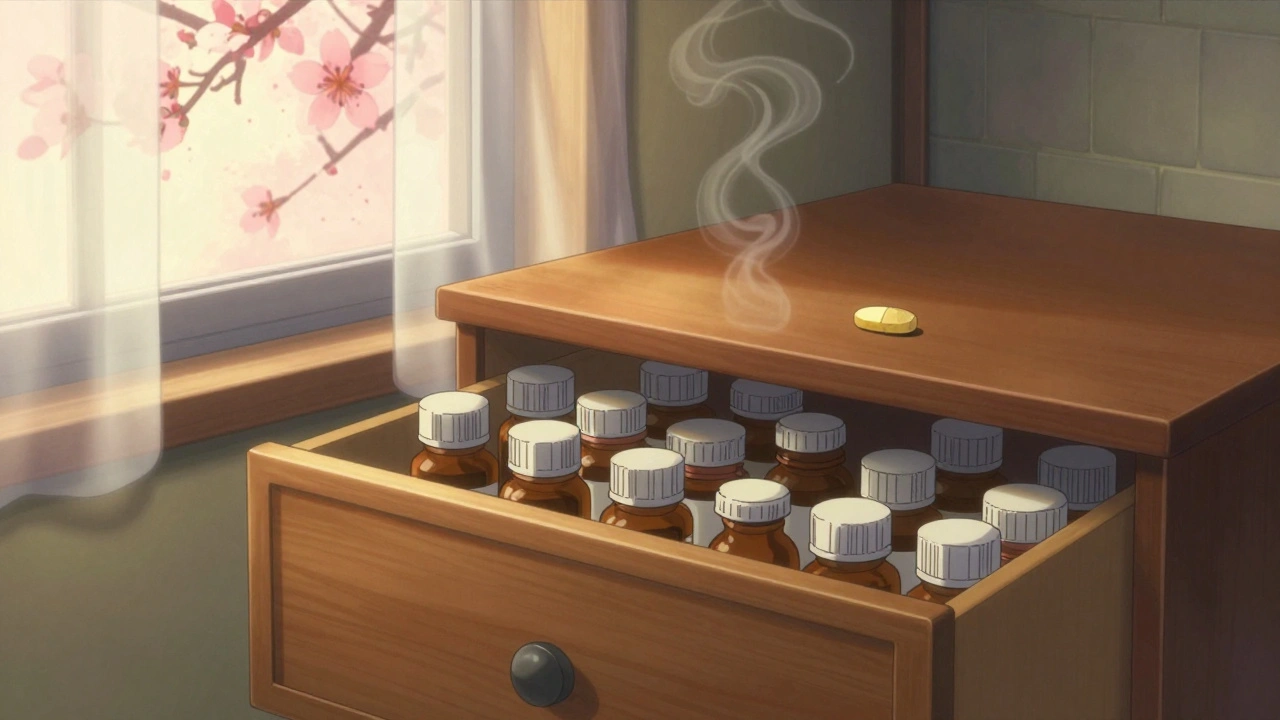
How to Store Medications to Prevent Early Expiration
Learn how to store medications properly to prevent early expiration, avoid waste, and ensure your pills remain safe and effective. Discover where not to keep them-and what to do with expired meds.