
Why Proper Medication Disposal Matters
Every year, millions of unused pills sit in medicine cabinets across the U.S. Some are expired. Others were prescribed for a short-term issue and never used. But leaving them where they are isn’t safe-and flushing them down the toilet or tossing them in the trash isn’t the answer either.
Medications in homes are the top source of misuse. Nearly 18.4 million Americans aged 12 or older misused prescription drugs in 2022, and most got them from family or friends. That’s why take-back events exist: to collect unused meds safely and destroy them so they can’t be abused or pollute the environment.
When medications end up in waterways, they don’t just disappear. Studies show 80% of U.S. streams contain traces of pharmaceuticals. That’s not just an environmental issue-it’s a public health risk. Take-back events solve both problems by sending drugs to high-temperature incinerators, where they’re destroyed completely.
What You Can and Can’t Bring
Not everything in your medicine cabinet can go to a take-back event. Here’s what’s accepted at nearly every authorized collection site:
- Prescription pills and liquids (including controlled substances like opioids and stimulants)
- Over-the-counter medicines (pain relievers, cold meds, allergy pills)
- Prescription patches (like fentanyl or nicotine patches)
- Ointments and creams
- Vitamins and supplements
- Pet medications
Now, here’s what you can’t bring:
- Asthma inhalers and other aerosols
- Hydrogen peroxide
- Iodine-based products (like Betadine)
- Thermometers (especially mercury ones)
- Illicit drugs
- Sharps (needles, syringes)
Some sites accept sharps separately, but most take-back events don’t. If you have needles, check with your pharmacy or local health department-they often have special drop-off programs.
How to Prepare Your Medications
The key to a smooth drop-off? Preparation. It’s simple, but skipping even one step can get your meds turned away.
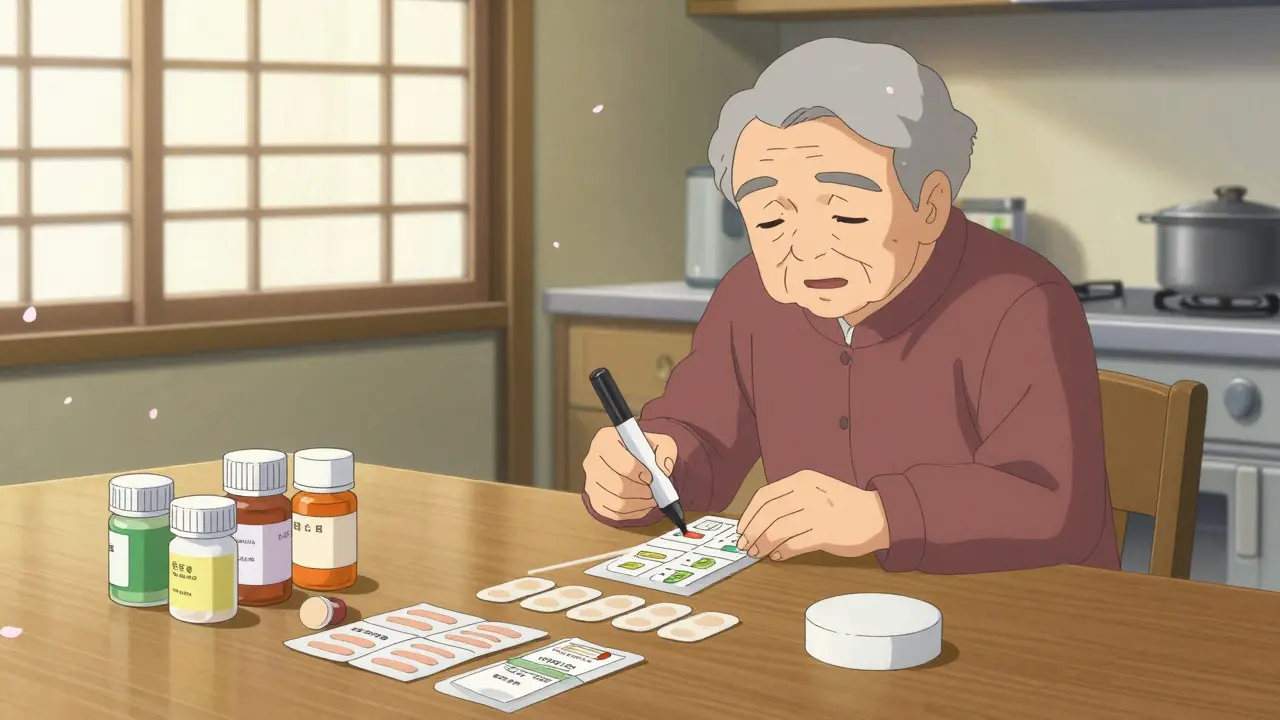
Step 1: Remove personal information
This isn’t optional. Your name, address, prescription number, and dosage details must be completely hidden. Use a permanent marker to black out the label. If the label is faded, cover it with tape first, then write over it. This protects your privacy under HIPAA rules and prevents someone from stealing your prescription info.
Step 2: Keep meds in original containers
About 92% of collection sites require medications to stay in their original bottles. That’s because pharmacy labels help staff verify what’s being dropped off. If you lost the bottle, don’t panic. You can put pills in a small, sealed plastic container-like a film canister or a clean pill organizer. But avoid ziplock bags unless you’re in a state that allows it (more on that below).
Step 3: Don’t mix medications
Keep each drug separate. Don’t dump all your pills into one bag. Mixing makes it harder for staff to identify and process them. Even if the site accepts mixed meds, it’s safer and faster to keep them sorted.
Step 4: Handle liquids and patches carefully
Liquid meds must be in their original bottles with tight caps. If the bottle is cracked, put it in a sealed plastic bag to prevent leaks. Transdermal patches (like pain patches) must be folded in half with the sticky side pressed together. This prevents accidental skin contact and keeps them from sticking to other items.
Regional Differences You Need to Know
Not all take-back sites are the same. Rules vary by state, pharmacy, and even city.
In California, you must use the original container. No exceptions. In Washington State, you can use a sealed bag instead-but liquids still need to be in their original bottle. Walgreens kiosks are the easiest: just bring your meds, and they’ll handle the rest. No container rules beyond privacy protection.
Some sites, like VA hospitals, won’t accept mixed meds at all. Others, like rural pharmacies, may not have clear signage. That’s why confusion is common. A 2023 Johns Hopkins study found 43% of people didn’t know how to prepare their meds properly. That’s why 28% of people skip take-back events altogether.
Bottom line: When in doubt, call ahead. Most pharmacies list their take-back rules on their website. If you’re unsure, ask the staff when you arrive. They’ve seen it all-and they’ll help you get it right.
What Happens to Your Medications After Drop-Off
Once you hand over your meds, they’re not going to a landfill. They’re shipped to licensed incineration facilities, where they’re burned at temperatures over 1,800°F. This destroys the chemicals completely, leaving no residue that can leach into soil or water.
In 2024 alone, Stericycle-a major disposal partner-incinerated nearly 30,000 tons of pharmaceutical waste. That’s the equivalent of 1,500 garbage trucks full of old pills and patches. Every one of those items was diverted from landfills, waterways, or someone’s medicine cabinet.
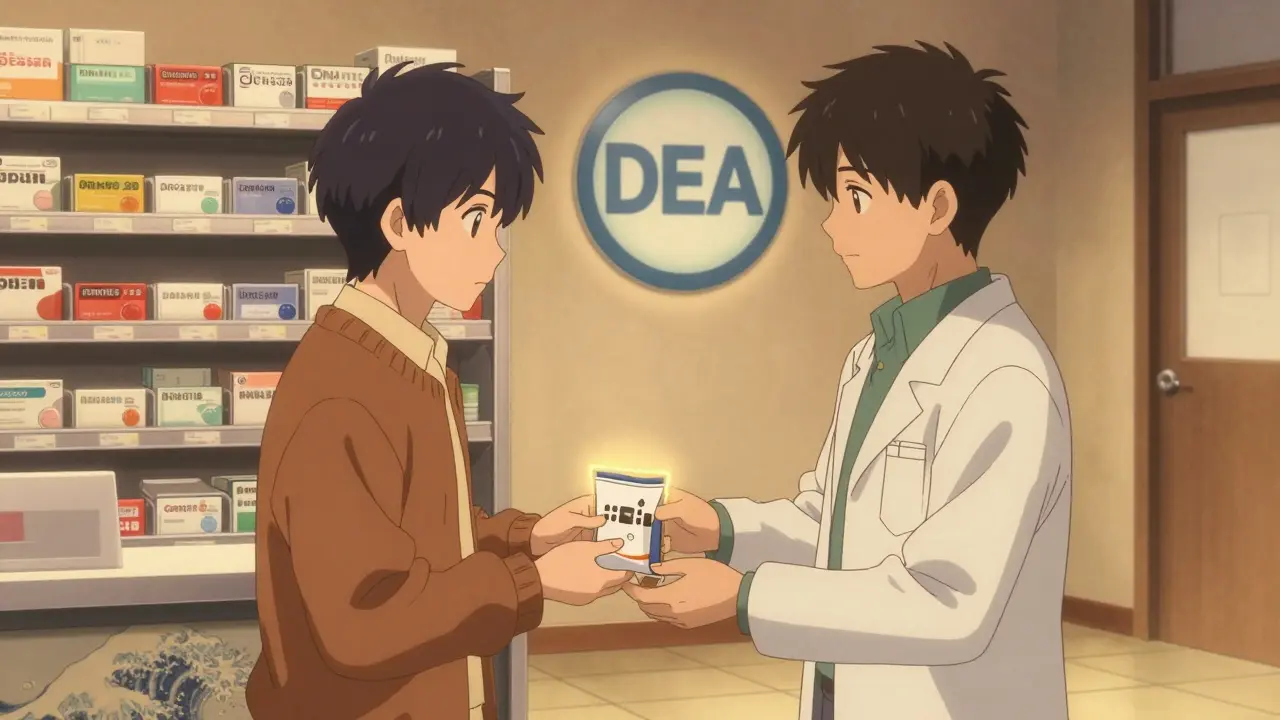
The process is tightly regulated. The DEA and FDA oversee every step. That’s why you can trust that your meds won’t be resold, reused, or dumped. They’re gone for good.
Common Mistakes and How to Avoid Them
Even when people mean well, they mess up. Here are the top three mistakes-and how to dodge them:
- Not covering personal info fully - 41% of rejected submissions fail here. Use a thick marker. Cover every letter. Don’t just scribble.
- Using the wrong container for liquids - 29% of rejections are from leaky or unsealed liquids. Keep them in the original bottle. If it’s damaged, double-bag it in ziplock.
- Bringing prohibited items - Inhalers, aerosols, and thermometers get tossed at the door. Check the list before you leave home.
Also, don’t assume your local pharmacy will take everything. Some only accept pills. Others don’t handle liquids or patches. Call first. Save yourself a wasted trip.

Where to Find a Take-Back Site Near You
You don’t need to wait for an event. Most places have permanent drop-off boxes.
The DEA runs a free online locator tool that shows all 16,500+ authorized sites across the U.S. Just enter your zip code. You’ll see pharmacies, hospitals, police stations, and even some libraries with collection bins.
Walgreens, CVS, and Rite Aid have kiosks in over 2,300 locations. Most are open during store hours. No appointment needed. Just walk in with your prepared meds.
If you live in a rural area, check with your county health department. Some run mobile collection units that visit small towns on set days. And don’t forget the VA-if you’re a veteran, their medical centers accept meds year-round.
What’s Changing in 2025
The system is getting better. In January 2024, the DEA launched Every Day is Take Back Day-a push to standardize rules across all sites. By 2025, 38 states are testing simpler rules: just remove your name, and you’re good to go. No more original container rules in many places.
The FDA is spending $8.7 million on public education to make this easier. The goal? Get participation up from 15% to 50%. That could stop 6.4 million pounds of drugs from polluting water each year.
It’s not just about safety anymore. It’s about making it so simple, no one has an excuse not to do it.
Final Tips for Success
- Check your medicine cabinet twice a year-spring and fall are good times.
- Don’t wait for a take-back day. Use permanent drop-off sites whenever you can.
- If you’re unsure, ask the pharmacy staff. They’re trained to help.
- Teach your family. Kids, teens, and older adults all need to know how to dispose of meds safely.
- When in doubt, call ahead. A two-minute phone call can save you a wasted trip.
Proper disposal isn’t complicated. It’s not expensive. It’s just one small step that keeps your family, your community, and your environment safer.


Marc Durocher
February 4, 2026 AT 08:39On a real note-why do we still need to dig up original bottles in 2025? My pharmacy’s kiosk just takes ‘em in a ziplock. Why are we still playing pharmacy archaeology?
larry keenan
February 4, 2026 AT 22:07Gary Mitts
February 6, 2026 AT 20:58clarissa sulio
February 7, 2026 AT 20:28Anthony Massirman
February 8, 2026 AT 06:22Bridget Molokomme
February 8, 2026 AT 10:15Monica Slypig
February 9, 2026 AT 07:58Becky M.
February 9, 2026 AT 14:14also-why do we still call it ‘take-back’? sounds like we’re returning a defective toaster.
jay patel
February 10, 2026 AT 16:09Ansley Mayson
February 11, 2026 AT 12:36phara don
February 13, 2026 AT 10:08Also-can I bring my expired CBD gummies? They’re technically ‘supplements’ but they’re basically just sugar with plant juice.
Hannah Gliane
February 13, 2026 AT 17:24Murarikar Satishwar
February 15, 2026 AT 08:44Dan Pearson
February 17, 2026 AT 04:12So I’m sitting here with 37 bottles of Xanax I can’t throw away, can’t flush, can’t recycle. And now I’m supposed to feel guilty? Nah. I’m done playing by rules written by bureaucrats who’ve never held a pill bottle in their hands. I’m just gonna bury ‘em in the backyard. Let the earth handle it. #TakeBackMyFreedom