

Medication Safety Checker
Check Your Medication Safety
This tool helps you understand if side effects are normal or require medical attention. Remember: Side effects aren't a sign to quit. They're a sign to talk.
Many people believe that if they feel worse after starting a new medication, the drug must be the problem - and the only solution is to quit. But that’s not always true. In fact, acting on these beliefs can be dangerous. A 2022 study from AdhereTech found that 37% of patients with chronic conditions stop taking their meds because they think side effects mean the drug isn’t working or is harming them. The truth? Most side effects are manageable, and stopping without talking to your doctor can lead to worse outcomes - even hospitalization.
Myth: If I Feel Bad, I Should Stop Taking My Medication
It’s understandable to want to stop when you feel nauseous, dizzy, or tired after starting a new pill. But feeling side effects doesn’t mean you need to quit. According to the FDA’s Adverse Event Reporting System, only 10-20% of patients experience noticeable side effects from medications. And even then, most can be reduced or eliminated with simple changes.
Take antibiotics, for example. Nausea is common, especially with amoxicillin or doxycycline. A 2020 study in the Journal of Clinical Pharmacy and Therapeutics showed that taking these with food cuts nausea by 68%. Yet, a JAMA Internal Medicine survey found that 42% of patients stop taking antibiotics because of nausea - without ever asking their doctor. That’s risky. Not only does it leave infection untreated, but it also fuels antibiotic resistance.
Antidepressants are another big one. Many people stop SSRIs like sertraline or fluoxetine because they feel jittery or have trouble sleeping at first. But those symptoms often fade within weeks. Abruptly stopping can trigger withdrawal: dizziness in 32% of cases, "brain zaps" in 27%, and insomnia in 41%, according to a 2019 review in the Journal of Clinical Psychiatry. The fix? Talk to your provider. A gradual taper or switching to a different medication can make all the difference.
Heart patients aren’t immune either. The American Heart Association reports that 28% of heart attack survivors quit beta-blockers within 90 days because of fatigue or dizziness. But research in Circulation found those who stopped were 3.2 times more likely to have another heart event. Side effects aren’t a reason to quit - they’re a reason to call your doctor.
Myth: You Can Stop Antibiotics When You Feel Better
This myth is one of the biggest drivers of antibiotic resistance. The CDC estimates that 2.8 million Americans get antibiotic-resistant infections every year, and 35,000 die from them. A huge part of the problem? People stopping antibiotics early.
Here’s the science: when you take antibiotics, you’re not just killing the bacteria making you sick - you’re killing the weakest ones first. The survivors are the toughest. If you stop too soon, those tough bacteria multiply. A 2020 meta-analysis in The Lancet Infectious Diseases showed that skipping even a few doses increases your risk of a resistant infection by 17%.
And yet, a 2022 University of Utah survey found that 63% of Americans think it’s fine to stop once symptoms fade. The Infectious Diseases Society of America is clear: symptom relief doesn’t mean infection gone. Most bacterial infections need 7-14 days of treatment to kill 99.9% of the bugs. Finishing the full course isn’t about being obedient - it’s about stopping superbugs before they start.

Myth: Statins Cause Severe Muscle Pain - So I Should Quit
Statins save lives. They lower cholesterol and reduce heart attack risk by up to 30%. But fear of muscle pain keeps 74% of patients off them within a year, according to a 2021 study in the American Journal of Cardiology.
The reality? The risk is tiny. The Cholesterol Treatment Trialists’ Collaboration analyzed data from 174,000 patients across 27 trials and found that statin users had only 0.9% more muscle complaints than those on placebo. That’s less than one extra person per 100 taking the drug. And here’s the kicker: a 2018 New England Journal of Medicine study showed that 90% of people who think they can’t tolerate statins can actually take them - if tested properly in a blinded trial.
Not all statins are the same. Lipophilic ones like simvastatin and atorvastatin penetrate muscle tissue more easily. Hydrophilic statins like pravastatin and rosuvastatin don’t. A 2020 meta-analysis in the Journal of the American College of Cardiology found that switching to a hydrophilic statin cuts muscle side effects by 32%. If you’ve had trouble before, ask your doctor about switching - don’t quit.
Myth: Over-the-Counter Painkillers Are Just as Good as Prescription Meds
People reach for ibuprofen or acetaminophen because they’re cheap, easy, and seem harmless. But for chronic pain - like arthritis, nerve pain, or back pain - OTC drugs often don’t cut it. A 2022 Journal of Pain Research analysis found that 68% of patients with moderate to severe pain get no real relief from maximum daily doses of OTC painkillers.
Here’s the math: the max daily dose of ibuprofen is 1,200 mg. For acetaminophen, it’s 3,000 mg. But for many chronic conditions, you need 800-1,200 mg of ibuprofen every 6 hours - which means hitting the limit in just two doses. And that’s not even getting into the risks.
Acetaminophen causes 56,000 emergency room visits each year, mostly from liver damage. The CDC says toxicity happens above 4,000 mg/day - and many people don’t realize they’re already hitting that from cold meds or sleep aids. Ibuprofen? It causes 10,000 hospitalizations yearly for stomach bleeding, per the American Gastroenterological Association. Delaying real treatment for an average of 14.7 months because you’re relying on OTC meds can make pain worse and harder to treat later.
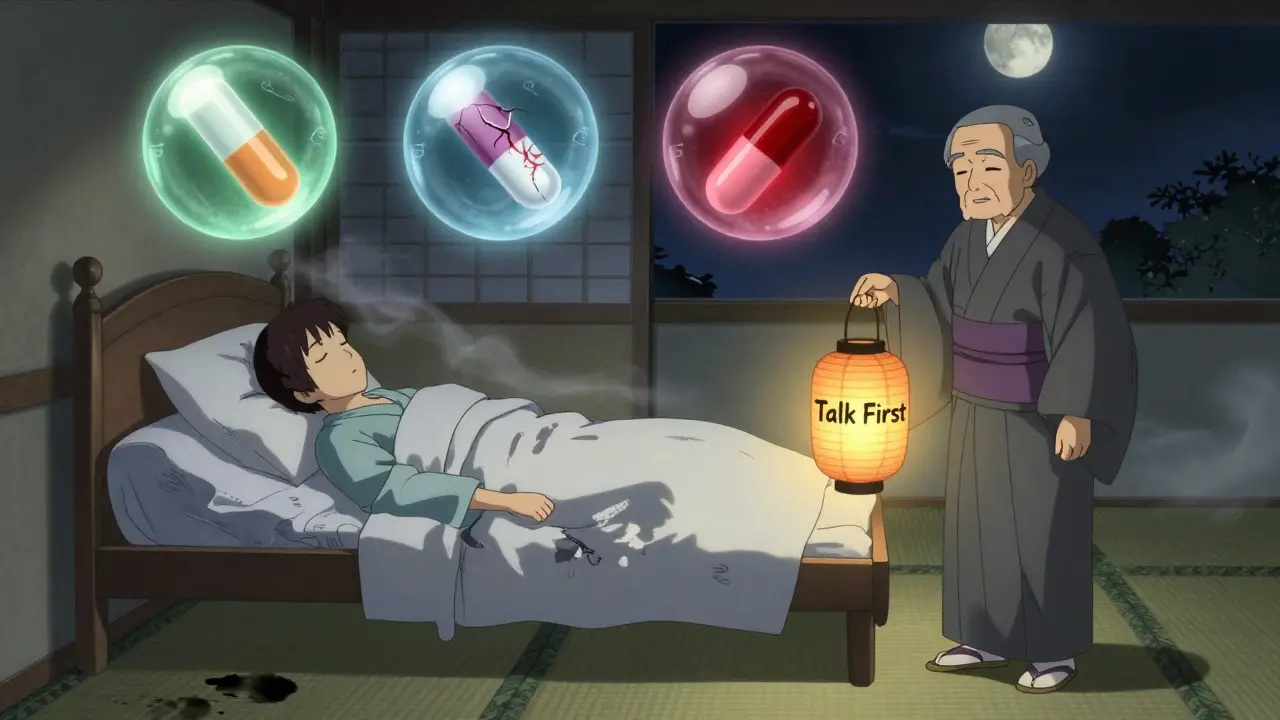
Myth: Prescription Drugs Are Safer Than Illicit Drugs
This one is deadly. The National Institute on Drug Abuse says 53% of new opioid misuse cases in 2022 started with pills taken from a family member’s medicine cabinet. People think, "If a doctor prescribed it, it must be safe." But prescription opioids carry serious risks - especially when taken without supervision.
The CDC reports that in 2022, 18,000 overdose deaths involved prescription opioids. And 30% of those cases were people taking pills not prescribed to them. The American Society of Addiction Medicine found that just 30 days of opioid use gives you a 23% chance of developing an addiction. That’s higher than many people realize.
Mixing prescriptions with alcohol is another silent killer. A 2022 study in the Journal of Clinical Medicine found that combining alcohol with certain meds - like opioids, benzodiazepines, or even acetaminophen - increases death risk by 47%. Acetaminophen and alcohol together cause 450 liver failure deaths each year, according to the American Liver Foundation. Prescription doesn’t mean harmless. It means you need to know the rules.
What You Can Do: Talk, Don’t Quit
Here’s the bottom line: side effects are common, but quitting without help is rarely the answer. The American Medical Association says 87% of doctors have seen patients hospitalized because they stopped meds due to myths. The fix? Communication.
Doctors and pharmacists aren’t just prescribing pills - they’re problem solvers. If you feel side effects, ask: "Can I take this with food?" "Can I take it at night instead?" "Is there a different pill I can try?" A 2023 study in the Annals of Family Medicine found that using "teach-back" - where you repeat the instructions back to your provider - improves adherence by 32%.
Pharmacists are especially powerful here. The American Pharmacists Association found that patients who got a medication therapy management session - a 20-minute chat about side effects and timing - were 41% less likely to quit their meds. And patients on apps like AdhereTech’s smart pill bottles had 47% fewer discontinuations because alerts reminded them to talk to their doctor before quitting.
Real people on platforms like PatientsLikeMe and Reddit confirm this. Of those who initially stopped meds because of side effects, 63% were able to stay on treatment after talking to a provider. One Reddit user wrote: "I thought my statin was wrecking my legs. I switched to rosuvastatin and haven’t had an issue since." Another: "I stopped my antidepressant because I felt dizzy. My doctor lowered my dose - now I feel better than I have in years."
Side effects aren’t a sign to quit. They’re a sign to talk.
Should I stop my medication if I feel side effects?
No - unless your doctor tells you to. Most side effects are temporary or manageable. Stopping without medical advice can lead to serious health risks, including worsening of your condition, withdrawal symptoms, or antibiotic resistance. Always call your provider before quitting.
Can I take antibiotics until I feel better and then stop?
No. Stopping antibiotics early allows the toughest bacteria to survive and multiply, leading to resistant infections. Most infections require 7-14 days of treatment to fully clear. Even if you feel fine, finish the full course as prescribed.
Do statins really cause muscle pain?
Only in a very small number of people. Studies show that less than 1% more statin users report muscle pain than those on placebo. Many people who think they can’t tolerate statins can actually take them after switching to a different type - like pravastatin or rosuvastatin - which are less likely to cause muscle issues.
Are OTC painkillers safe for long-term use?
Not for chronic pain. OTC painkillers like ibuprofen and acetaminophen are designed for short-term use. Long-term use can cause liver damage (acetaminophen) or stomach bleeding (ibuprofen). For ongoing pain, you need a treatment plan - not just pills from the drugstore.
Can I share my prescription meds with family members?
Never. Prescription drugs are tailored to your body, condition, and other medications. Sharing them - even with good intentions - can cause dangerous interactions, overdoses, or addiction. In 2022, over 18,000 opioid deaths involved people taking pills not prescribed to them.
What should I do if I’m scared of side effects?
Talk to your pharmacist or doctor. Ask if the side effect is common, how long it lasts, and what you can do to reduce it. Many side effects improve with time, changes in timing, or switching medications. You’re not alone - and you don’t have to suffer in silence.
Medication isn’t magic - but it’s powerful. And like any powerful tool, it needs to be used correctly. Your health isn’t a gamble. When in doubt, ask. Your body will thank you.


Jane Ryan Ryder
March 3, 2026 AT 12:02Callum Duffy
March 4, 2026 AT 16:35Matt Alexander
March 6, 2026 AT 08:40Gretchen Rivas
March 7, 2026 AT 09:37Mike Dubes
March 8, 2026 AT 11:10Helen Brown
March 10, 2026 AT 02:24John Cyrus
March 10, 2026 AT 03:39John Smith
March 10, 2026 AT 08:16Sharon Lammas
March 10, 2026 AT 12:35marjorie arsenault
March 12, 2026 AT 04:27tatiana verdesoto
March 13, 2026 AT 17:36