
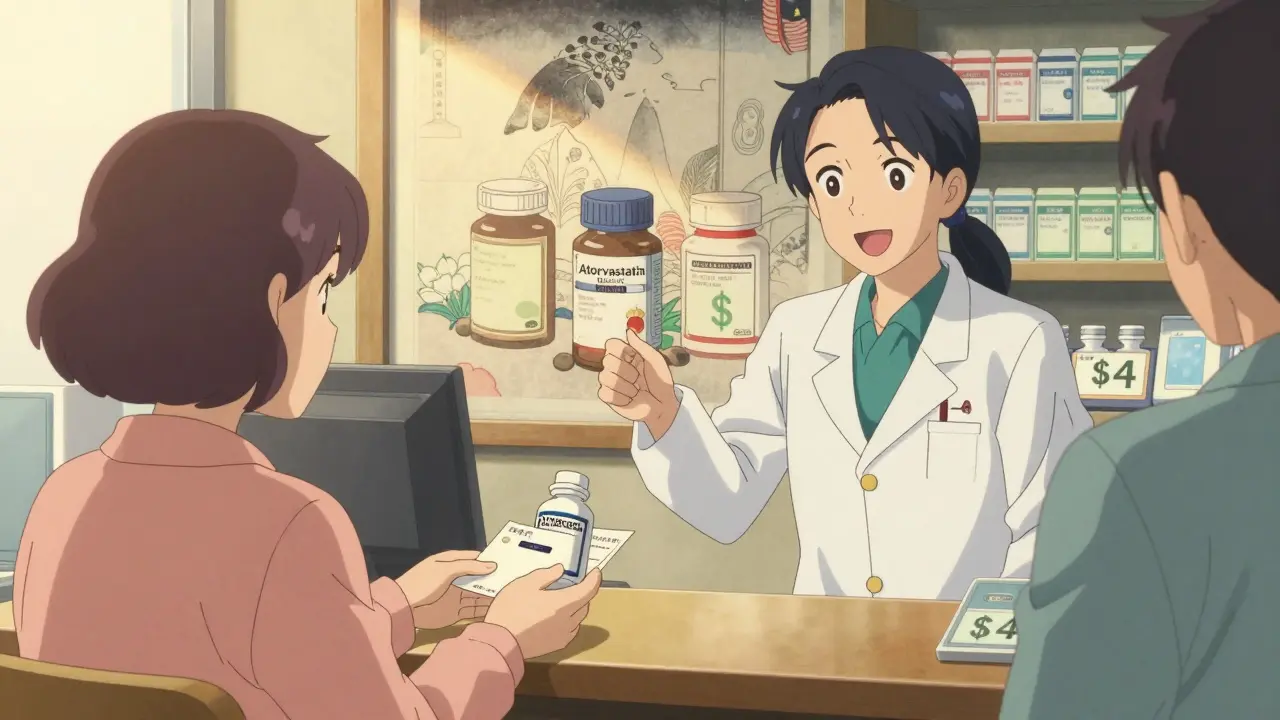
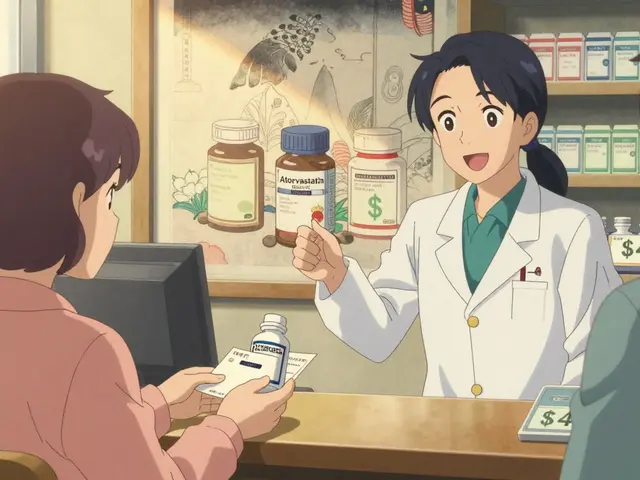
Switching to generic medications can cut your monthly drug bill by 80% or more-without changing how well your medicine works. If you’re paying $150 a month for a brand-name pill, the generic version might cost just $4. That’s not a guess. It’s a fact backed by the FDA and millions of real patients. Yet, many people still stick with expensive brand names out of fear, confusion, or habit. Here’s the truth: generic drugs are not cheaper because they’re weaker. They’re cheaper because they don’t need to pay for advertising, fancy packaging, or decades of research costs.
What Exactly Is a Generic Drug?
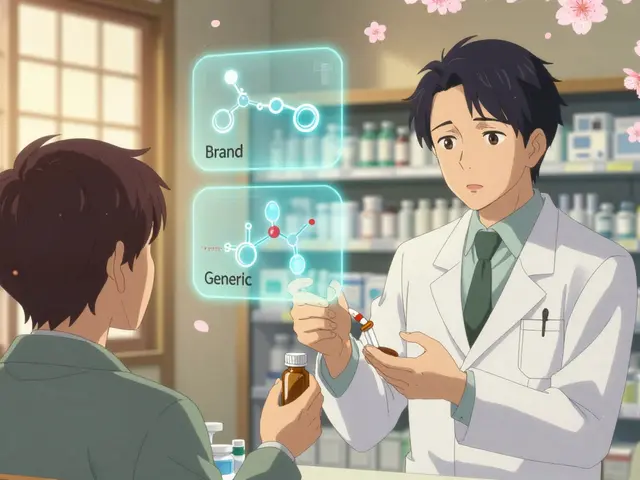
A generic drug has the same active ingredient, dose, strength, and route of administration as the brand-name version. It works the same way in your body. The FDA requires it to deliver the same amount of medicine into your bloodstream at the same speed. That’s called bioequivalence. If it doesn’t meet this standard, it doesn’t get approved.
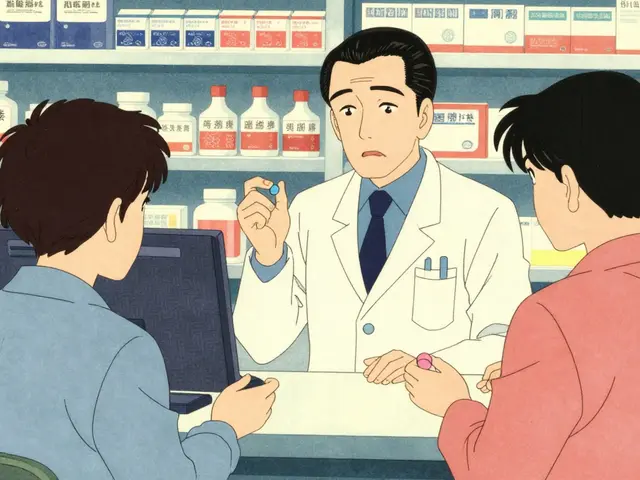
What’s different? The color, shape, taste, or inactive ingredients like fillers or dyes. These don’t affect how the drug works. That’s why a generic version of a blue pill might be white and oval. It’s the same medicine, just packaged differently.
For example, the generic version of Lipitor (atorvastatin) lowers cholesterol just like the brand. The generic version of Metformin treats type 2 diabetes the same way as Glucophage. The FDA has approved over 20,000 generic drugs. Most of them are used daily by millions of people.
How Much Money Do You Really Save?
The numbers speak for themselves. On average, generic medications cost 85% less than their brand-name equivalents. Over the last decade, Americans saved more than $2.2 trillion by choosing generics.
Take a closer look at real examples:
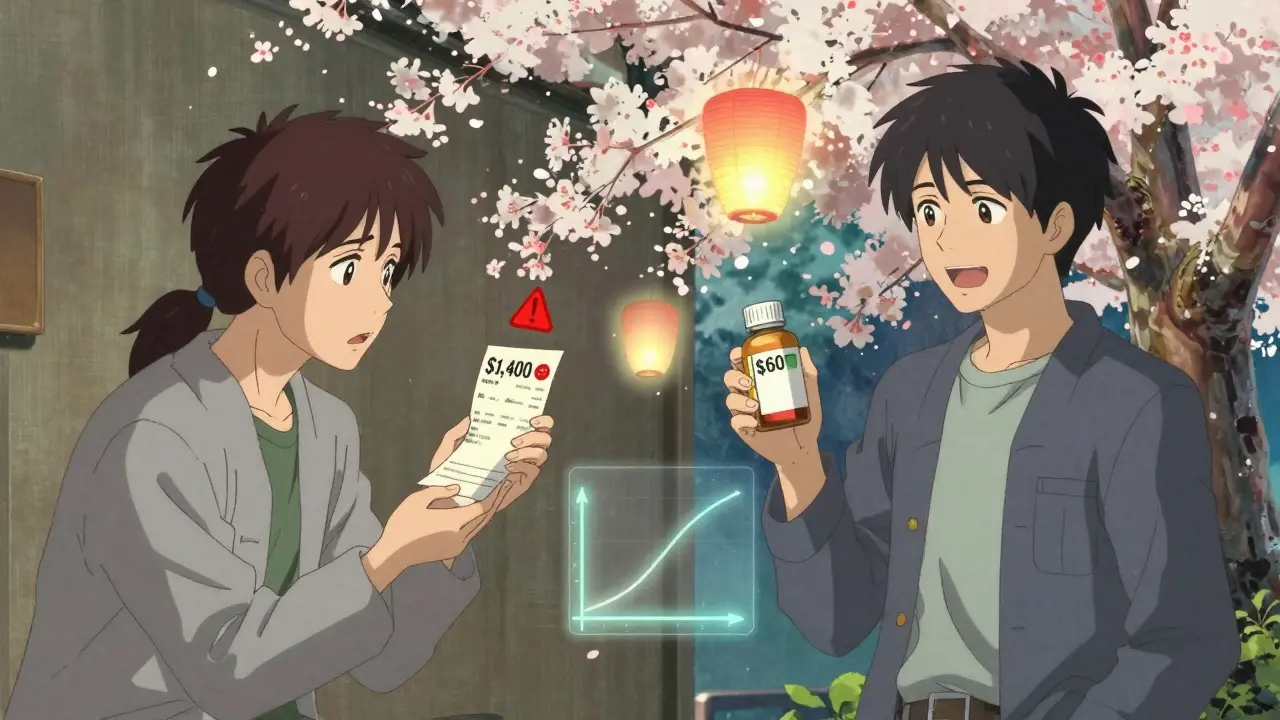
- A 30-day supply of a brand-name drug that cost $1,400 dropped to under $60 after a generic arrived.
- Another drug fell from $88 per milliliter to under $10-saving patients an average of $3,300 per prescription.
- At Costco, 90% of the top 184 generic drugs for Medicare patients cost less than $20 for a 30-day supply.
Even with insurance, you’re still paying more than you need to. Many people don’t realize that their $10 copay for a brand-name drug could be a $3 copay for the generic. Some uninsured patients save even more by buying generics through direct-to-consumer pharmacies like the Mark Cuban Cost Plus Drug Company, where median savings hit $5 per prescription.
Why Do Some People Think Generics Don’t Work?
It’s not because generics are less effective. It’s because of perception. Some patients report feeling different after switching-headaches, nausea, or a sense that the medicine isn’t working as well. But when researchers study these cases under controlled conditions, there’s no difference in how the drugs perform.
What’s really happening? Two things. First, changing from one pill shape or color to another can trigger a placebo effect. Your brain expects the old pill to work better because it’s familiar. Second, inactive ingredients can cause minor side effects in rare cases-like a dye causing an allergic reaction. But that’s not the drug failing. It’s your body reacting to something that doesn’t affect the treatment.
There’s one exception: drugs with a narrow therapeutic index-like levothyroxine for thyroid disease. Even small changes in blood levels can matter. That’s why some doctors prefer to keep patients on the same brand or generic version consistently. But even here, switching between approved generics is safe if monitored by your doctor.
How to Get the Best Price on Generic Medications
Not all pharmacies charge the same. Your insurance copay isn’t always the lowest price. Here’s how to save even more:
- Ask your pharmacist: "Is there a generic? What’s the cash price?" Sometimes the cash price is lower than your insurance copay.
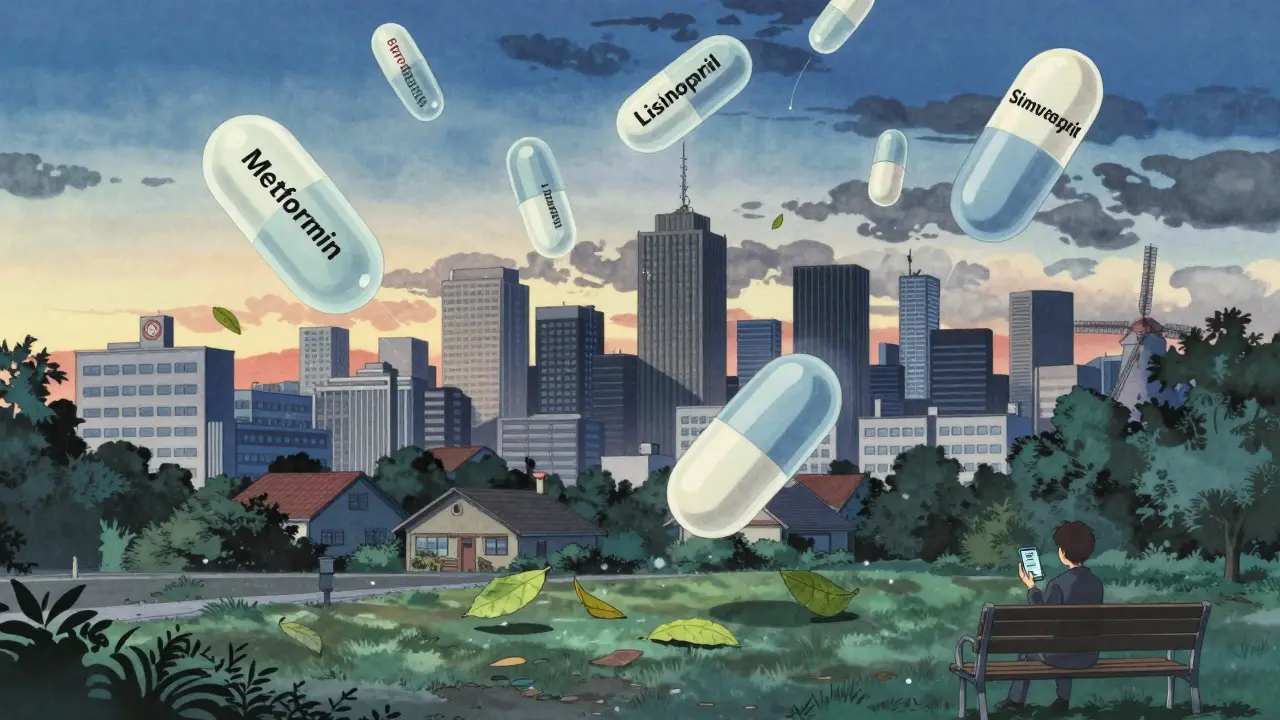
- Check Costco, Walmart, or CVS for their $4 generic lists. Many common medications like metformin, lisinopril, and simvastatin are available for under $10.
- Use the Mark Cuban Cost Plus Drug Company (MCCPDC). It’s a transparent pharmacy that sells generics at cost plus a small fee. No insurance needed.
- Compare prices with GoodRx or SingleCare. These apps show real-time prices at local pharmacies.
- Ask your doctor if your prescription can be written for a 90-day supply. Bulk discounts often apply.
One patient in Phoenix saved hundreds a year by switching her daughter’s medications to generics. Another Reddit user cut his monthly drug bill from $300 to $40. These aren’t outliers. They’re the new normal.
What About Insurance and Formularies?
Most insurance plans encourage generics by putting them in the lowest cost tier. You’ll pay less out of pocket. But sometimes, your plan might not cover a specific generic, or it requires prior authorization.
If your doctor prescribes a brand-name drug and you want the generic, just ask. Pharmacists are allowed to substitute generics automatically in most states-unless the doctor writes "Dispense as Written" or "Do Not Substitute." You can also request the generic yourself. No need to argue. Just say, "I’d like the generic version if it’s available and approved for my condition."
Don’t assume your insurance will automatically pick the cheapest option. Always check your explanation of benefits (EOB) or log into your plan’s portal to see what you’re being charged.
Are There Any Downsides?
For most people, the answer is no. But there are a few real limitations:
- Some complex drugs-like biologics for rheumatoid arthritis or cancer-don’t have true generics. Instead, they have biosimilars, which are similar but not identical. These are still cheaper than the brand, but not as dramatically so.
- Occasionally, a generic manufacturer might have a supply shortage. That’s rare, but it happens. If your pharmacy runs out, ask if another brand is available.
- Manufacturing consolidation is a growing concern. A few big companies now make most generics. If one shuts down a plant, it can cause temporary shortages. But the FDA is working to prevent this by approving more manufacturers.
Still, the benefits far outweigh the risks. Generic drugs are held to the same quality standards as brand-name ones. The same factories that make brand-name drugs often make generics too-just under a different label.
What’s Changing Right Now?
The generic drug market is growing. More blockbuster drugs are losing patent protection every year. In 2025 and 2026, dozens of high-cost medications for diabetes, heart disease, and mental health will become available as generics.
The FDA is also speeding up approvals. In 2022 alone, they approved hundreds of new generics. The goal? More competition means lower prices. Analysts predict this will save the U.S. healthcare system another $100-200 billion annually over the next five years.
Direct-to-consumer pharmacies like MCCPDC are challenging the old system. They’re proving that you don’t need a middleman-like a pharmacy benefit manager-to get fair prices. Patients are catching on. More people are paying cash for generics than ever before.
Final Thought: Don’t Pay More Than You Have To
Medicine shouldn’t be a luxury. If you’re taking a daily pill for blood pressure, cholesterol, diabetes, or depression, you deserve to afford it. Generic medications make that possible. They’re not a compromise. They’re the smart, proven, and safe choice.
Next time you get a prescription, ask: "Is there a generic?" Then ask: "What’s the cash price?" You might be shocked by how little you need to pay.
Are generic medications as safe as brand-name drugs?
Yes. The FDA requires generic drugs to meet the same strict standards for quality, strength, purity, and stability as brand-name drugs. They’re made in the same type of facilities and inspected using the same rules. The only difference is the price.
Can I switch from a brand-name drug to a generic without my doctor’s permission?
In most cases, yes. Pharmacists can substitute a generic unless the prescription says "Dispense as Written" or "Do Not Substitute." But it’s always a good idea to let your doctor know you’re switching, especially if you’re on a medication with a narrow therapeutic index, like thyroid medicine or seizure drugs.
Why do some generics cost more than others?
When multiple generic manufacturers enter the market, prices drop due to competition. If only one company makes a generic, it can charge more. Over time, more companies usually join, bringing prices down. That’s why one pharmacy might charge $5 for a generic while another charges $12-it’s about competition and location.
Do generics take longer to work than brand-name drugs?
No. The FDA requires generics to be bioequivalent, meaning they enter your bloodstream at the same rate and to the same extent as the brand-name drug. If you feel a difference in how quickly it works, it’s likely due to your body adjusting to a new pill shape or your expectations-not the drug itself.
What if my insurance won’t cover the generic?
That’s rare, but if it happens, ask your pharmacist for the cash price. Often, it’s still cheaper than your insurance copay. You can also ask your doctor to file an appeal with your insurer, or switch to a different generic version that’s covered. Always compare prices before paying.



Napoleon Huere
January 27, 2026 AT 17:24It’s wild how we’ve been conditioned to equate price with quality. I used to think generics were like buying a knockoff watch-looks similar, but ticks wrong. Turns out, my body couldn’t tell the difference between Lipitor and atorvastatin. My cholesterol dropped the same. My wallet? It screamed in relief. We’ve built a system where marketing is mistaken for medicine. The FDA doesn’t lie. The pharmaceutical companies? They’re just selling fear.
It’s not about saving money. It’s about reclaiming dignity. You shouldn’t have to choose between eating and taking your blood pressure pill. Generics don’t compromise-they correct.
Shweta Deshpande
January 28, 2026 AT 17:49Oh my goodness, this post made me cry a little, honestly. In India, we’ve been using generics for decades because we had no choice-but now I see how much we’ve been ahead of the game! My mom takes metformin for 12 rupees a month (like, less than 15 cents), and she’s been stable for 15 years. I remember when I first came to the US and saw a $150 pill and thought, ‘How is this even legal?’
And the part about Costco? I just ran to my local Walmart and found lisinopril for $4. I felt like I’d won the lottery. Thank you for normalizing this. We don’t need fancy packaging to be healthy. We need transparency. And maybe a little less corporate brainwashing. 💛
Aishah Bango
January 29, 2026 AT 08:20People who take generics are just gambling with their lives. You think the FDA checks every batch? Newsflash-they inspect 1% of foreign plants. That’s it. And don’t get me started on the fillers. Some generics use dyes that are banned in the EU. You’re not saving money-you’re trading your health for a coupon. I’d rather pay $150 and sleep at night.
And no, ‘bioequivalence’ doesn’t mean ‘identical.’ It means ‘close enough for the regulators to look away.’
Simran Kaur
January 31, 2026 AT 01:24My aunt in Delhi switched from a brand-name antidepressant to generic and cried for three days because she thought it wasn’t working. Then she realized-it was the *color* of the pill. She’d been taking blue ones for 10 years, and the generic was white. Her brain didn’t trust it. We’re so attached to the *idea* of medicine, not the medicine itself.
When I told my cousin in Chicago this story, he laughed and said, ‘We’re all just scared of change.’ And you know what? He’s right. But I also think it’s beautiful that we care so much about our bodies. We just need to redirect that care toward truth, not branding. 💕
Also, I just got my levothyroxine for $7 at CVS. I’m crying again. This time, happy tears.
Neil Thorogood
February 1, 2026 AT 17:38So let me get this straight… you’re telling me I’ve been paying $120 for a pill that’s basically the same as a $4 one… and I’ve been doing it for YEARS? 🤯
Bro. I’m not mad. I’m just disappointed. Like, I could’ve bought a whole damn motorcycle with what I spent on brand-name Zoloft. 🏍️💸
PS: I just switched. Took the generic. Felt nothing different. Except my bank account just did a backflip. Thanks for the wake-up call. 🙌
Peter Sharplin
February 2, 2026 AT 08:34There’s a nuance here that’s often missed: generics aren’t always cheaper at the pharmacy counter because of insurance. Sometimes, the copay is artificially inflated to push brand-name sales. Always ask for the cash price. I once saved $80 on a 30-day supply of simvastatin just by saying, ‘I’m paying out of pocket.’
Also, if you’re on a long-term med, ask for a 90-day supply. Most generics drop to $10–$15 for 90 days. That’s less than $0.50 per day. You’re literally paying less than your morning coffee.
Betty Bomber
February 2, 2026 AT 15:21Y’all are overthinking this. I take generic metformin. It’s white. I used to take blue. I didn’t feel different. I didn’t even notice. My HbA1c is the same. My bank account is happier. Done.
Also, I bought my blood pressure med on GoodRx for $3. I didn’t even need to tell my doctor. The pharmacist just swapped it. Boom. Easy.
Curtis Younker
February 4, 2026 AT 08:07Let me tell you about my buddy Dave. He was paying $280 a month for his diabetes med. Thought he had no choice. Then he found out the generic was $18. He cried. Then he bought a new bike. Then he started a YouTube channel called ‘Generic Hero’ and now he’s helping 20,000 people save money. That’s the ripple effect.
Don’t just switch meds-switch your mindset. You’re not a victim of the system. You’re the customer. And customers have power. Go to Costco. Use GoodRx. Ask questions. Your body deserves to be free from financial stress. You’ve got this.
Nicholas Miter
February 4, 2026 AT 16:41yeah i switched to generic for my antidepressant last year and honestly? i didnt notice a thing. my anxiety was still under control, my sleep was better, and i saved like $100 a month. the only difference was the pill looked different and the bottle had a different logo. weird how we think the color matters more than the science. also, my pharmacist said the same factory makes both. just different labels. mind blown.
also, i never knew walmart had a $4 list. now im checking every script. its like finding free money in your couch.
Suresh Kumar Govindan
February 4, 2026 AT 18:20It is my solemn duty to inform you that the United States Food and Drug Administration operates under a framework of regulatory capture, wherein pharmaceutical conglomerates exert undue influence over approval protocols. The bioequivalence standard, while statistically acceptable, fails to account for pharmacokinetic variability across ethnic populations. Furthermore, the majority of generic APIs are manufactured in facilities with documented GMP violations. To advocate for generics without acknowledging systemic risk is not merely irresponsible-it is a betrayal of public health.
John Wippler
February 6, 2026 AT 08:03Here’s the thing nobody talks about: the real villain isn’t Big Pharma. It’s the middlemen. Pharmacy Benefit Managers (PBMs). They’re the ones who negotiate rebates-so the more expensive the brand-name drug, the bigger the kickback they get. That’s why your insurance pushes brands. It’s not about your health. It’s about their profit.
Generics bypass all that. When you pay cash, you cut out the PBM. You’re dealing directly with the manufacturer. That’s why MCCPDC is revolutionary. They’re not selling medicine. They’re selling honesty.
And if you think generics are ‘inferior’? Go look up the FDA’s inspection logs. Same factories. Same inspectors. Same quality control. Just no ad budget. That’s it.
Faisal Mohamed
February 8, 2026 AT 04:45From a phenomenological standpoint, the commodification of pharmaceuticals under late-stage capitalism has resulted in a semiotic dislocation between the pharmacological substance and its perceived efficacy. The brand-name drug functions as a Lacanian objet petit a-an object of desire constructed through symbolic capital. Generics, by contrast, are signifiers stripped of their aura, rendering them ontologically suspect in the consumer’s psyche.
Moreover, the FDA’s bioequivalence threshold of 80–125% AUC is statistically porous and epistemologically inadequate for personalized medicine. One must question: is ‘equivalence’ a moral category-or merely a regulatory loophole?