
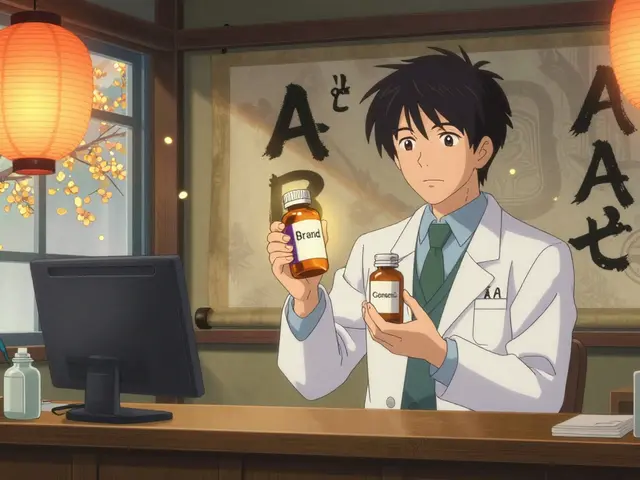
When you pick up a prescription at the pharmacy, you might not realize that a complex system is deciding whether the pill you’re handed is a safe swap for the brand-name drug your doctor wrote on the script. That system is the FDA’s therapeutic equivalence (TE) codes, and it’s what keeps millions of Americans from overpaying for medications every year. These codes aren’t just bureaucratic labels-they’re science-backed decisions that tell pharmacists exactly which generics can be swapped without risking your health.
What Therapeutic Equivalence Really Means
Therapeutic equivalence doesn’t just mean two drugs have the same active ingredient. It means they work the same way in your body, produce the same clinical effect, and carry the same safety profile. The FDA doesn’t guess at this. It requires proof. For a generic drug to earn a therapeutic equivalence rating, it must pass three tests:- Pharmaceutical equivalence: Same active ingredient, strength, dosage form (like tablet or injection), and route of administration (oral, topical, etc.) as the brand-name drug.
- Bioequivalence: The generic must deliver the same amount of medicine into your bloodstream at the same rate as the original. This is usually proven through blood tests in healthy volunteers.
- Clinical equivalence: The FDA reviews all available data to confirm there’s no reason to believe the generic will behave differently in real patients under the conditions listed in the drug’s label.
Only when all three are met does the FDA assign a therapeutic equivalence code. This system started in 1980 with the first edition of the Orange Book-officially called Approved Drug Products with Therapeutic Equivalence Evaluations. Today, it’s updated monthly and used by pharmacists, insurers, and state pharmacy boards to make substitution decisions.
The Letter System: What AB, BC, and BX Really Mean
The TE code is a one- or two-letter rating you’ll see next to each drug in the Orange Book. It’s simple but packed with meaning.- A-rated: These are the gold standard. They’re considered interchangeable with the brand-name drug. If your script says “brand name only,” your pharmacist can still swap it out for an A-rated generic without asking.
- B-rated: These are not automatically interchangeable. The FDA has concerns-maybe the drug’s absorption is unpredictable, or it’s a complex delivery system like an inhaler or topical cream. A B rating doesn’t mean it’s unsafe. It just means more caution is needed.
But it gets more detailed. The second letter adds context:
- AB1, AB2, AB3: Used when multiple brand-name drugs (called Reference Listed Drugs) exist for the same medicine. Each gets its own AB number. You can only substitute within the same AB group.
- BC: Extended-release tablets or capsules with bioequivalence issues.
- BD: Active ingredients with documented bioequivalence problems.
- BT: Topical products (like creams or ointments) where absorption is hard to measure.
- BN: Aerosol inhalers or nebulizer products.
- BR: Suppositories or enemas meant for systemic absorption.
- BS: Products with inconsistent drug standards.
- BX: Not enough data to make a call. These are often new generics or complex products under review.
Here’s the kicker: 90% of all generic drugs in the U.S. have an A rating. That’s over 12,600 products out of 14,000 listed in the 2023 Orange Book. But the 10% with B ratings? They’re often the trickiest-and most expensive-drugs to make.
Why Some Generics Get B Ratings (Even When They Should Work)
You might wonder: if a generic has the same ingredients, why isn’t it automatically interchangeable? The answer lies in complexity. For simple pills, it’s easy to prove bioequivalence. You give volunteers the brand and the generic, measure blood levels over time, and compare curves. If they match within strict limits, it’s approved. But what about a cream that absorbs through the skin? Or an inhaler that delivers medicine deep into the lungs? Or a long-acting injection that releases drug slowly over weeks? These aren’t just pills with a different label. Their delivery systems matter. And right now, the tools we use to test bioequivalence aren’t good enough to capture how these products behave in real people. That’s why drugs like certain asthma inhalers, eczema creams, or testosterone injections often get B ratings-even if they’re clinically effective. A 2022 study in the Journal of Generic Medicines found that 68% of B-rated products were for complex delivery systems. The FDA admits this is a gap. In its 2022 draft guidance, it’s pushing for better testing methods: in vitro tests, real-world data, and even patient-reported outcomes.For now, though, if your prescription says “B-rated,” your pharmacist can’t swap it unless your doctor says it’s okay.
How Pharmacists Use TE Codes Every Day
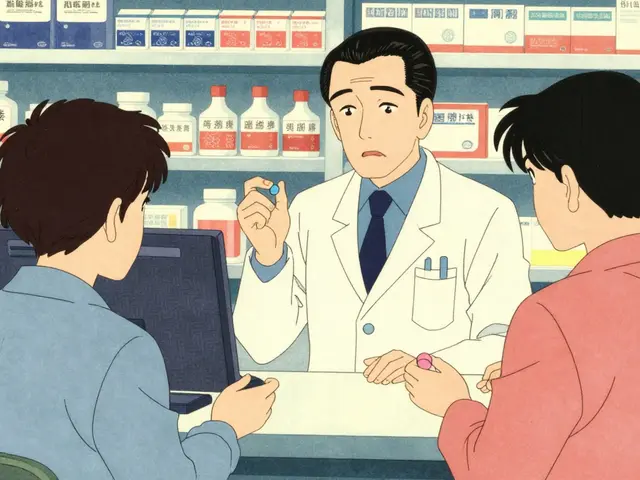
In a busy pharmacy, time matters. A pharmacist doesn’t have hours to read clinical studies. They look at the Orange Book. They check the TE code. And they act.- If it’s an A-rated drug, they substitute automatically. In 49 states, laws let them do this without calling the doctor.
- If it’s a B-rated drug, they either call the prescriber or leave it as-is. Some pharmacists refuse to substitute B-rated drugs entirely-just to be safe.
According to a 2022 survey of 1,200 community pharmacists, 87% said TE codes make their job easier. But 42% of physicians still don’t fully understand them. One doctor told me (anecdotally, from a medical forum) that he once prescribed a B-rated generic for a patient with depression, only to have the pharmacist refuse to fill it-because they thought “B” meant “not safe.” The patient had to wait three days for a refill.
That’s the problem: confusion. The TE code system works brilliantly for simple pills. But for complex drugs, it creates more questions than answers.
How Much Money Does This System Save?
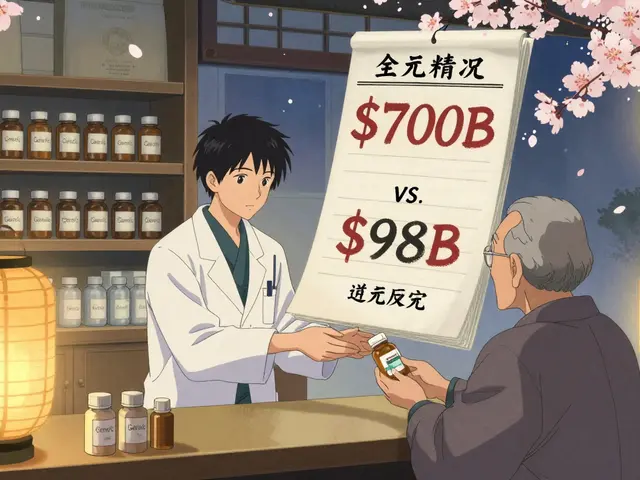
The numbers are staggering. Generic drugs make up 90% of all prescriptions filled in the U.S. But they cost only 23% of what brand-name drugs do. In 2023, that translated to $370 billion in savings.Therapeutic equivalence codes are the engine behind that. Without them, pharmacies couldn’t swap drugs. Insurance companies wouldn’t cover generics. Patients would pay more.
Each time a pharmacist substitutes an A-rated generic, they save an average of $35 per prescription. Multiply that by 4 billion prescriptions a year, and you get the scale. Pharmacists spend about 2.7 minutes per script checking TE codes. That’s 1.7 million hours a year. But it’s worth it. That time translates directly into lower drug costs for patients and insurers.

What’s Changing in 2026?
The FDA isn’t sitting still. In 2023, it had 1,850 Product-Specific Guidance documents-detailed roadmaps for how to prove bioequivalence for each drug. It’s also expanding its use of real-world data: patient records, claims databases, even wearable monitors that track how a drug affects someone over time.The goal? Reduce B-rated products for complex generics by 30% by 2027. That means more substitutions, more savings, and fewer patients stuck with expensive brand-name drugs because the system couldn’t keep up.
They’re also testing new methods:
- Using in vitro testing for topical products instead of relying on messy human trials.
- Allowing data from foreign regulators (like the EMA) when U.S. data is limited.
- Adding patient-reported outcomes to the evaluation for drugs that affect quality of life-like asthma inhalers or pain creams.
One thing won’t change: the core principle. The FDA won’t approve a generic unless it’s as safe and effective as the original. The tools are evolving. The goal isn’t.
What You Should Do
If you’re a patient:- Ask your pharmacist: “Is this an A-rated generic?” If it is, you’re getting a safe, cheaper alternative.
- If you’re switched to a B-rated drug and feel different-fatigue, dizziness, lack of effect-tell your doctor. It might not be your body. It might be the formulation.
- Don’t assume “generic” means “less effective.” Most are identical. The system works.
If you’re a prescriber:
- Check the Orange Book before writing “dispense as written” on a prescription.
- Understand that a B rating doesn’t mean the drug is bad-it means more monitoring is needed.
- Use the FDA’s free online tools to look up TE codes. It takes 30 seconds.
The system isn’t perfect. But it’s the best we have. And for millions of people, it’s the reason they can afford their medicine.
What does an A-rated generic mean?
An A-rated generic means the FDA has determined it is therapeutically equivalent to the brand-name drug. It has the same active ingredient, strength, dosage form, and route of administration, and has passed bioequivalence testing. Pharmacists can substitute it without needing the prescriber’s permission in most states.
Can I be sure an A-rated generic will work the same as the brand?
Yes, for the vast majority of cases. The FDA requires strict bioequivalence standards: the generic must deliver the same amount of medicine into your bloodstream at the same rate as the brand. Studies show no significant difference in clinical outcomes between A-rated generics and their brand-name counterparts. Over 90% of generic drugs in the U.S. are A-rated.
Why do some generics have a B rating?
B-rated generics have issues that make substitution risky without more information. This could be due to complex delivery systems (like inhalers or creams), inconsistent absorption, or insufficient data. A B rating doesn’t mean the drug is unsafe-it means the FDA needs more evidence before allowing automatic substitution. Always check with your doctor or pharmacist before switching a B-rated drug.
Are over-the-counter (OTC) drugs given TE codes?
No. The FDA’s therapeutic equivalence coding system only applies to prescription drugs. OTC medications are not evaluated or coded in the Orange Book. Substitution of OTC drugs is handled by manufacturers and retailers, not the FDA.
How do I check a drug’s therapeutic equivalence code?
You can search the FDA’s Orange Book online for free at the FDA’s website. Just enter the drug name, active ingredient, or manufacturer. The results will show the current TE code, whether it’s A or B, and any special notes. Pharmacists use this daily to verify substitutions.
Do all states allow pharmacists to substitute A-rated generics?
Yes, 49 states and the District of Columbia allow pharmacists to substitute A-rated generics without contacting the prescriber. Only one state requires explicit permission in all cases. However, even in states that allow substitution, pharmacists must follow state-specific rules-like notifying the prescriber if a B-rated drug is substituted.


William Minks
March 6, 2026 AT 21:54Just had my pharmacist swap my blood pressure med for an A-rated generic and saved $42 this month. 🤑 The system works. No complaints here.
Jeff Mirisola
March 7, 2026 AT 04:13People act like generics are some kind of scam but 90% of them are literally identical. I’ve been on generics for 12 years and I’m still alive. 🤷♂️
Susan Purney Mark
March 8, 2026 AT 23:17As a nurse, I’ve seen patients panic when they get a different pill. But 99% of the time? Same exact results. The FDA’s system is way more reliable than most people think. 💯
Ian Kiplagat
March 10, 2026 AT 11:46Interesting read. B-rated drugs are the real headache. My asthma inhaler’s still B-rated after 5 years. Why?
Amina Aminkhuslen
March 11, 2026 AT 05:08Oh sweet mother of corporate greed, this is why we can’t have nice things. Big Pharma lobbies to keep B-rated drugs alive so they can charge $800 for a vial of insulin. 🤬
Andrew Poulin
March 11, 2026 AT 13:48BX means no data. That’s it. Stop overthinking it. If it’s BX, ask your doc. Simple.
Weston Potgieter
March 12, 2026 AT 03:59They say A-rated is safe but what about the 1% of people who have weird reactions? You think the FDA tests for every possible allergy? Nah. It’s a numbers game. And you’re the number.
Vikas Verma
March 13, 2026 AT 14:40Therapeutic equivalence is a cornerstone of pharmaceutical economics. The bioequivalence metrics are rigorously validated under ICH guidelines. Substitution protocols are standardized across WHO member states. This is not anecdotal-it is evidence-based policy.
Sean Callahan
March 15, 2026 AT 04:27i just got switched to a generic and now i feel like a zombie. maybe its the filler. maybe its the moon. maybe its the government. idk anymore
Aaron Pace
March 16, 2026 AT 03:32My pharmacist refused to swap my B-rated cream. I asked why. She said ‘I don’t trust it.’ 😅 I told her to Google ‘TE codes’ and she looked at me like I spoke Klingon.
Joey Pearson
March 16, 2026 AT 19:05My mom’s on a B-rated heart med. She’s fine. But her pharmacist calls the doctor every time. Smart. Better safe than sorry. ❤️
Roland Silber
March 16, 2026 AT 22:55The real issue isn’t the code. It’s the lack of public education. People see ‘generic’ and think ‘cheap.’ They don’t realize it’s the same molecule. We need more public campaigns-like ‘A-rated = A+’.
Patrick Jackson
March 18, 2026 AT 04:52Think about it: we trust a pill to regulate our hormones, our mood, our heartbeat… and we let a two-letter code decide if it’s safe. It’s almost poetic. Or terrifying. Maybe both. 🤔
Adebayo Muhammad
March 20, 2026 AT 04:03And yet… who really controls the Orange Book? The FDA? Or the pharmaceutical conglomerates that fund the studies? The data is curated. The criteria are opaque. The system is a smoke screen for profit.
Pranay Roy
March 21, 2026 AT 19:14Wait-so the FDA allows generics to be swapped based on blood tests in healthy volunteers? What about people with liver disease? Or kidney failure? Or pregnancy? They don’t test on real patients. This is a death trap waiting to happen.