
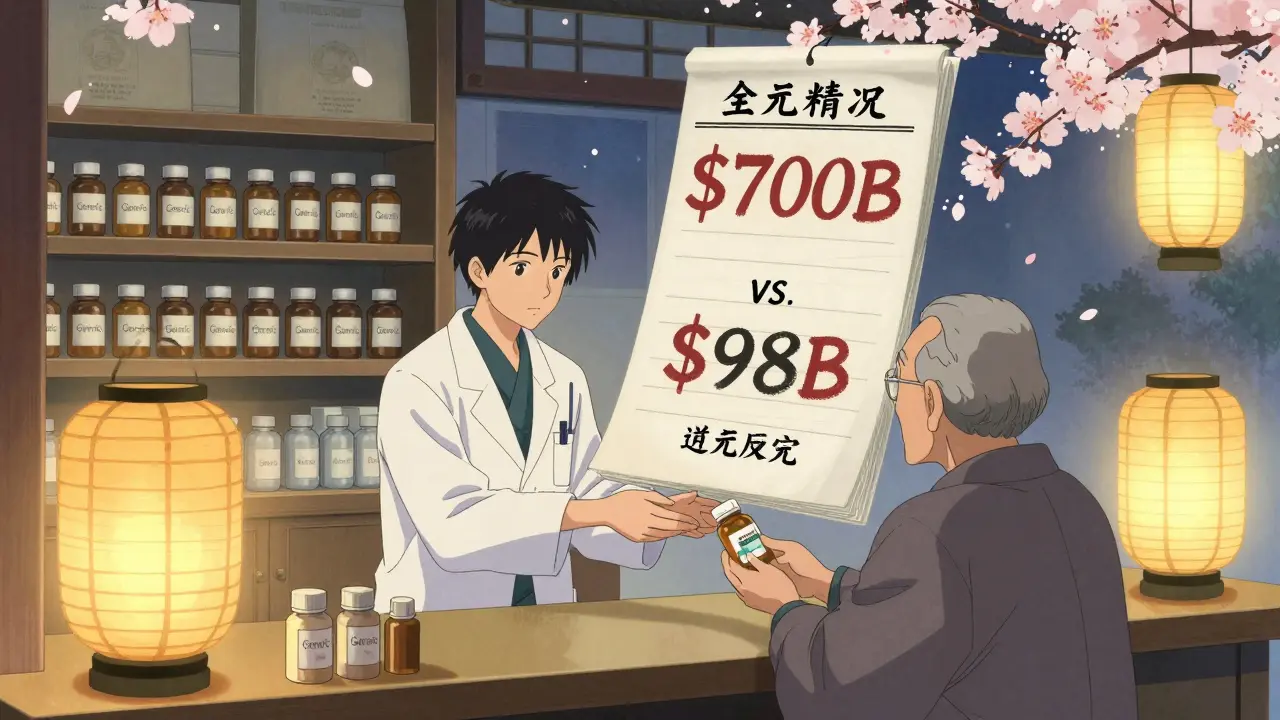
Every year, Americans spend over $650 billion on prescription drugs. That’s more than any other country in the world. But here’s the twist: 90% of all prescriptions filled are for generic drugs - yet they make up only 12% of total drug spending. Meanwhile, brand-name drugs, which make up just 10% of prescriptions, swallow up 88% of the money. This isn’t a glitch. It’s proof that generics are the single most effective tool we have to control skyrocketing healthcare costs.
What Exactly Are Generic Drugs?
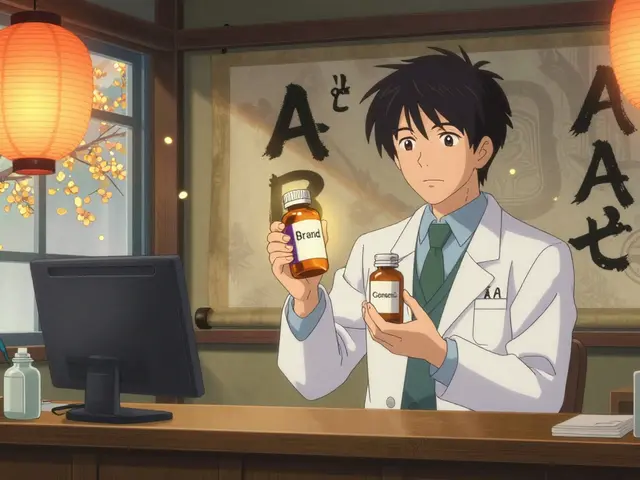
Generic drugs aren’t knockoffs. They’re exact copies of brand-name medications in every way that matters: same active ingredient, same dose, same way of being taken - whether it’s a pill, injection, or inhaler. The FDA requires them to meet the same strict standards for safety, strength, and quality. The only differences? The color, shape, or inactive ingredients like fillers or dyes. And the price - that’s where the real difference shows up.
After a brand-name drug’s patent expires, generic manufacturers can apply to the FDA through an Abbreviated New Drug Application (ANDA). This process skips expensive clinical trials because the drug’s safety and effectiveness have already been proven. Instead, they only need to show bioequivalence: that their version delivers the same amount of medicine into the bloodstream at the same rate as the original. The FDA requires this to be within 80-125% of the brand-name drug’s performance. In practice, most generics match within 95-105%.
Because they don’t spend millions on marketing or research, generics can be priced 80-85% lower. For example, the cholesterol drug atorvastatin (Lipitor) cost $200 a month when it was brand-name. Today, the generic version sells for under $10 at most pharmacies. That’s not a discount - it’s a revolution in affordability.
How Generics Save Billions - The Numbers Don’t Lie
In 2024, generics were used in 3.9 billion prescriptions across the U.S. That’s over 90% of all prescriptions filled. Yet they accounted for only $98 billion in spending. Brand-name drugs? Just 435 million prescriptions - but $700 billion in costs. The math is brutal: one out of every ten prescriptions costs nearly nine times more than the rest.
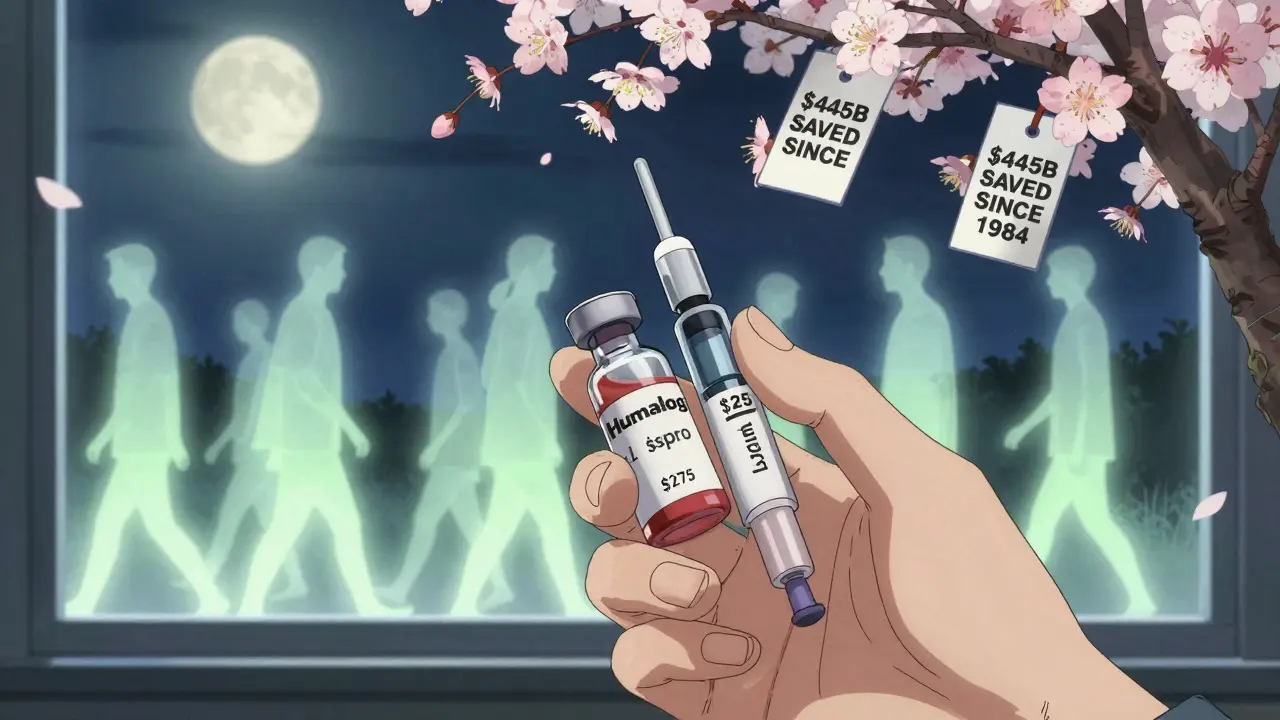
Since 1984, when the Hatch-Waxman Act created the modern generic approval system, these drugs have saved the U.S. healthcare system over $445 billion in just one year. By 2025, that number will exceed $500 billion. That’s not theoretical. That’s real money staying in people’s pockets, keeping insurance premiums lower, and reducing strain on public programs like Medicare.
Compare this to other cost-control methods. Medicare drug price negotiation, which just started in 2026, is expected to save $6 billion annually on 10 drugs. Sounds good? It is - but generics save that much every single week. The Congressional Budget Office found that generic competition cuts prices by 90% within a year of patent expiration. Medicare negotiation? It averages 42%. The gap is staggering.
The Biosimilar Gap - Where the System Is Failing
Biosimilars are the next frontier. These are generic-like versions of complex biologic drugs - things like insulin, rheumatoid arthritis treatments, and cancer therapies. Unlike small-molecule generics, biosimilars aren’t exact copies. They’re highly similar, with minor differences that don’t affect safety or effectiveness. But they’re still 15-35% cheaper than the brand-name versions.
Here’s the problem: 90% of biologics set to lose patent protection in the next decade have zero biosimilar competitors in development. In Europe, biosimilar adoption is 70-85%. In the U.S., it’s stuck at 25-30%. Why? Because pharmacy benefit managers (PBMs) often favor brand-name biologics. They get big rebates from manufacturers - even if the brand costs twice as much. So even when a cheaper biosimilar exists, it’s not automatically chosen.
Take insulin. In 2023, the Inflation Reduction Act capped Medicare insulin costs at $35 per month. That forced Eli Lilly to drop the list price of Humalog from $275 to $25. But that $25 price? It’s for the generic version. The brand still sells for over $100. Without generics, that $35 cap wouldn’t have worked. And without biosimilars for other biologics, we’re just delaying the next crisis.
Why Don’t More Doctors Prescribe Generics?
It’s not that doctors don’t know generics work. Most do. But the system makes it harder than it should be.
First, there’s “product hopping.” Brand-name companies make tiny changes - like switching from a pill to a liquid capsule - to reset patent clocks. This delays generic entry by 6-12 months. Second, “pay-for-delay” deals: brand companies pay generic manufacturers to hold off on launching their version. The FTC says these delays cost consumers $3.5 billion a year.
Then there’s pharmacy practices. Some insurance plans charge higher copays for generics than for brand-name drugs - yes, really. Why? Because the pharmacy benefit manager gets a bigger rebate from the brand. So even though the generic costs less, the patient pays more out of pocket. A 2024 report from Express Scripts found 45% of commercial plans do this.
And then there’s the confusion around narrow therapeutic index (NTI) drugs - like warfarin or levothyroxine. These drugs have a tiny window between effective and toxic. Some states require a doctor’s permission to switch. Even though the FDA says they’re bioequivalent, some patients and doctors still worry. A 2023 study showed 23% of users on PatientsLikeMe reported symptoms returning after switching to generic levothyroxine. The FDA later found most cases were due to inconsistent dosing, not the drug itself - but the perception stuck.
Real People, Real Savings
One Reddit user, PharmTech2020, shared how switching their mom from brand-name Humalog insulin ($350/month) to generic insulin lispro ($25/month) kept her from rationing doses. That’s not an outlier. GoodRx’s 2024 report found 68% of patients skipped doses or split pills when generics weren’t available. For Medicare beneficiaries, 42% skipped doses due to cost - but only 12% did so with generics.
On Drugs.com, 1.2 million patient reviews show generics have nearly identical efficacy ratings to brand-name drugs - 4.2 out of 5 for both. But affordability? Generics scored 4.5 out of 5. Brands? A dismal 2.3. That gap tells you everything.
Still, complaints exist. In 2023, the FDA logged 1,247 adverse event reports linked to generic substitutions - mostly from different inactive ingredients causing stomach upset or rashes. These are rare, but they matter. For people with allergies or sensitivities, even small changes in fillers can cause problems. That’s why pharmacists are required to notify prescribers before switching NTI drugs.
What’s Holding Generics Back?
Manufacturing is another bottleneck. Over 80% of active pharmaceutical ingredients (APIs) are made in India and China. During the pandemic, supply chain disruptions caused over 300 drug shortages - mostly generics. The FDA’s 2023 task force identified 127 drugs at risk of shortage due to manufacturing quality issues.
Complex generics - like inhalers or injectables - are harder and more expensive to make. The FDA says these can cost 30-40% more to develop than simple pills. That’s why fewer companies enter this space. And when they do, they often face lawsuits from brand-name manufacturers that drag on for years.
Then there’s the “authorized generic” trick. Brand companies launch their own generic version - same drug, same factory - under a different label. They undercut third-party generics by pricing just a little lower. Result? Price drops are only 25-30% instead of 80-85%. It’s legal. It’s smart business. But it kills competition.
What Needs to Change?
Generics are already the backbone of affordable care. But the system is rigged against them.
- Stop pay-for-delay deals. The FTC has called for legislation to ban these agreements.
- Require PBMs to pass savings to patients. If a generic costs less, the copay should be lower - not higher.
- Fast-track biosimilars. The FDA’s 2024 plan aims to cut review times by 50%. That’s a start.
- Clarify NTI substitution rules. State laws need to align with FDA science, not fear.
- Invest in domestic API production. Reducing reliance on overseas manufacturing would prevent shortages.
Right now, the system rewards complexity and delay. It should reward speed and savings. Generics prove that affordable doesn’t mean inferior. The science is solid. The savings are real. The question isn’t whether generics work - it’s why we’re still making it so hard for them to do their job.
What You Can Do
If you’re on a prescription, ask your pharmacist: “Is there a generic version?” If your insurance won’t cover it, ask your doctor to write a letter of medical necessity. Many generics are covered at the lowest tier - sometimes even $0 copay.
Use tools like GoodRx or the FDA’s Orange Book to compare prices and therapeutic equivalence codes. If your drug has an “A” rating, it’s safe to substitute. If it’s “B,” check with your doctor.
And if you’re a patient advocate, push for state laws that ban generic differentials and require automatic substitution unless the prescriber objects. Change doesn’t happen in Congress - it starts at the pharmacy counter.
Jacob den Hollander
February 7, 2026 AT 03:18Wow, this post really hit home for me. I’ve been on generic levothyroxine for years, and yeah, I had that weird stomach thing at first-like, minor bloating, nothing crazy. But after a few weeks? Totally fine. My endo said the FDA’s got it locked in. Still, I get why people panic. I mean, your body’s like, ‘Wait, why’s this pill look different?!’ It’s not just about chemistry, it’s about trust.
My mom used to split her brand-name pills just to make them last. Like, half a pill every other day. Scary stuff. When we switched to generic? She stopped rationing. No drama. Just… relief. I wish more people knew how easy it is to ask for the cheaper version. Pharmacies don’t always tell you. You gotta push.
Andrew Jackson
February 7, 2026 AT 18:03It is an undeniable fact that the American healthcare system has been systematically undermined by corporate interests masquerading as innovation. The so-called ‘generic drug revolution’ is not a triumph of science-it is a consequence of legislative failure. The Hatch-Waxman Act was not a victory for patients; it was a surrender to profit-driven pharmaceutical conglomerates who recognized that regulatory loopholes could be weaponized to extract wealth under the guise of accessibility.
One must ask: why is it acceptable that the United States, the most technologically advanced nation on Earth, relies upon foreign manufacturing for 80% of its active pharmaceutical ingredients? This is not a market failure-it is a national security vulnerability. To call generics ‘affordable’ is to ignore the structural fragility of their supply chain. We do not outsource our defense industry. Why do we outsource our medicine?
The truth is, the system is not broken-it was designed this way. To keep the populace docile, dependent, and distracted by cost-saving illusions while the real power remains concentrated in the hands of those who profit from scarcity.
PAUL MCQUEEN
February 7, 2026 AT 21:30So generics save 80-85%? Cool. But let’s be real-how many people actually know what ‘bioequivalent’ means? I’ve seen ads for ‘brand-new improved’ versions of drugs that are literally the same pill with a different color. It’s all theater. And don’t even get me started on the ‘authorized generics’-that’s just the big guys playing chess while the rest of us think we’re winning at checkers.
Also, why are we still using paper prescriptions? Everything else is digital. Why can’t my pharmacy just auto-substitute unless the doc says no? It’s 2025. We’re still doing this manually? Come on.
Chima Ifeanyi
February 8, 2026 AT 18:29Let’s deconstruct the neoliberal mythos surrounding generics. The 80-85% savings narrative is a performative metric engineered to obscure the asymmetry of power between PBMs, manufacturers, and patients. The real cost is not in the pill-it is in the structural extraction via rebate systems that incentivize overpricing. The FDA’s bioequivalence thresholds are statistically permissible, yet clinically insufficient for NTI drugs. This is not innovation; it is regulatory capture masquerading as efficiency.
Moreover, the global supply chain dependency on India and China is a strategic vulnerability. The pandemic exposed this. Yet, no meaningful investment has been made in domestic API infrastructure. The U.S. government subsidizes defense contractors but balks at funding pharmaceutical sovereignty. This is not an accident. It is policy.
And let’s not forget: biosimilars are being actively suppressed by patent thickets and contract manipulation. The 25% adoption rate in the U.S. versus 85% in Europe is not a market preference-it is a market distortion.
Frank Baumann
February 8, 2026 AT 20:27I just want to say-I cried when I found out my dad’s $400-a-month heart med was now $12 as a generic. Not because it was cheap. Because for the first time in ten years, he wasn’t choosing between groceries and his pills. I’ve been in that room. The one where the pharmacist says, ‘It’s not covered unless you pay $120.’ And you just nod because you’ve already sold your car. This isn’t about economics. It’s about dignity.
And yeah, I know some people get rashes. I had a cousin who broke out in hives after switching. But here’s the thing-she called her pharmacist. They switched back. No big deal. The system works if you know how to fight it. Don’t let fear silence you. Ask. Push. Demand. Your life is worth more than a rebate.
Also, why do pharmacies still charge more for generics? That’s not a mistake. That’s a scam. And if your insurance does that? Switch. Just switch. There are 17 other plans out there. Don’t let them treat you like a number.
Alex Ogle
February 9, 2026 AT 06:55It’s wild how much of this is invisible until you need it. I used to think generics were just ‘cheap versions.’ Turns out they’re the exact same thing, just without the fancy packaging and the TV ads. I mean, if you think about it, the brand-name companies aren’t selling medicine-they’re selling trust. And that trust costs millions. Which is why, when the patent runs out, the price collapses. Not because the drug changed. Because the marketing stopped.
I’ve used generic statins, antibiotics, even insulin. Never had an issue. My doctor says they’re identical. My pharmacist says the same. So why do we still treat them like second-class drugs? It’s not science. It’s perception. And perception is what the industry controls.
Also, I didn’t even know about the ‘authorized generic’ trick until I read this. That’s… kind of insane. Like, the company that made the original drug just slaps a new label on it and undercuts everyone else? That’s not competition. That’s a monopoly with a disguise.
Brandon Osborne
February 10, 2026 AT 03:38THIS IS WHY AMERICA IS BROKE. EVERY SINGLE TIME WE LET CORPORATIONS PLAY GAMES WITH OUR HEALTH. PAY-FOR-DELAY? AUTHORIZED GENERICS? PBMs CHOOSING BRANDS OVER CHEAPER DRUGS? THIS ISN’T A SYSTEM-IT’S A SCAM. AND YOU KNOW WHAT? I’M TIRED OF BEING TOLD TO ‘ASK MY PHARMACIST.’
MY PHARMACIST ISN’T A LAWYER. MY PHARMACIST ISN’T A POLITICIAN. MY PHARMACIST JUST WANTS TO GIVE ME A PILL AND GET ME OUT THE DOOR.
WE NEED LAWS. NOT ADVICE. WE NEED TO BAN PAY-FOR-DELAY. WE NEED TO FORCE PBMS TO PASS SAVINGS TO PATIENTS. WE NEED TO CRACK DOWN ON THE ‘AUTHORIZED GENERIC’ TRICK. AND WE NEED TO MAKE DOMESTIC MANUFACTURING A NATIONAL PRIORITY.
STOP ASKING PEOPLE TO ‘DO MORE.’ START MAKING THE SYSTEM WORK.
Lyle Whyatt
February 10, 2026 AT 14:28I came from Australia, and I gotta say-we do generics better here. Automatic substitution? Standard. No copay differential? Yep. Pharmacists can switch without asking the doctor unless it’s something like warfarin? Totally fine. We don’t have this whole ‘is it safe?’ drama.
Also, our PBS (Pharmaceutical Benefits Scheme) negotiates bulk prices directly. No middlemen. No rebates. Just straight-up price caps. The result? A generic statin here costs AUD $5. In the U.S.? $10-$15. And that’s with insurance.
It’s not magic. It’s policy. We chose to treat medicine as a public good. Not a profit center. Maybe we need to start thinking that way here too.
Tatiana Barbosa
February 12, 2026 AT 02:13Generics saved my life. Seriously. I was on $500/month for my autoimmune med. Switched to generic? $35. No change in how I felt. No side effects. Just… freedom. I used to cry in the pharmacy aisle because I couldn’t afford it. Now? I can pay rent. I can eat. I can breathe.
Don’t let anyone tell you generics aren’t real. They’re not ‘inferior.’ They’re not ‘second-rate.’ They’re the same damn thing. Just without the branding. And honestly? I’d rather have a $35 pill that works than a $500 pill that makes me feel like I’m being robbed.
Also, if your insurance charges more for generics? Switch insurers. Seriously. There are 500 plans out there. Don’t be loyal to a system that screws you.
MANI V
February 12, 2026 AT 18:42Let me be clear: the generic drug system is a façade. The FDA’s bioequivalence standards are laughably lax. 80-125%? That’s a 45% window. That’s not precision-that’s a gamble. And yet we treat it like gospel. Meanwhile, patients are left wondering why their anxiety meds suddenly don’t work. Or why their blood pressure spikes after a switch.
And let’s not pretend the ‘authorized generic’ isn’t a corporate trick. It’s not competition-it’s collusion. The same company that made the brand now sells the generic under a different label. Same factory. Same chemistry. Same price gouging. Just a different name on the box.
This isn’t healthcare reform. It’s a shell game. And we’re all the suckers.
Susan Kwan
February 14, 2026 AT 14:19So you’re telling me the system is rigged… but the solution is to ‘ask your pharmacist’? Cute. That’s like saying ‘if you’re being robbed, just ask the thief politely to stop.’
Generics aren’t the problem. The people who profit from keeping them expensive are. And until we stop treating patients like we’re doing them a favor by letting them buy cheaper medicine, nothing will change.
Random Guy
February 15, 2026 AT 17:45bro like i just found out my generic adderall is 20 bucks and the brand is 300?? like why am i still alive??
Ryan Vargas
February 16, 2026 AT 11:12The entire narrative around generics is a constructed illusion designed to pacify the public while the true mechanisms of pharmaceutical control remain untouched. The 80-85% savings statistic is a mathematical sleight-of-hand: it compares the total spending on generics to brand-name drugs, but ignores the fact that brand-name manufacturers have artificially extended monopolies through evergreening, patent thickets, and regulatory manipulation. The Hatch-Waxman Act was not a victory-it was a concession.
Furthermore, the FDA’s bioequivalence standards are not grounded in clinical outcomes but in statistical tolerances that permit pharmacokinetic divergence of up to 45%. This is not science. It is a compromise engineered by industry lobbyists. The fact that 23% of patients report symptom recurrence after switching to generic levothyroxine is not anecdotal-it is predictive of systemic failure.
And the ‘authorized generic’? That is not competition. That is monopolistic camouflage. The same corporate entity that owns the brand manufactures the generic, then undercuts independent producers by pricing just below their cost of production-effectively bankrupting them. This is not market efficiency. This is predatory consolidation.
Until we dismantle the PBM-rebate system, ban pay-for-delay, and nationalize API production, the ‘savings’ are a mirage. The real cost is not in dollars-it is in lives deferred, in insulin rationing, in patients who die because their medicine was too expensive to be allowed to work.
Jacob den Hollander
February 17, 2026 AT 05:08Wait, so you’re saying PBMs are the real villains? I never thought about it that way. I just thought pharmacies were being cheap. But if they’re getting kickbacks from the brand-name companies… that’s wild. So even when the generic is cheaper, the pharmacy gets paid more to give you the expensive one? That’s not just broken. That’s evil.
And the authorized generic thing? That’s like if McDonald’s made a ‘cheaper’ burger… but it’s made in the same kitchen with the same ingredients, just sold under a different name. And then they undercut the real competitors until they go out of business. That’s not free market. That’s corporate sabotage.