
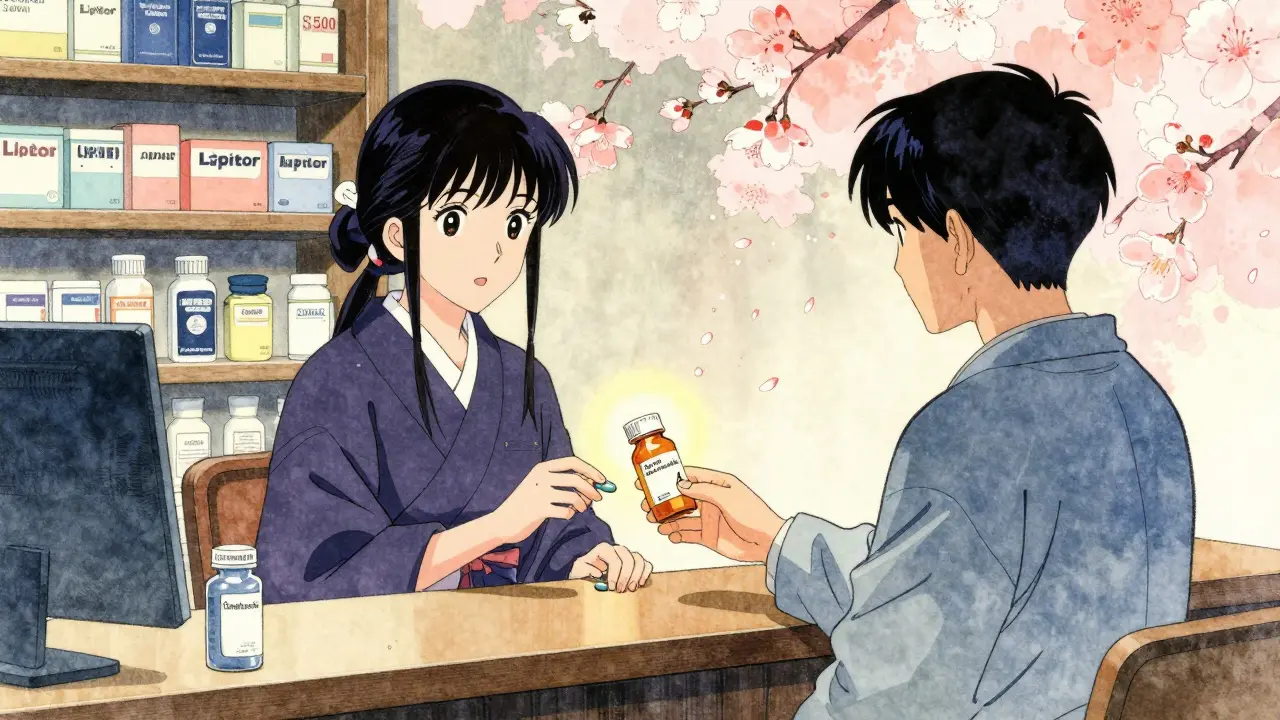
Have you ever looked at your prescription receipt and wondered why the generic version cost you $4 while the brand-name version was $500? It’s not a trick. It’s not a scam. It’s simple economics, regulation, and science working together to save you money-without sacrificing effectiveness.
Generic drugs aren’t cheaper because they’re inferior. They’re cheaper because they don’t have to repeat the same expensive steps that brand-name drugs do. And that’s the whole story.
Same Medicine, Different Price Tag
A generic drug contains the exact same active ingredient as its brand-name counterpart. If you take generic atorvastatin, you’re getting the same molecule as Lipitor. Generic omeprazole is chemically identical to Prilosec. The FDA requires this. No exceptions. No loopholes. The generic must deliver the same amount of medicine into your bloodstream at the same speed as the brand. That’s called bioequivalence. And it’s not a guess-it’s proven through rigorous testing.
So why the price difference? It comes down to one thing: who paid for the research.
The $2.6 Billion Price of Being First
When a pharmaceutical company creates a new drug, they’re not just mixing chemicals in a lab. They’re spending over a decade and $2.6 billion on average to get it approved. That’s not an estimate-it’s from the Tufts Center for the Study of Drug Development. This money goes into years of lab work, animal testing, and multiple phases of human clinical trials. Each phase gets more expensive. Phase III trials alone can involve thousands of patients over several years.
On top of that, companies spend millions on marketing. Think commercials, doctor visits, patient brochures, and promotional events. All of this has to be paid back before the drug even hits shelves. And they only have a limited window to do it.
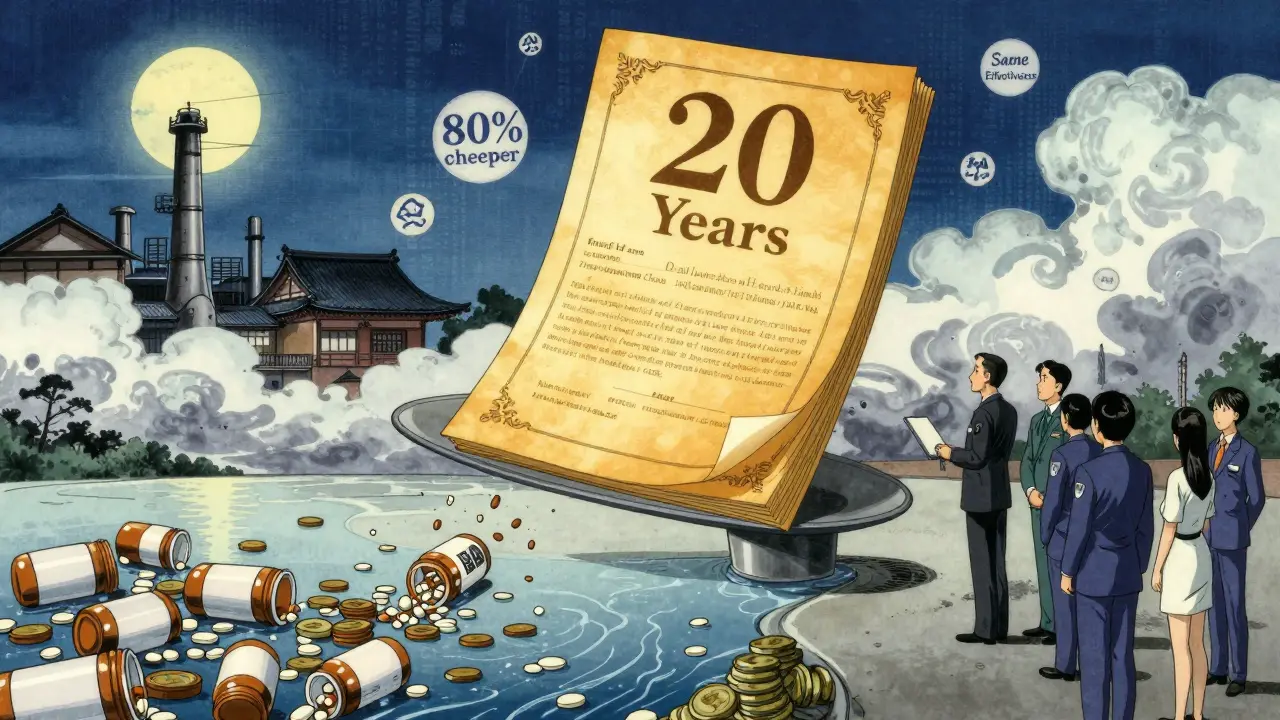
Patents give brand-name drug makers exclusive rights to sell their product for 20 years from the date of filing. That sounds long, but most of that time is eaten up by the approval process. In reality, companies often get only 7-12 years of market exclusivity before generics can enter.
How Generics Skip the Cost
Generic manufacturers don’t need to start from scratch. They don’t have to prove the drug works. They don’t have to prove it’s safe. The FDA already did that-for the brand-name version.
Instead, generic companies submit what’s called an Abbreviated New Drug Application (ANDA). The word “abbreviated” is key. All they need to show is that their version matches the brand in strength, dosage, and how the body absorbs it. That’s it. No repeating clinical trials. No testing on thousands of patients. That cuts development costs from billions to just $1-5 million per drug.
And here’s the kicker: the FDA still inspects their factories just as strictly. Generic manufacturers must follow the same Current Good Manufacturing Practices (CGMP) as brand-name makers. The same quality controls. The same inspections. In 2022, the FDA did over 12,000 inspections worldwide-half of them at generic drug plants.
Competition Drives Prices Down
Once a patent expires, it’s open season. Multiple companies can start making the same drug. And they all want your business.
It’s basic supply and demand. When one company makes a generic, they might charge $50. But if five others jump in, they have to drop their price to compete. Before long, you’re looking at $4, $2, even $1 per pill.
The Congressional Budget Office found that within a year of a generic entering the market, prices drop by 80-90%. And they keep falling as more manufacturers join. Some drugs have over a dozen generic makers. That’s why you can buy generic ibuprofen for pennies at any pharmacy.
By 2022, generics made up 90.5% of all prescriptions filled in the U.S. But they only accounted for 18% of total drug spending. Meanwhile, brand-name drugs-only 9.5% of prescriptions-made up 82% of the cost. That’s not a typo. It’s the math of competition.
What’s Different? (Spoiler: Not What You Think)
You might notice that your generic pill looks different. Maybe it’s a different color, shape, or has a different imprint. That’s because trademark laws require generics to look different from the brand. But the active ingredient? Identical.
Some inactive ingredients-like fillers, dyes, or flavorings-can vary. These don’t affect how the drug works. But they can affect how you feel. For example, someone allergic to a dye in one brand might react to it, but not to the generic version. Or vice versa. That’s rare, but it happens.
For drugs with a narrow therapeutic index-like warfarin or levothyroxine-doctors sometimes prefer to keep patients on the same version. Why? Because tiny changes in blood levels can matter. But that’s not because generics are less effective. It’s because switching between different generic manufacturers (yes, there can be multiple) might cause slight variations in absorption. Even then, the FDA says all approved generics meet the same standard.
Real Numbers, Real Savings
Let’s get concrete:
- Generic Lipitor (atorvastatin): $4/month vs. Brand: $500/month
- Generic Prilosec (omeprazole): $6/month vs. Brand: $300/month
- Generic Synthroid (levothyroxine): $12/month vs. Brand: $150/month
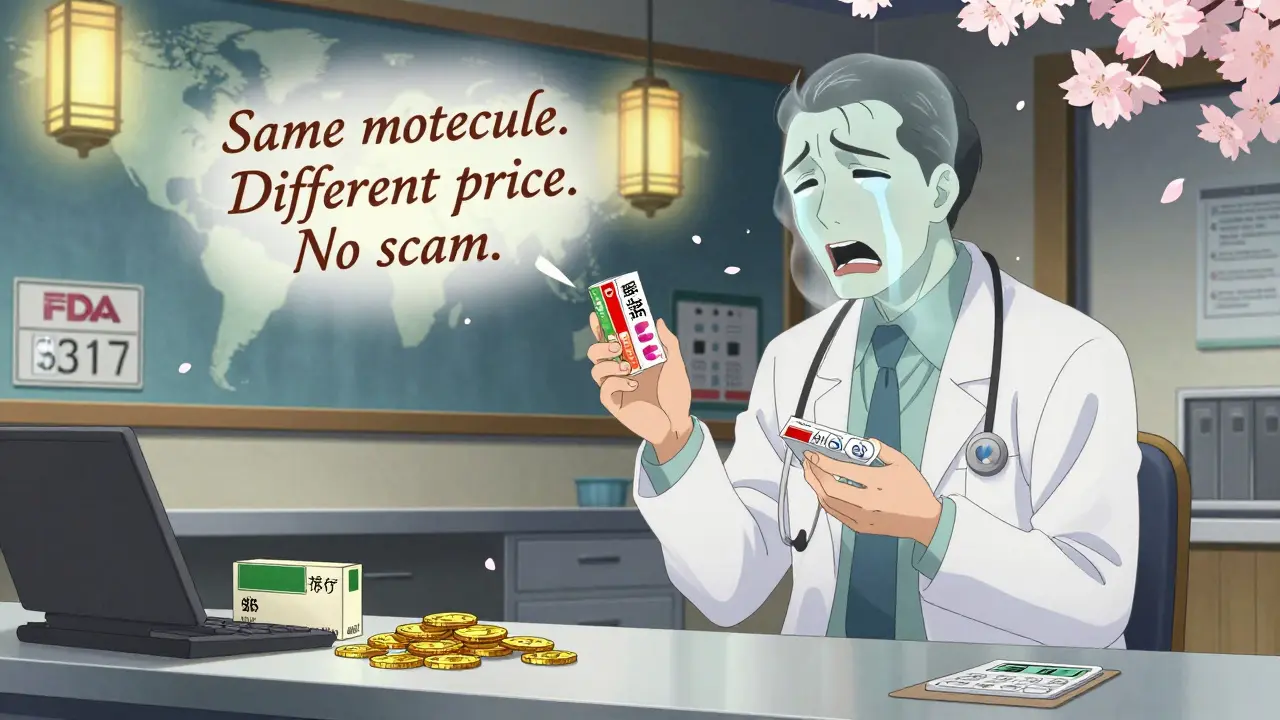
That’s not speculation. That’s from real prescription data. Tebra’s 2023 survey of 1,000 Americans found generics cost 79% less on average. And for those who switched, monthly savings averaged $317 per medication.
From 2007 to 2016, generics saved the U.S. healthcare system $1.67 trillion. In 2022 alone, they saved $293 billion. That’s money that didn’t go to drug companies. It went to patients, insurers, and Medicare.
Why Do People Still Doubt Generics?
Despite the evidence, 62% of Americans still trust brand-name drugs more. Why? Because of appearance. Because of myths. Because someone once told them, “The generic might not work as well.”
But the data doesn’t lie. A 2021 study in the Journal of the American Pharmacists Association found that 84% of patients who switched to generics saw no difference in effectiveness. And 63% of Americans now choose generics over brand-name drugs-mostly because they’re cheaper.
Even Reddit users report success stories. One person wrote: “I switched from brand-name Synthroid to generic levothyroxine. My TSH levels stayed the same. I saved $400 a month.”
There are rare cases where someone feels different after switching. But that’s usually not because the drug is weaker. It’s because the body adjusts to a new pill shape, or because the inactive ingredients changed. Talk to your pharmacist. They can help you figure out if it’s the drug-or something else.
What You Should Do
If you’re on a brand-name drug and paying a lot:
- Ask your doctor if a generic is available.
- Check your insurance formulary. Generics are usually Tier 1-lowest copay.
- Use apps like GoodRx. They often show prices lower than your insurance copay.
- Don’t assume the brand is better. The science says otherwise.
- If you notice side effects after switching, tell your doctor. But don’t assume it’s the generic’s fault.
Pharmacists are trained to help with this. In 49 states, they can automatically substitute a generic unless your doctor says otherwise. And they’re required to explain the change to you. Take five minutes to ask questions. It’s worth it.
By 2028, over 150 brand-name drugs will lose patent protection. That means thousands more generics will hit the market. Prices will drop even further. And more people will save thousands per year.
The system isn’t perfect. Supply chains are fragile. Some active ingredients come from just two countries. But the core truth remains: generics are safe. They’re effective. And they’re drastically cheaper-not because they’re cut corners, but because they don’t need to pay for someone else’s research.
Are generic drugs as effective as brand-name drugs?
Yes. The FDA requires generic drugs to have the same active ingredient, strength, dosage form, and route of administration as the brand-name version. They must also prove bioequivalence-meaning they deliver the same amount of medicine into your bloodstream at the same rate. Studies show generics work just as well for the vast majority of patients.
Why do generic drugs look different?
Trademark laws require generics to look different from brand-name drugs. That means different colors, shapes, or markings. But the active ingredient is identical. The difference is only cosmetic. Some people notice the change and think it’s a different drug-but it’s not.
Can I trust generic drugs made overseas?
Yes. The FDA inspects manufacturing facilities worldwide-including those in China and India-where most active ingredients are produced. All facilities, whether making brand or generic drugs, must meet the same strict quality standards. In 2022, the FDA conducted over 12,000 inspections globally. No country is exempt from these rules.
Why are some generic drugs still expensive?
Some generics stay pricey because few companies make them. If only one or two manufacturers produce a drug, competition is low-and prices stay high. This often happens with older drugs, complex formulations, or those with low profit margins. The FDA is working to speed up approvals for these harder-to-make generics to increase competition.
Do insurance plans prefer generics?
Yes. Most insurance plans have three tiers: Tier 1 is generics (lowest copay, often $0-$15), Tier 2 is brand-name drugs ($25-$50), and Tier 3 is specialty drugs (25-33% coinsurance). Your plan will usually require you to try the generic first. If you ask for the brand, your doctor may need to approve it.
Is it safe to switch from a brand-name drug to a generic?
For most medications, yes. The FDA and major medical groups like the American Medical Association confirm that generic substitution is safe and appropriate for the vast majority of drugs. For a small number of drugs with narrow therapeutic indexes-like warfarin or thyroid meds-doctors may recommend staying on the same version to avoid small variations in absorption. But even then, switching between approved generics is still considered safe.
How do I know if my generic drug is approved?
All approved generics are listed in the FDA’s Orange Book, which shows which drugs are therapeutically equivalent to brand-name versions. You can ask your pharmacist for this information. If the drug is sold in the U.S., it has been reviewed and approved by the FDA. Look for the FDA logo on the packaging or ask your pharmacist to confirm.


Robin bremer
February 21, 2026 AT 23:28Ellen Spiers
February 23, 2026 AT 19:47John Cena
February 25, 2026 AT 19:37Irish Council
February 27, 2026 AT 16:16Freddy King
February 28, 2026 AT 20:00Laura B
February 28, 2026 AT 20:47Caleb Sciannella
March 2, 2026 AT 08:03Oana Iordachescu
March 2, 2026 AT 23:00Michaela Jorstad
March 4, 2026 AT 02:18Chris Beeley
March 4, 2026 AT 09:44Arshdeep Singh
March 6, 2026 AT 01:59Liam Crean
March 6, 2026 AT 04:07