
If you've ever felt unusual muscle aches after starting a cholesterol medication, you've likely come across the idea that taking a supplement might help. It's a common conversation in doctor's offices and on health forums: can Vitamin D is a fat-soluble prohormone that regulates calcium absorption and bone health fix the side effects caused by Statins is a class of lipid-lowering medications that inhibit the enzyme HMG-CoA reductase to reduce cholesterol production ? For millions of people balancing heart health and bone density, the answer isn't as simple as a "yes" or "no." While the theory seems sound, the actual clinical data tells a more complicated story.
The Big Question: Can Vitamin D Stop Muscle Pain?
The most frequent reason people look into this combination is to combat Statin-Associated Muscle Symptoms (often called SAMS), which range from mild soreness to severe muscle weakness. The logic is straightforward: Vitamin D is essential for muscle function, and statins can sometimes interfere with how the body processes nutrients. Therefore, filling a deficiency should, in theory, stop the pain.
However, high-quality evidence suggests this isn't the case. A major study known as the VITAL trial looked at over 2,000 people starting statin therapy. The researchers found that the group taking Vitamin D had the exact same rate of muscle symptoms (31%) as the group taking a placebo. Even more telling, people who were severely deficient (levels below 20 ng/mL) didn't see a significant difference in pain when they supplemented. This means that while Vitamin D is great for your bones, it isn't a magic eraser for statin side effects.
How Statins Might Actually Change Your Vitamin D Levels
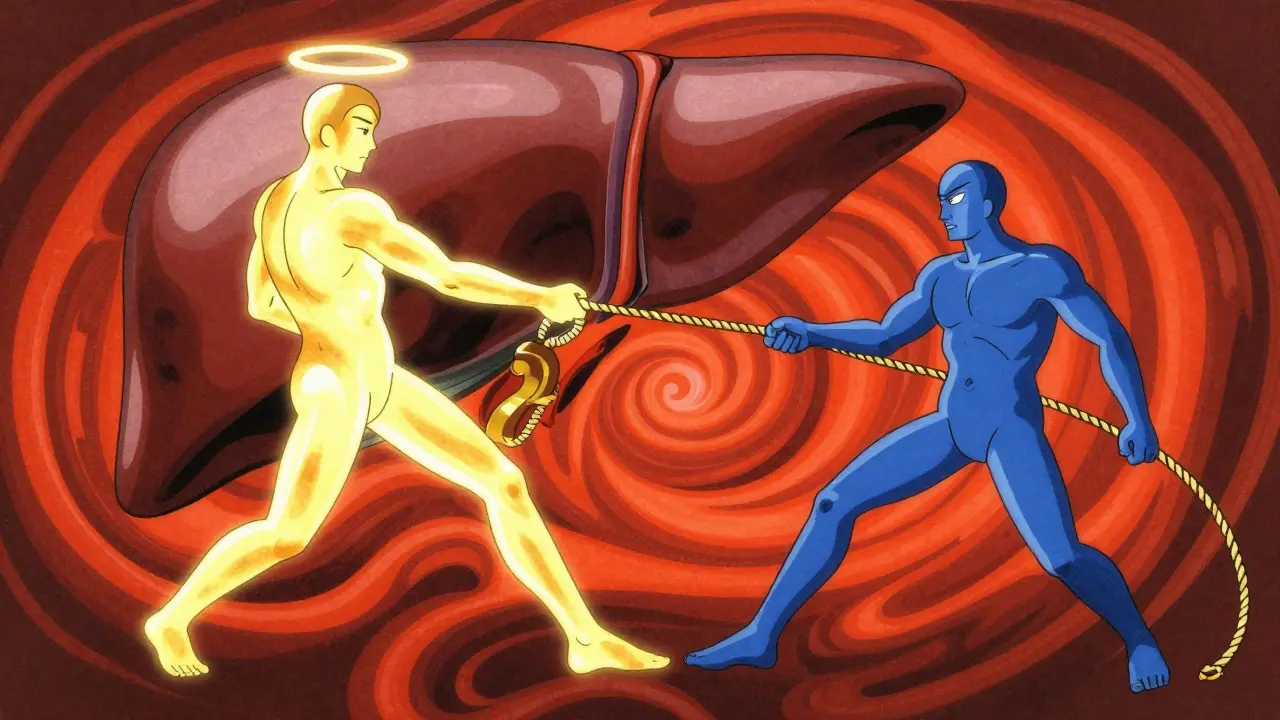
It's a bit of a scientific tug-of-war. On one hand, statins block the production of cholesterol. Since Vitamin D is actually derived from cholesterol, some scientists argue that blocking that pathway could lower your Vitamin D synthesis. On the other hand, some evidence shows the opposite happening.
Research has shown that some statins might actually increase Vitamin D absorption. For example, a study noted that patients using Rosuvastatin experienced a jump in their Vitamin D levels from about 11.8 ng/ml to 35.2 ng/ml after just eight weeks. This suggests that certain medications might stimulate cholesterol transporters that accidentally help the body soak up more Vitamin D. Because different drugs behave differently, your experience depends heavily on which specific statin you are taking.
| Statin Type | Metabolism Pathway | Observed Effect on Vitamin D |
|---|---|---|
| Atorvastatin | CYP3A4 Enzyme | Potential increase in circulating levels |
| Rosuvastatin | Minimal CYP3A4 | Significant increase in absorption noted |
| Simvastatin | CYP3A4 Enzyme | Potential for pharmacokinetic interaction |
| Pravastatin | Non-CYP3A4 | Minimal interaction reported |
The Role of the CYP3A4 Enzyme
To understand why some statins interact and others don't, we have to look at the Cytochrome P450 3A4 (or CYP3A4), which is an enzyme in the liver responsible for breaking down a huge variety of drugs and nutrients. Both certain statins (like Atorvastatin and Simvastatin) and Vitamin D metabolism rely on this same "processing plant."
When two substances compete for the same enzyme, things get messy. Some research indicates that high doses of Vitamin D might actually lower the concentration of the statin in your blood, potentially making the medication slightly less effective. While this isn't usually a cause for panic, it's a reason why your doctor might want to monitor your cholesterol levels more closely if you're taking high-dose supplements.

Why Do So Many People Claim it Works?
If the clinical trials say it doesn't work, why do you see thousands of people on Reddit or health forums claiming that Vitamin D cured their muscle pain? There are a few psychological and biological reasons for this gap.
First, the placebo effect is incredibly strong in pain management. Second, many people who start Vitamin D also make other lifestyle changes-like increasing water intake or improving their diet-which can alleviate muscle stiffness. Third, some individuals may have a specific genetic variation in their CYP2R1 enzyme (the one that converts Vitamin D into its active form), meaning they might actually benefit from supplementation where the general population doesn't.
Practical Tips for Managing Both
You don't have to choose between heart health and bone health. The goal is to maintain a balanced approach without wasting money on unnecessary supplements. If you are taking statin-associated muscle symptoms medications and want to optimize your health, consider these steps:
- Get a blood test: Don't guess your Vitamin D levels. Ask for a 25-hydroxy vitamin D test to see if you are actually deficient.
- Aim for the "Sweet Spot": The European Atherosclerosis Society suggests keeping levels above 20 ng/mL for general health, even if it doesn't stop the muscle pain.
- Review your statin type: If you're experiencing severe interactions, talk to your doctor about whether a non-CYP3A4 metabolized statin (like Pravastatin) would be a better fit.
- Don't stop your meds: Never stop taking a statin because of muscle pain without a doctor's guidance; the risk of a cardiovascular event often outweighs the discomfort of myalgia.
Will taking Vitamin D make my statin less effective?
There is some evidence that very high doses of Vitamin D may slightly lower the concentration of statins that are processed by the CYP3A4 enzyme (like Atorvastatin). However, for most people taking standard doses, this effect is clinically insignificant and won't noticeably change your cholesterol results.
Which statins are most likely to interact with Vitamin D?
The statins most likely to interact are those metabolized by the CYP3A4 enzyme, specifically Atorvastatin, Simvastatin, and Lovastatin. Statins like Rosuvastatin and Pravastatin have a different metabolic path and are less likely to compete for the same enzyme.
Can I take Vitamin D if I'm already on a statin?
Yes, it is generally safe. While it may not prevent the muscle aches associated with statins, maintaining adequate Vitamin D levels is important for overall bone and immune health. Just ensure your dosage is based on your actual blood levels rather than a generic recommendation.
Does Vitamin D deficiency make statin side effects worse?
Some experts believe that deficiency can exacerbate muscle pain, but the latest large-scale randomized trials (like VITAL) have not found a significant link. Most evidence suggests that the muscle pain is caused by the drug's effect on the muscle cells themselves, not a lack of Vitamin D.
How much Vitamin D should I take while on statins?
There is no special "statin dose" for Vitamin D. You should follow the standard guidelines for your age and health status. The best approach is to test your levels and supplement only enough to reach a healthy range (typically above 20-30 ng/mL).