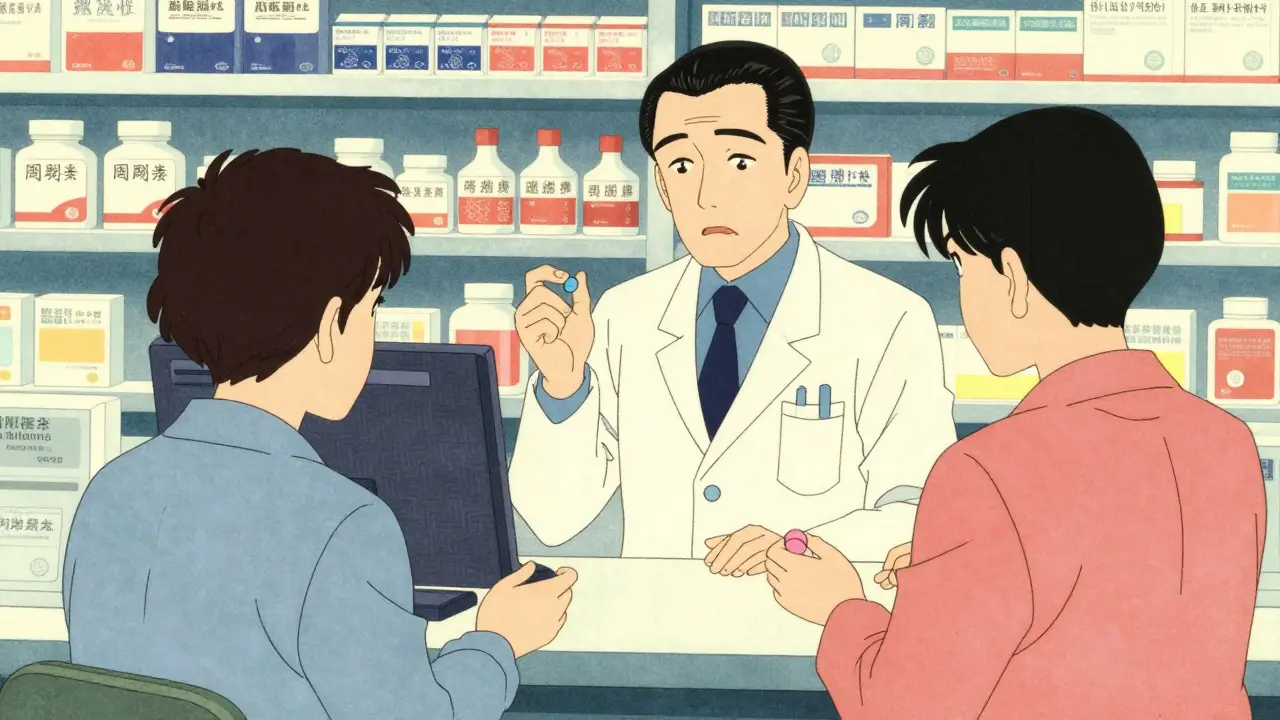
Imagine standing behind a pharmacy counter during the morning rush. You've just swapped a brand-name medication for a therapeutically equivalent generic to save a patient money, but the patient looks at the pill and panics because it's blue instead of pink. Suddenly, a simple cost-saving measure turns into a ten-minute debate about whether the drug actually works. This is the daily reality for thousands of healthcare providers.
While generic substitution is a standard practice designed to lower healthcare costs, it isn't always a smooth process. For pharmacists, the challenge isn't usually the science-it's the psychology of the patient and the gaps in communication from prescribing doctors. When a pharmacist switches a brand-name drug for a generic, they aren't just changing a product; they're managing a patient's trust in their treatment.
The Friction of Implementation
On paper, generic substitution is a win-win. It reduces patient spending by roughly 21% while maintaining clinical efficacy. However, the actual workflow is often messy. Even though most pharmacists agree that the right to substitute is beneficial, a surprising number find it difficult to implement in a busy retail environment.
A major hurdle is the "educational gap." Many patients arrive at the pharmacy having never discussed generics with their doctor. When the pharmacist introduces the switch at the point of sale, it can feel like a surprise or, worse, a downgrade. In some cases, up to half of all patients will refuse the switch until they can call their physician for confirmation, which creates a bottleneck in the pharmacy's workflow and delays patient care.
The burden of education falls heavily on the pharmacist. They must quickly explain that a generic drug is not a "cheap knock-off" but a version that has passed rigorous testing. In the U.S., this is governed by the Abbreviated New Drug Application (ANDA) process, which ensures the generic version is bioequivalent to the brand name.
Patient Psychology and the "Cheap" Stigma
Why do patients resist generics? It usually boils down to a few specific fears. Some patients equate lower cost with lower quality, believing that if it's cheaper, it must be less effective. Others are thrown off by physical changes. When the shape, size, or color of a pill changes, it can trigger a placebo-like negative response or simply lead to confusion, especially for elderly patients.
This is particularly challenging for patients managing chronic diseases. While about 82% of people are fine with a generic for a short-term infection, only about 72% feel comfortable with it for a lifelong condition. There's a deep-seated mistrust in some cases, often fueled by a lack of knowledge or a general suspicion of the pharmaceutical industry.
For patients with dementia or those taking a long list of medications (polypharmacy), these changes can be dangerous. If a patient doesn't recognize their pill, they might skip a dose or take the wrong medication entirely, leading to suboptimal drug use and increased health risks.

Clinical Risks and Narrow Therapeutic Index Drugs
Most of the time, the difference between a brand and a generic is negligible. The FDA has analyzed thousands of studies showing an average difference of only 3.5% in how the body absorbs the drug. For a standard antibiotic or blood pressure medication, this is irrelevant. But for some drugs, a 3.5% difference is a big deal.
Pharmacists are particularly cautious with Narrow Therapeutic Index (NTI) medications. These are drugs where a small change in concentration can lead to either a toxic effect or a complete failure of the treatment. Anti-epileptic drugs (AEDs) are a prime example. Switching a stable patient with epilepsy from one manufacturer's generic to another, or from a brand to a generic, can potentially trigger a breakthrough seizure.
| Factor | Standard Generics | NTI / Biologics | Pharmacist Action |
|---|---|---|---|
| Risk Level | Low | High | Exercise extreme caution |
| Bioequivalence | 80-125% range | Strictly monitored | Check manufacturer consistency |
| Patient Reaction | Mild confusion | Potential clinical failure | Detailed counseling required |
| Cost Impact | Significant saving | Variable | Balance cost vs. stability |
The Complex World of Biosimilars
It's important to distinguish between traditional generics and Biosimilars. Traditional generics are made of simple chemical molecules. Biosimilars, however, are derived from living organisms and are far more complex. Because they are not identical copies, they require different clinical studies to prove they work the same way.
This adds another layer of stress for the pharmacist. While the law might allow for substitution, the structural variations in biologics mean that pharmacovigilance-monitoring the patient after the switch-is critical. A pharmacist cannot treat a biosimilar switch with the same "plug-and-play" mentality as a generic aspirin switch.

Strategies for Better Substitution Outcomes
How do pharmacists overcome these hurdles? The most successful practitioners move from being "pill dispensers" to "patient educators." Instead of simply telling a patient the drug is generic, they proactively explain why it's a safe choice.
Effective strategies include:
- Using Data: Mentioning the FDA's finding that there is only a tiny difference in absorption helps move the conversation from "opinion" to "science."
- Warning About Appearance: Telling the patient, "The pill will be yellow instead of white, but it's the exact same medicine," prevents the shock at the moment of dispensing.
- Physician Collaboration: Encouraging doctors to write "dispense as generic" on the prescription reduces patient anxiety and the number of phone calls to the clinic.
- Targeted Counseling: Spending extra time with high-risk patients, such as those with mental illness or dementia, to ensure they recognize their new medication.
Ultimately, the goal is to bridge the communication gap between the clinic and the pharmacy. When a doctor validates the switch, the patient's acceptance rate skyrockets, and the pharmacist can focus on clinical care rather than arguing about pill colors.
Is a generic drug really as effective as a brand-name drug?
Yes. In the vast majority of cases, generics are therapeutically equivalent. They must contain the same active ingredient and demonstrate bioequivalence, meaning the rate and extent of absorption into the bloodstream are essentially the same as the brand-name version. The FDA's data shows an average difference of only 3.5% in absorption between the two.
Why do some pharmacists hesitate to substitute certain medications?
Pharmacists are cautious with Narrow Therapeutic Index (NTI) drugs, such as certain anti-epileptics or anticoagulants. In these cases, a tiny fluctuation in the drug's concentration in the blood can be the difference between a controlled condition and a medical emergency. For these specific medications, stability is more important than cost savings.
What is the difference between a generic and a biosimilar?
Generics are chemical copies of small-molecule drugs and are identical in structure. Biosimilars are versions of complex biologic medicines made from living cells. Because they are so complex, they cannot be exact copies, so they must undergo rigorous clinical testing to prove they have the same effect as the original biologic.
Why does the pill look different if the drug is the same?
Different manufacturers use different inactive ingredients (excipients) for fillers, binders, and coloring. While these don't change how the active medicine works, they do change the look, taste, or shape of the pill. This is often the biggest source of confusion for patients during substitution.
Can I refuse a generic substitution?
Yes, patients generally have the right to request the brand-name version. However, this may result in higher out-of-pocket costs, as some insurance plans may refuse to cover the brand name if a generic equivalent is available and effective.
Next Steps for Pharmacy Patients and Providers
If you are a patient, the best way to avoid stress is to ask your doctor about generic options before you leave the clinic. Ask if your specific medication is an NTI drug or if a switch might affect your stability. This ensures you aren't surprised at the pharmacy counter.
For pharmacists, the priority should be creating a "pre-emptive' communication' strategy. Instead of reacting to patient concern, try to address the most common objections-cost, color, and quality-before the patient even brings them up. Building this trust leads to better adherence and lower overall healthcare costs.