

Medication Neuropathy Risk Checker
Check Your Medication Risk
Your Risk Assessment
When you start a new medication, you expect side effects like drowsiness, nausea, or dry mouth. But what about tingling or numbness in your fingers or toes? If you’ve noticed this, you’re not imagining it. These aren’t just minor annoyances-they’re early warning signs of something more serious: drug-induced peripheral neuropathy.
What You’re Feeling Isn’t Normal
Tingling and numbness from medications aren’t random. They follow a clear pattern. You’ll likely feel it first in your feet or hands, like a sock or glove is on too tight. It might start as a light buzzing, pins and needles, or a dull ache that doesn’t go away. Over time, it can spread up your arms or legs. This is called the "glove and stocking" distribution. It’s not just discomfort-it’s your nerves telling you they’re being damaged.According to the American Academy of Physical Medicine and Rehabilitation, these mild symptoms are often the first sign of nerve damage from a drug. By the time you lose feeling or have trouble walking, it’s already too late for full recovery in many cases. Catching it early is the only way to stop it from getting worse.
Which Medications Cause This?
Not all drugs cause neuropathy. But some do-and often, you won’t know until it’s too late. Here’s what the data shows:- Chemotherapy drugs like oxaliplatin cause tingling in 85-95% of patients during treatment. Even after stopping, symptoms can keep getting worse for months.
- Paclitaxel affects 60-70% of users. Numbness here usually stops getting worse once the drug is stopped, but recovery can take over a year.
- Isoniazid (used for tuberculosis) causes nerve damage in 10-20% of people at normal doses. At higher doses, it jumps to 50%.
- Metronidazole (an antibiotic) can cause numbness after just a few months of use.
- Amiodarone (for heart rhythm) and phenytoin (for seizures) can damage the protective coating around nerves.
- Stavudine (an HIV drug) leads to neuropathy in 25-35% of users.
- Statins (cholesterol drugs) are controversial-some studies say they cause nerve issues in 1-2% of users, but others think it’s mostly coincidence or misreported symptoms.
What’s scary is that many of these drugs are lifesavers. You can’t just stop chemotherapy because your toes tingle. But you also can’t ignore it. That’s why timing and monitoring matter more than you think.
Why This Happens (In Simple Terms)
Your nerves are like electrical wires. They need to send signals from your hands and feet to your brain. When a drug messes with them, it’s usually one of three ways:- Direct nerve poison-Drugs like cisplatin and bortezomib attack the nerve cell body itself, especially in the dorsal root ganglion. This is where nerves connect to the spinal cord.
- Blocked transport-Paclitaxel and vinca alkaloids stop the inside of the nerve from moving nutrients and signals properly. It’s like a traffic jam in your nerve.
- Myelin damage-Drugs like amiodarone strip away the fatty coating around nerves. Without it, signals get slow or scrambled.
This isn’t guesswork. Nerve conduction studies show the first sign is a drop in the signal strength from the sural nerve in your ankle-long before you feel anything. That’s why doctors who monitor closely catch problems early.
Real People, Real Stories
You don’t have to imagine this. People are living it.On CancerCare, a user named "ChemoSurvivor42" said: "My first sign was tingling in my toes after my second oxaliplatin treatment. My oncologist said it was normal. By cycle 4, I couldn’t button my shirts."
On Reddit, "NeuroNewbie" shared: "I started noticing numbness in my fingers after three months of isoniazid. My doctor gave me B6 but didn’t stop the meds. Six months later, I still have tingling."
And on PatientsLikeMe, 73% of people who stopped their medication at the first sign of tingling said their symptoms improved or disappeared within six months.
Meanwhile, 52% of people with drug-induced neuropathy waited three months or longer before getting a proper diagnosis. That’s the gap between recovery and permanent damage.
What Should You Do If You Notice Tingling?
Don’t wait. Don’t assume it’s "just stress" or "old age." Here’s what works:- Track it. Write down when it started, which body parts are affected, and whether it’s getting worse. Use a notebook or your phone. Note if it’s worse at night or after activity.
- Don’t ignore it. Many patients dismiss early symptoms. That’s the biggest mistake. Tingling isn’t a side effect you live with-it’s a signal.
- Talk to your doctor. Ask: "Could this be from my medication?" Bring your notes. Mention the glove-and-stocking pattern. Request a neurological exam.
- Ask about monitoring. Ask if they use tools like the Total Neuropathy Score or the EORTC QLQ-CIPN20 questionnaire. Fewer than 1 in 3 oncology clinics use them regularly.
- Consider dose changes. You don’t always need to quit the drug. Studies show 60-70% of people can keep taking essential meds with reduced doses or longer breaks between cycles.
- Protect yourself. If you’re losing feeling in your feet, check them daily for cuts or blisters. Wear non-slip socks. Remove throw rugs. A fall with numb feet can lead to serious injury.

What’s New in Detection and Prevention
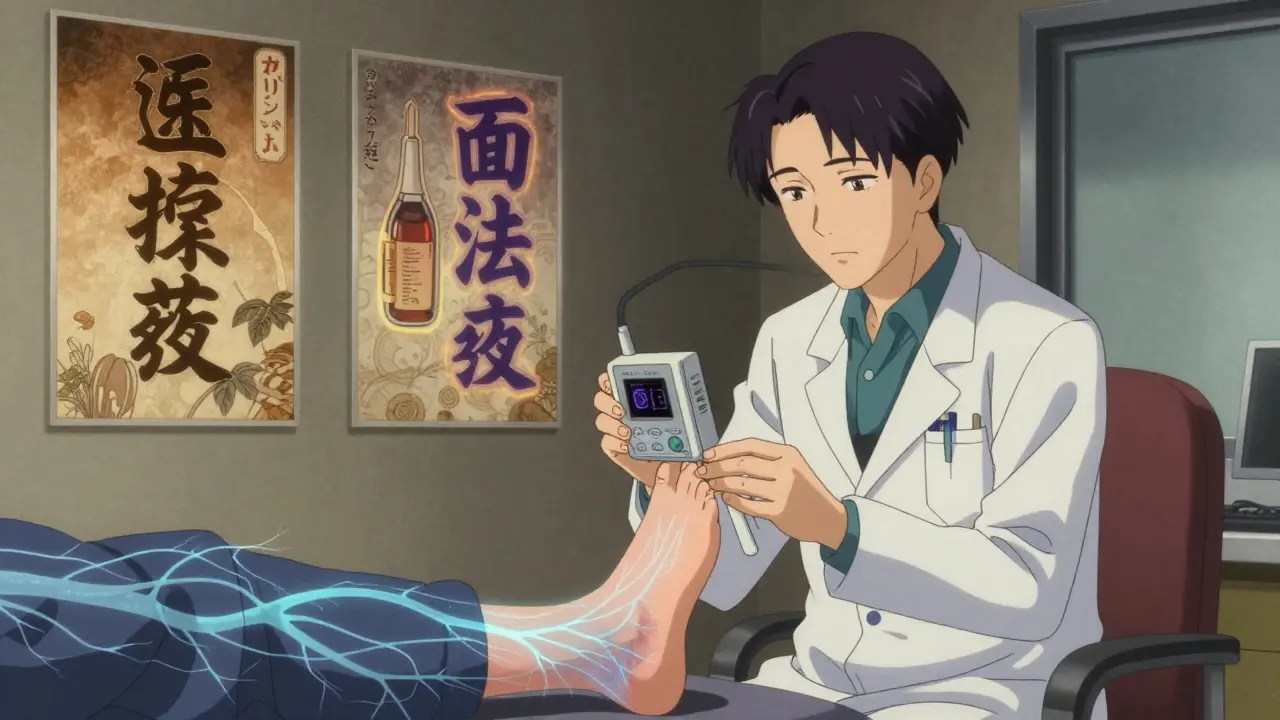
The field is changing fast. In 2021, the FDA approved the SudoScan device-a non-invasive tool that measures sweat gland activity to detect early nerve damage. It’s 85% accurate for small fiber neuropathy, which is often the first stage.Researchers are also testing acetyl-L-carnitine, a supplement that showed a 40% reduction in neuropathy severity in a 2023 clinical trial for paclitaxel patients.
And in the next five years, doctors may start using genetic testing to predict who’s at highest risk before giving neurotoxic drugs. Some people’s genes make their nerves more vulnerable. Knowing that upfront could save millions from permanent damage.
The Bottom Line
Tingling and numbness from medication aren’t harmless quirks. They’re red flags. The earlier you act, the better your chances of avoiding long-term nerve damage. Many cases are reversible-if you catch them in time.Don’t wait for pain. Don’t wait for weakness. Don’t wait for your doctor to bring it up. If you feel it, speak up. Your nerves can’t tell you they’re in trouble. You have to speak for them.
Can medication-induced tingling go away on its own?
Yes, but only if the medication is stopped or adjusted early. In many cases, symptoms improve within 3-6 months after stopping the drug. But if the nerve damage is allowed to progress for over a year, recovery becomes partial or unlikely. Early action is critical.
Is tingling from statins real or just in people’s heads?
The evidence is weak. While some patients report tingling after starting statins, large studies haven’t confirmed a direct cause-and-effect link. Experts believe many cases are coincidental or misattributed. If you’re concerned, talk to your doctor-but don’t stop your statin without medical advice, especially if you have heart disease.
Can I take supplements to prevent neuropathy from chemo?
Some supplements show promise. Vitamin B6 helps with isoniazid-induced neuropathy. Acetyl-L-carnitine has been shown in trials to reduce severity of paclitaxel-induced symptoms. But not all supplements work, and some can interfere with treatment. Always check with your oncologist before starting anything.
Why do some people get neuropathy and others don’t?
Genetics, age, existing nerve damage (like from diabetes), and overall health play a role. Older adults and those with pre-existing conditions are more vulnerable. Researchers are now identifying specific gene variants that make nerves more sensitive to certain drugs. This could lead to personalized treatment plans in the near future.
Should I stop my medication if I get tingling?
Never stop a prescribed medication without talking to your doctor. For life-saving drugs like chemotherapy, stopping could be dangerous. Instead, ask about dose reduction, longer intervals between treatments, or adding protective therapies. Most patients can continue treatment safely with the right adjustments.
How long does it take for symptoms to appear after starting a drug?
It varies. For oxaliplatin, tingling can start after the first dose. For isoniazid or metronidazole, it often takes 1-3 months. Statins may take years. The key is to pay attention from day one, especially if you’re on a known neurotoxic drug. Early detection tools can pick up nerve changes even before symptoms show up.






Kandace Bennett
March 14, 2026 AT 19:12OMG I KNEW IT!!! 🤯 Tingling in my toes after chemo? Totally drug-induced neuropathy. I ignored it for weeks and now I can’t feel my feet in the shower 😭 My oncologist was like ‘oh that’s normal’ but NOPE. I demanded a neuro consult and they finally listened. SudoScan changed my life. If you feel it, SPEAK UP. Your nerves ain’t gonna scream for you 💪
Tim Schulz
March 15, 2026 AT 17:15Oh honey. You’re telling me people are surprised that chemo fries their nerves? 🤦♂️ I mean, we’ve known since the 80s that platinum compounds are basically nerve grenades. But sure, let’s act like this is new science. Meanwhile, I’m over here reading your 2023 trial on acetyl-L-carnitine like it’s the first time anyone’s ever heard of antioxidants. 😂
Jinesh Jain
March 15, 2026 AT 19:51Interesting post. I’ve been on isoniazid for 4 months now and noticed slight numbness in my fingertips last week. Didn’t know it could be linked. Will mention it to my doctor. No rush, but good to be aware. Thanks for the clarity.
douglas martinez
March 17, 2026 AT 18:10This is an exceptionally well-researched and clinically grounded article. The distinction between direct neurotoxicity, transport disruption, and myelin damage is critical for patient education. I will be sharing this with my neurology residents. Thank you for elevating the standard of discourse on iatrogenic neuropathy.
Sabrina Sanches
March 18, 2026 AT 02:09YESSSS!! 🙌 I felt the tingling after my third paclitaxel dose and told my oncologist. She said ‘it’s fine’ but I insisted on the EORTC QLQ-CIPN20. Turns out I was already at stage 2. They adjusted my dose and now I’m fine. Don’t let anyone gaslight you. Your body knows. Trust it. 💕
Shruti Chaturvedi
March 19, 2026 AT 20:17For those of us in countries where neurologists are hard to find, this info is gold. I live in a village with one clinic. I told my nurse about the numbness and she didn’t know about glove-stocking pattern. Now she’s asking her colleagues. Small steps. We’re learning together.
Katherine Rodriguez
March 20, 2026 AT 11:46Who even benefits from this? Pharma companies. They know these drugs cause nerve damage but keep selling them because people are too scared to stop. And now they want you to pay for SudoScan? Classic. I’ve been saying this for years. They don’t care about your toes. They care about your insurance.
Devin Ersoy
March 22, 2026 AT 00:32Look, I’m not here to dunk on anyone’s chemo, but let’s be real - if you’re on amiodarone and suddenly your toes feel like they’re wrapped in cling film, congrats, you’ve unlocked the ‘I’m a walking cautionary tale’ achievement. 🎮 I’ve seen this movie before. The sequel? Permanent neuropathy. The prequel? Ignoring the tingling. Spoiler: nobody wins. 🤷♂️
Scott Smith
March 22, 2026 AT 09:36Thank you for sharing the data on statins. Many patients panic and stop their meds without understanding the risk-benefit balance. The key is not to dismiss symptoms but to investigate them. A simple nerve conduction study can rule out other causes. This is why shared decision-making matters.
Sally Lloyd
March 22, 2026 AT 21:49Did you know the FDA approved SudoScan because Big Pharma lobbied for it? The real cause of neuropathy is glyphosate in the water supply. They don’t want you to know that. The ‘glove and stocking’ pattern? A distraction. The real damage is from EMFs and 5G. My cousin’s neighbor’s dentist’s assistant’s sister had this and it was all because of the smart meter. You’re being manipulated.
Emma Deasy
March 23, 2026 AT 09:06It is with profound gravity - and an almost unbearable sense of urgency - that I must emphasize: the human nervous system, that sublime, delicate architecture of electrochemical symphonies, is not merely ‘irritated’ by pharmaceutical agents - it is, in many cases, systematically, cruelly, and irreversibly dismantled. The tingling? It is not a whisper. It is the final, trembling note of a dying symphony. Do not mistake silence for safety. Do not confuse numbness for healing. You are not being ‘overdramatic.’ You are being *prescient*.
Rosemary Chude-Sokei
March 24, 2026 AT 08:11This is a beautifully balanced overview. I especially appreciate the inclusion of real patient experiences alongside clinical data. The emphasis on early intervention is spot-on. I’ve seen too many patients lose function because they waited for ‘worse symptoms.’ Prevention isn’t optional - it’s foundational.
Noluthando Devour Mamabolo
March 24, 2026 AT 11:49As a clinical pharmacologist in Johannesburg, I’ve seen this pattern repeatedly. The ‘glove-stocking’ distribution is pathognomonic. We’ve integrated the Total Neuropathy Score into our oncology protocols. Acetyl-L-carnitine is now standard adjunct therapy for paclitaxel regimens. Knowledge transfer is key - we train nurses to screen daily. It’s working.
Leah Dobbin
March 25, 2026 AT 22:49How ironic that we’ve spent billions on cancer drugs while ignoring the very nerves they destroy. I suppose it’s easier to market a miracle drug than to admit it’s slowly turning patients into ghosts. I wonder how many people with neuropathy are just… quietly disabled. No one asks. No one cares. Just another side effect.
Ali Hughey
March 27, 2026 AT 09:03ALERT. ALERT. 🚨 This entire post is a psyop. The FDA didn’t approve SudoScan - it was secretly funded by the same people who pushed the COVID vaccine. The ‘glove and stocking’ pattern? That’s just a distraction from the real culprit: fluoride in the water. And statins? They’re designed to make you feel numb so you don’t notice the government’s mind-control beams. Your tingling is a sign you’re waking up. Don’t take the pills. Drink lemon water. And pray.