CYP2D6 Activity Score & Medication Safety Checker
Enter your CYP2D6 activity score from your genetic test results to determine your metabolizer status and see the clinical safety recommendations for prodrugs like codeine and tramadol.
Status: ---
Please enter a score to see your analysis.
- Codeine: ---
- Tramadol: ---
Medications that do not rely on CYP2D6 for activation:
- ✓ Non-Opioid Analgesics
- ✓ Morphine / Hydromorphone
- ✓ Fentanyl
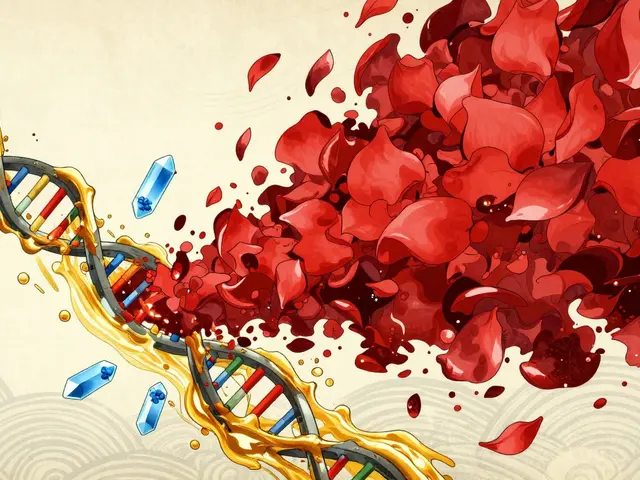
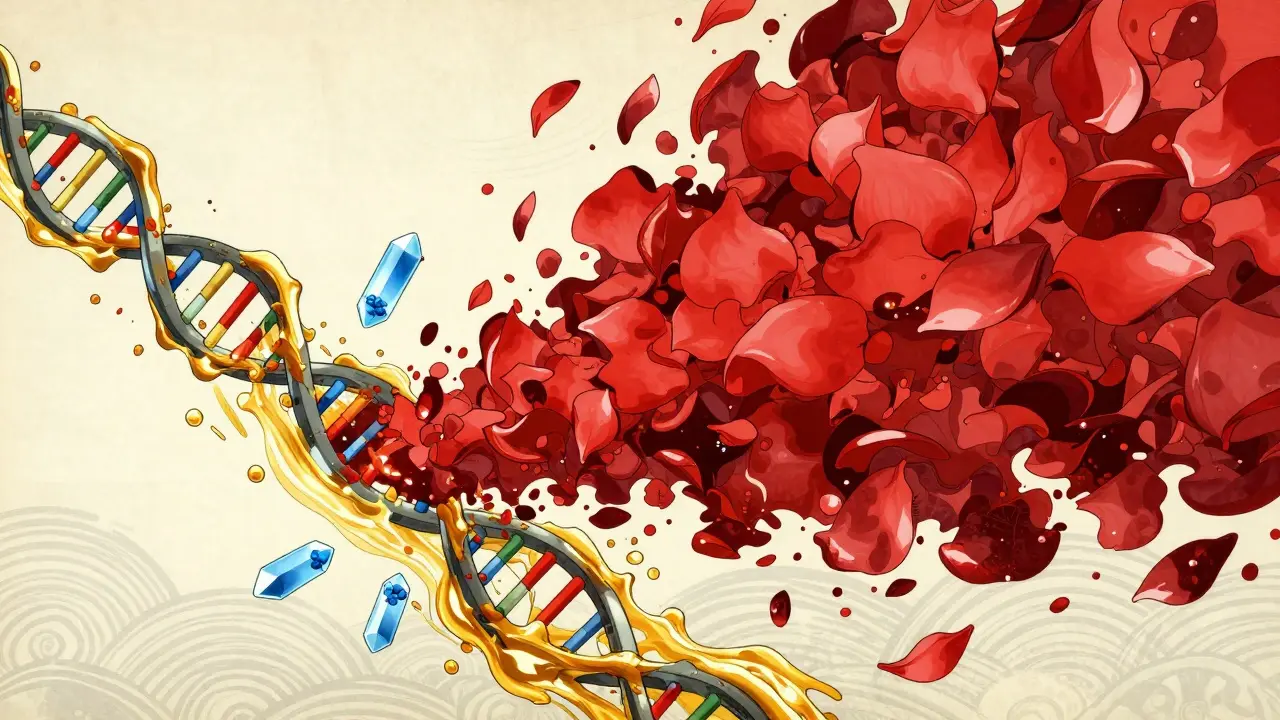
Imagine taking a standard, doctor-prescribed dose of a common painkiller, only for your body to process it so aggressively that it becomes a lethal overdose. For most people, this sounds like a medical impossibility. But for a specific group of people called CYP2D6 ultrarapid metabolizers is a genetic subgroup of patients who convert codeine to morphine at significantly accelerated rates , a normal dose can be a death sentence. This isn't about taking too many pills; it's about how your DNA handles the drug.
| Risk Factor | The Effect | The Result |
|---|---|---|
| CYP2D6 Gene | Multiple functional copies of the gene | Too much morphine produced quickly |
| Dose Level | Standard therapeutic dose | Potential life-threatening toxicity |
| Critical Warning | Highest risk in children (<12 years) | Severe respiratory depression |
Why Your Genes Change How Codeine Works
To understand the risk, you first have to understand that Codeine is an inactive prodrug, meaning it doesn't actually relieve pain on its own . For it to work, your liver needs to convert it into Morphine, which is the active compound that blocks pain signals in your brain. This conversion is handled by an enzyme called CYP2D6, a member of the cytochrome P450 family.
Most people are "normal metabolizers." Their liver converts codeine to morphine at a steady, predictable pace. However, ultrarapid metabolizers (UMs) have extra copies of the CYP2D6 gene. Instead of a steady stream, their bodies create a flood of morphine. Research shows that UMs can convert codeine to morphine at rates 3.5 to 4.5 times higher than average. This means a "safe" dose of codeine is effectively transformed into a massive dose of morphine almost instantly.
The Danger Zone: Morphine Toxicity and Overdose
When the body is flooded with morphine, the central nervous system slows down. This leads to codeine overdose risk that manifests as morphine toxicity. You aren't just feeling "too relaxed"; your vital organs are starting to shut down.
The most dangerous symptom is respiratory depression. This is when breathing becomes shallow, slow, or stops entirely. In clinical reviews by the FDA, 13 out of 15 patients who had their blood tested during toxicity events showed morphine levels far exceeding the therapeutic range, even though they had followed the prescription exactly. Other warning signs include extreme sleepiness, difficulty waking up, nausea, and circulatory collapse. In the worst cases, this leads to cardiac arrest and death.
The Pediatric Crisis: Why Children Are at Higher Risk
The risk is most terrifying for children, particularly those recovering from tonsillectomies or adenoidectomies. Because children's bodies are smaller, the impact of an unplanned morphine surge is much more severe. A heartbreaking example from the New England Journal of Medicine detailed a 15-month-old child who died after a standard post-surgery dose of codeine; post-mortem tests confirmed the child was a CYP2D6 ultrarapid metabolizer.
The FDA took this so seriously that in 2013, they issued a safety communication restricting the use of prescription codeine for cough and pain in children. Their review found that out of 64 serious adverse events, 21 deaths occurred in children under 12. This is why most doctors now strictly avoid giving codeine to kids, opting for non-narcotic alternatives instead.
Mapping the Risk: Who Is Most Likely to Be a UM?
Not everyone has the same chance of being an ultrarapid metabolizer. This genetic trait varies wildly depending on your ancestry. If you have roots in certain parts of the world, your risk profile changes significantly.
- North Africans and Ethiopians: The highest risk group, with up to 29% of the population being ultrarapid metabolizers.
- Europeans: Between 3% and 7% are UMs.
- Australians: Roughly 3% are UMs, while about 6% are "poor metabolizers" (meaning codeine won't work for them at all).
- East Asians: The lowest prevalence, typically 1% to 2%.
This ethnic variation is a prime example of why "one size fits all" medicine is dangerous. A dose that is perfectly safe for a patient in Tokyo might be lethal for a patient in Addis Ababa.
How to Identify Your Metabolizer Status
You can't tell if you're a UM by looking in the mirror or based on how you feel. The only way to know is through pharmacogenetic testing. Doctors use an "activity score" to categorize patients based on their CYP2D6 genotype:
- Ultrarapid Metabolizers: Activity score > 2.25 (High risk of toxicity).
- Normal Metabolizers: Activity score 1.25 to 2.25.
- Intermediate Metabolizers: Activity score 0.25 to 1.0.
- Poor Metabolizers: Activity score 0 (No pain relief from codeine).
Testing is available through specialized labs, though it usually takes between 3 to 14 days to get results. While the cost can range from $200 to $500, it is a small price to pay compared to the risk of a fatal overdose. Some newer research is focusing on point-of-care testing that could give results in just two hours, which would allow doctors to make safer prescribing decisions in real-time.
Safer Alternatives to Codeine
If you are a CYP2D6 ultrarapid metabolizer, the Clinical Pharmacogenetics Implementation Consortium (CPIC) explicitly states that codeine or Tramadol should not be used. But what should you use instead?
The goal is to use medications that don't rely on the CYP2D6 enzyme to become active. This removes the "genetic lottery" from the equation. Safer options include:
- Non-Opioid Analgesics: For mild to moderate pain, standard over-the-counter options are preferred.
- Direct Opioids: Morphine, Hydromorphone, or Fentanyl. Because these drugs are already active, they don't need the CYP2D6 enzyme to work, making the dose predictable regardless of your genetics.
It is worth noting that some people switch to hydrocodone or oxycodone. While these are often used as replacements, research indicates they still undergo partial CYP2D6 metabolism, meaning they may still pose a risk to UMs, albeit generally lower than codeine.
Can I tell if I am an ultrarapid metabolizer without a test?
No. There are no physical symptoms or outward signs that indicate your CYP2D6 status. The only way to determine if you are an ultrarapid metabolizer is through a genetic test that analyzes your CYP2D6 gene variants and calculates your activity score.
Why is codeine still used if it is so risky for some?
Codeine has been used for decades and is relatively cheap. For the majority of the population (normal metabolizers), it is effective and safe. However, as genetic testing becomes more common, many experts believe codeine will eventually be replaced entirely by safer, more predictable alternatives.
What should I do if I suspect a family member has had a bad reaction to codeine?
If someone shows signs of extreme sleepiness, shallow breathing, or difficulty waking up after taking codeine, seek emergency medical help immediately. This could be a sign of morphine toxicity. After the crisis, consult a doctor about pharmacogenetic testing for the family, as this trait is hereditary.
Is Tramadol just as dangerous as Codeine for UMs?
Yes. Like codeine, tramadol is a prodrug that requires the CYP2D6 enzyme to be converted into its more potent active form. The CPIC guidelines recommend avoiding both codeine and tramadol for individuals with a CYP2D6 activity score greater than 2.25.
Does this risk apply to all ages?
The risk exists for all ages, but it is most critical in children. Because of their lower body mass and the risk of respiratory arrest after surgery (like tonsillectomies), the FDA and other global health agencies have strictly limited codeine use in children under 12.
Next Steps for Patients and Caregivers
If you have a history of unexpected, severe reactions to painkillers, or if you belong to a high-prevalence ethnic group, don't guess with your health. Start by asking your doctor about a CYP2D6 genotype test. If you are currently taking codeine and notice extreme lethargy or a decrease in breathing rate, contact your healthcare provider immediately.
For those managing chronic pain, moving toward a personalized medicine approach-where your medication is chosen based on your DNA-is the safest path. Whether it's switching to a non-opioid or a direct-acting opioid like morphine, the goal is to remove the volatility of the CYP2D6 enzyme from your treatment plan.