
Most people don’t think about where they keep their medicines until they find a bottle of pills that’s discolored, smells funny, or just doesn’t seem to work anymore. But medication storage isn’t just about tidiness-it’s about safety, effectiveness, and saving money. In the U.S. alone, $20 billion worth of medications are wasted every year because they expired too soon. And guess what? Nearly 4 out of 10 of those cases happened because of how the meds were stored-not because the expiration date was wrong.
Why Your Medicine Expires Sooner Than It Should
Expiration dates aren’t arbitrary. They’re based on strict testing by manufacturers to prove the drug stays at 90-110% of its labeled strength up to that date. But that guarantee only holds if the medicine is stored exactly as the label says. Heat, moisture, and light break down the active ingredients. Once that happens, your painkiller might not relieve pain. Your blood pressure pill might not control your pressure. And in rare cases, degraded meds can actually become harmful. The biggest enemy? Humidity. Bathroom medicine cabinets are the worst place for pills. Every time you shower, the humidity spikes to 85-95%. That’s enough to turn aspirin into vinegar-smelling chunks within months. A 2023 study showed aspirin breaks down 300% faster in that kind of dampness. Liquid medications like eye drops and insulin are even more sensitive. If they’re left in a hot car or near the stove, they can lose potency in days.Where to Store Your Medications (And Where Not To)
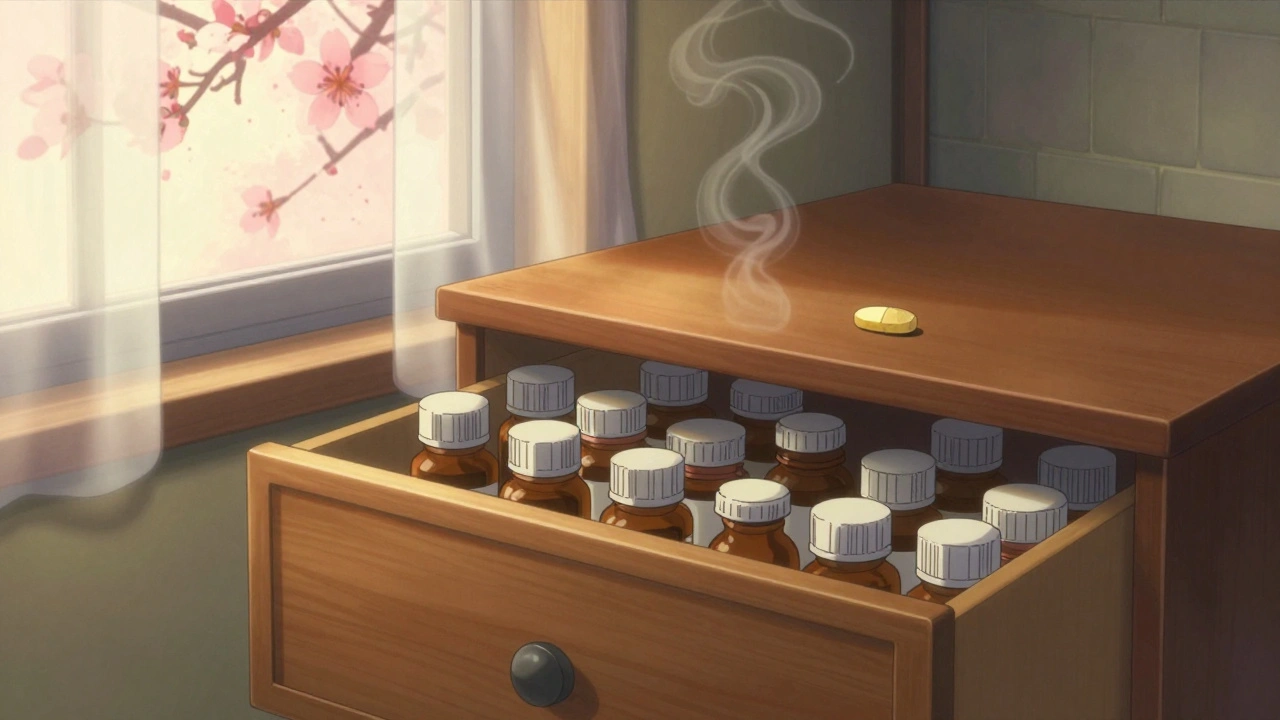
Forget the bathroom. Forget the kitchen counter next to the toaster. Forget the sunlit windowsill. Here’s where you should store your meds instead:- Bedroom dresser drawer - Cool, dry, and out of direct light. This is the #1 recommended spot for most pills and capsules.
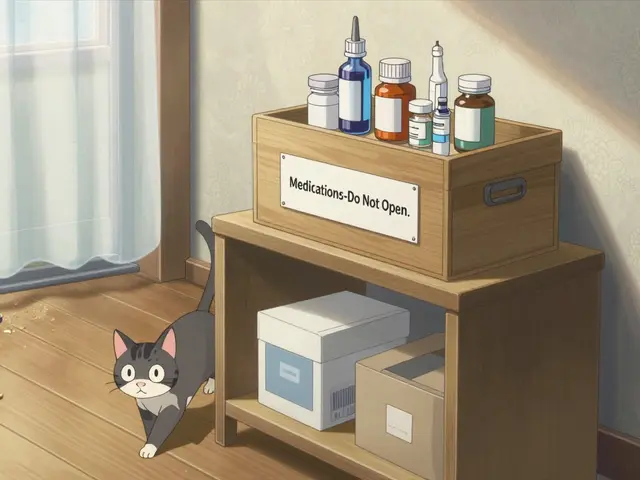
- A locked cabinet in a climate-controlled room - Ideal if you have kids, pets, or multiple medications. Keep it between 19-22°C (66-72°F).
- Refrigerator (only if required) - Some liquids, like insulin or certain antibiotics, need to be kept cold. But don’t store them in the fridge door-temperature swings there can ruin them. Put them in the center shelf, where it’s most stable (2-8°C).
What Happens When You Ignore the Rules
You might think, “It’s just one expired pill-it’s probably still fine.” But that’s risky. Here’s what actually happens when meds degrade:- Tablets change color - If your white pills turn yellow, brown, or develop dark spots, toss them. A 15% or greater color shift means chemical breakdown.
- Crumbly or sticky pills - If tablets crumble in your fingers or feel tacky, moisture has gotten in. That’s a clear sign they’re no longer safe.
- Smells like vinegar - That’s acetylsalicylic acid (aspirin) breaking down. Don’t take it. It won’t help-and it could upset your stomach more than help.
- Cloudy or cloudy liquids - Eye drops, syrups, or injectables that look murky, have floating bits, or separate into layers are contaminated. The CDC says 78% of expired eye drops grow dangerous bacteria like Pseudomonas aeruginosa.
Keep the Original Bottle-It’s Not Just for Show
That little plastic bottle your pharmacist gave you? It’s not just for convenience. It’s designed to protect your medicine. Most prescription bottles are made of amber plastic, which blocks 97% of UV light. Clear containers? They let in light that degrades drugs like nitroglycerin and certain antibiotics. The original bottle also has the expiration date, dosage instructions, and safety cap-all critical for safe use. Never transfer pills into pill organizers unless you’re using them for daily doses. Even then, only fill them for a week at a time. Long-term storage in plastic boxes exposes meds to air and moisture, speeding up degradation.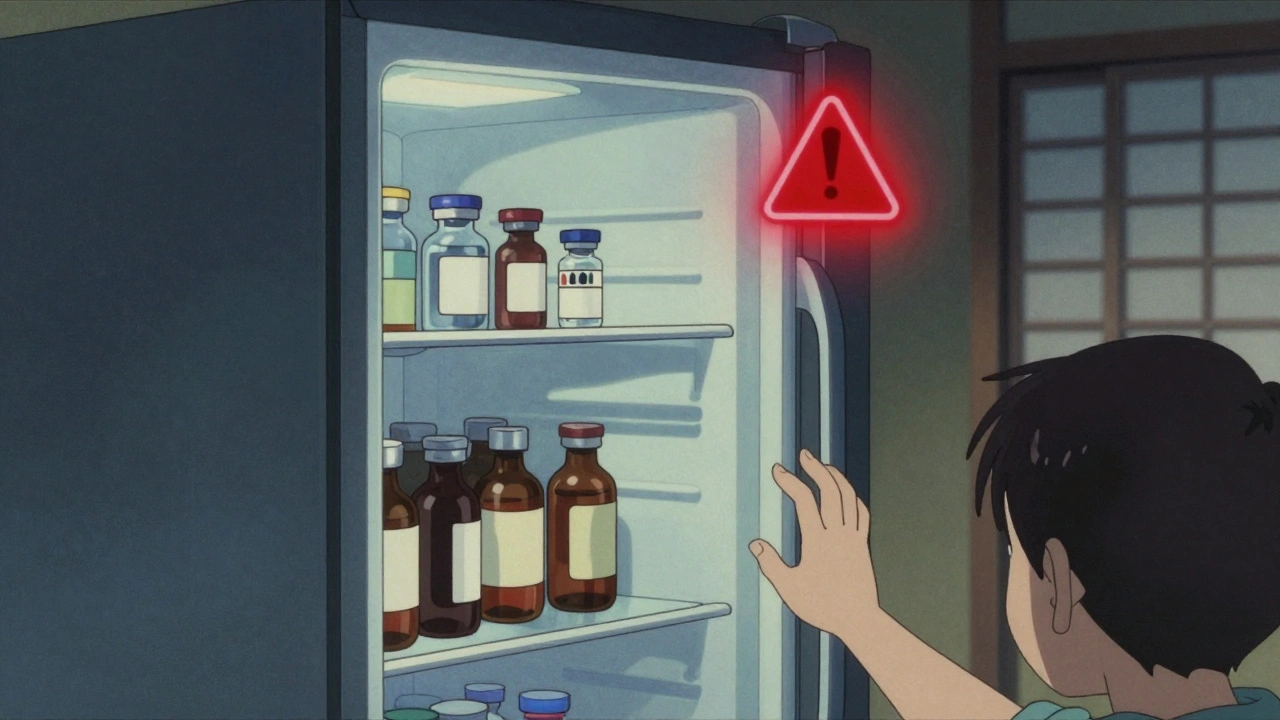
Special Cases: Insulin, Nitroglycerin, and Other Sensitive Drugs
Some meds have very specific rules:- Insulin - Unopened? Keep refrigerated (2-8°C). Opened? Can stay at room temperature (up to 28 days) but must be kept away from heat and sunlight. Never freeze it.
- Nitroglycerin - Must stay in its original dark glass bottle. Even brief exposure to light can make it useless. Replace it every 3-6 months, even if it hasn’t expired.
- Rectal suppositories - Heat melts them. Store in the fridge if your home gets above 25°C.
- Eye drops - Once opened, most expire after 28 days, even if the bottle says otherwise. Write the opening date on the label.
How to Track Expiration Dates (Without Forgetting)
People forget. That’s normal. But forgetting means taking meds that don’t work-or worse, taking something that’s degraded. Here’s a simple system that works:- Every month, set a reminder on your phone to check your medicine cabinet.
- Look at every bottle. Write the expiration date on a sticky note if it’s hard to read.
- Use colored dot stickers: red for this year, blue for next year, green for two years out. This visual cue cuts expired meds by over 60% in studies.
- Assign one person in the household to do this check. It’s like changing smoke detector batteries-someone has to do it.
What About Those ‘Expired’ Pills You Found in the Back of the Cabinet?
The FDA’s Shelf Life Extension Program found that many drugs stored perfectly in military labs stayed effective for years past their label date. But here’s the catch: that only applies to meds kept in climate-controlled, dry, dark rooms with no temperature swings. Your bathroom? Not even close. If your meds are expired and stored in a hot, humid place? Don’t risk it. Taking a degraded antibiotic could mean your infection doesn’t clear. Taking old heart medication could lead to a dangerous spike in blood pressure. The risk isn’t worth it.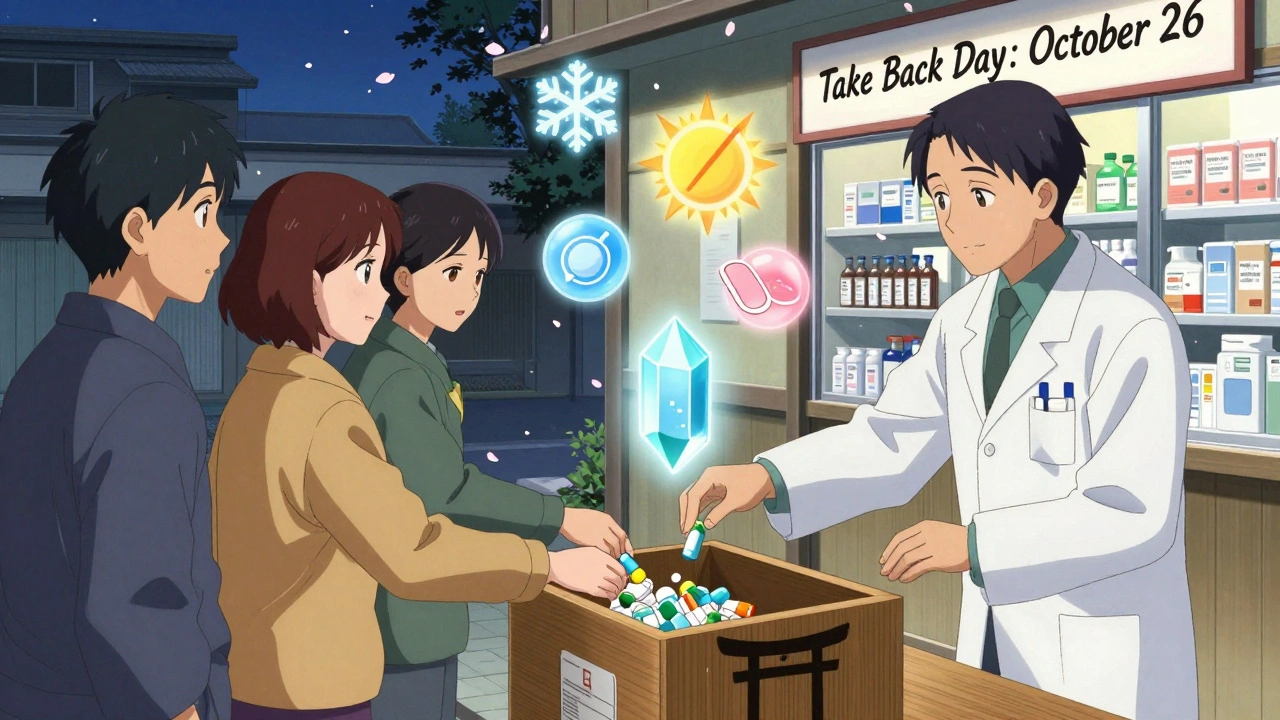
What to Do With Expired or Unused Medications
Never flush pills down the toilet or throw them in the trash. That pollutes water and puts them within reach of kids or pets. The safest way to dispose of meds is through a drug take-back program. In the U.S., the DEA runs National Prescription Drug Take Back Day twice a year. Over 11,000 collection sites-pharmacies, police stations, hospitals-accept unused or expired meds for free. The next one is October 26, 2024. If you can’t wait, many pharmacies offer year-round drop-off bins. Ask your pharmacist.What’s Changing in Medication Storage?
The industry is catching up. Newer prescription labels now include icons that show storage needs-like a snowflake for cold storage or a sun with a line through it for “keep away from light.” Some smart pillboxes, like the MedMinder Pro, now monitor temperature and humidity and send alerts if your meds are getting too hot or damp. Merck just launched a new heat-stable insulin in late 2023 that lasts 56 days at 30°C-huge for people in hot climates or without reliable refrigeration. And researchers at the University of Wisconsin are testing prescription bottles with built-in silica gel to keep humidity inside at 45% lower than normal. Those could be on shelves by late 2025.Final Tip: When in Doubt, Ask Your Pharmacist
Pharmacists are trained to know exactly how each medication behaves. If you’re unsure whether your medicine is still good-or where to store it-just ask. No judgment. No extra charge. They see this every day. A quick call or visit can save you from taking something that’s no longer safe or effective. Proper storage doesn’t take much effort. But it makes all the difference. Your meds work better. You stay healthier. And you stop wasting money on pills that never had a chance to help you.Can I still use medicine after the expiration date?
It depends. If the medicine was stored perfectly-cool, dry, dark-it might still be effective. But in real homes, especially in humid or hot places, most drugs degrade before their expiration date. If your pills look, smell, or feel different, don’t use them. The FDA doesn’t recommend taking expired meds unless it’s an emergency and no other option exists.
Is it safe to store pills in the fridge?
Only if the label says so. Most tablets and capsules don’t need refrigeration and can actually get damaged by moisture inside the fridge. But liquids like insulin, some antibiotics, and eye drops often require it. Always check the packaging or ask your pharmacist. If you do refrigerate, keep them on the center shelf-not the door.
Why shouldn’t I keep medicine in the bathroom?
Bathrooms are the worst place for meds. Showers create humidity levels above 85%, which causes pills to break down faster. Heat from hair dryers and hot water also raises the temperature. Aspirin, for example, degrades 300% faster in bathroom conditions. Stick to a dry, cool drawer instead.
How do I know if my medicine has gone bad?
Look for these signs: tablets that are discolored, cracked, or sticky; pills with a vinegar smell (aspirin); liquids that are cloudy, have particles, or separate into layers. If the medicine looks, smells, or feels different from when you first got it, throw it out. Don’t guess.
What’s the best way to dispose of old meds?
Use a drug take-back program. The DEA hosts National Prescription Drug Take Back Day twice a year, and many pharmacies have year-round drop-off bins. Never flush meds or throw them in the trash-they can pollute water or be found by kids or pets. If no take-back option is available, mix pills with coffee grounds or cat litter, seal them in a container, and throw them in the trash.


Sam Mathew Cheriyan
December 8, 2025 AT 01:48Ernie Blevins
December 8, 2025 AT 06:58Ted Rosenwasser
December 9, 2025 AT 07:43Helen Maples
December 11, 2025 AT 02:21Olivia Hand
December 12, 2025 AT 19:04Desmond Khoo
December 13, 2025 AT 15:05Kyle Oksten
December 14, 2025 AT 13:41Sadie Nastor
December 16, 2025 AT 10:20Sangram Lavte
December 16, 2025 AT 19:20Wesley Phillips
December 18, 2025 AT 11:13Nancy Carlsen
December 19, 2025 AT 16:06Ashley Farmer
December 21, 2025 AT 15:59