
Glaucoma Medication Safety Checker
Medication Safety Check
Know if your allergy or cold medications are safe for your glaucoma type
Select your glaucoma type and medications to see safety results
Many people reach for over-the-counter allergy meds without thinking twice. But if you have glaucoma - especially a specific type - those pills could be a silent threat to your vision. It’s not about taking too much. It’s about taking the wrong kind.
Not All Glaucoma Is the Same
Glaucoma isn’t one disease. It’s a group of conditions that damage the optic nerve, often from high pressure inside the eye. The two biggest types are primary open-angle glaucoma (POAG) and narrow-angle glaucoma. POAG makes up about 70% of cases. It’s slow, silent, and usually doesn’t react badly to common allergy medicines. But narrow-angle glaucoma? That’s where things get dangerous.Narrow-angle glaucoma affects 10% to 15% of glaucoma patients. It’s caused by a physical blockage - the iris sits too close to the drainage channel in the eye. When something causes the pupil to dilate, that channel can snap shut. No drainage. Pressure spikes. Vision blurs. Pain hits. And if you don’t act fast, permanent blindness can follow in hours.
The Culprits: Antihistamines and Decongestants
Many OTC allergy and cold medicines contain antihistamines like diphenhydramine (Benadryl) or chlorpheniramine. These work by blocking histamine to stop sneezing and runny nose. But they also block another important chemical in your body: acetylcholine. That’s the signal that keeps your pupil small and your eye’s drainage open.When antihistamines block acetylcholine, your pupil dilates. In someone with narrow angles, that’s like dropping a cork into a bottle. The drainage angle closes. Intraocular pressure can jump from normal (15 mmHg) to over 50 mmHg in minutes. That’s an emergency.
Decongestants like pseudoephedrine and phenylephrine - common in sinus meds - make things worse. They tighten blood vessels, which can also raise eye pressure. Even if you’ve never had symptoms, you might still have narrow angles. And if you don’t know it, you’re at risk.
Other Hidden Risks
It’s not just allergy pills. A lot of everyday meds can trigger this:- Antidepressants - Especially SSRIs like sertraline or escitalopram. A 2021 study found daily users had over a 5x higher risk of acute angle-closure.
- Anti-nausea drugs - Meclizine (Bonine) and promethazine (Phenergan) have strong anticholinergic effects.
- Migraine treatments - Topiramate (Topamax) and sumatriptan can cause fluid shifts in the eye.
- Sulfa-based drugs - Acetazolamide and sulfamethoxazole can cause swelling that blocks drainage.
- Steroids - Nasal sprays, eye drops, or even oral steroids can raise pressure over time. Even if you have open-angle glaucoma, long-term steroid use can make it worse.
And here’s the twist: some blood pressure meds actually help glaucoma. Beta-blockers like timolol are used as eye drops to lower pressure. But calcium channel blockers? They might raise it. The interaction isn’t simple. It’s personal.
What About Newer Allergy Meds?
Good news: not all antihistamines are created equal. Second-generation options like loratadine (Claritin), cetirizine (Zyrtec), and fexofenadine (Allegra) were designed to stay out of the brain and eyes. They have minimal anticholinergic effects. For most glaucoma patients, these are much safer.But “safer” doesn’t mean “safe for everyone.” A 2023 clinical trial is testing a modified version of loratadine with even less eye penetration - because even small effects matter in vulnerable eyes. Until then, don’t assume. Talk to your eye doctor before switching meds.
Steroids: The Silent Pressure Builder
Steroid-induced glaucoma is a different beast. It doesn’t cause sudden attacks. It creeps up. Over 10 days of using nasal sprays, eye drops, or even oral steroids, proteins can build up in your eye’s drainage system. It’s like clogging a sink with grime. Slowly, pressure rises. You might not feel anything until vision is damaged.Patients with open-angle glaucoma are often told they can use steroids. But that’s only true if you’re being monitored. If you’re using a steroid nasal spray for months, your eye pressure should be checked. A single 10-day course might be fine. Two months? Not without a follow-up.
What Should You Do?
If you have glaucoma - or think you might - here’s what to do right now:- Know your type. Ask your eye doctor: “Do I have open-angle or narrow-angle glaucoma?” If you don’t know, get a gonioscopy. It’s a simple, painless test that checks your drainage angle. The American Academy of Ophthalmology now recommends it for all new patients over 40.
- Check every medication. Look for these words on labels: anticholinergic, sedating, causes drowsiness. These are red flags.
- Avoid diphenhydramine. It’s in Benadryl, Tylenol PM, ZzzQuil, and many cold formulas. Even one dose can trigger an attack in someone with narrow angles.
- Use second-gen antihistamines. Claritin, Zyrtec, Allegra - these are your best bet. Still, confirm with your doctor.
- Limit steroid use. Don’t use nasal sprays or eye drops for more than 10 days without checking pressure.
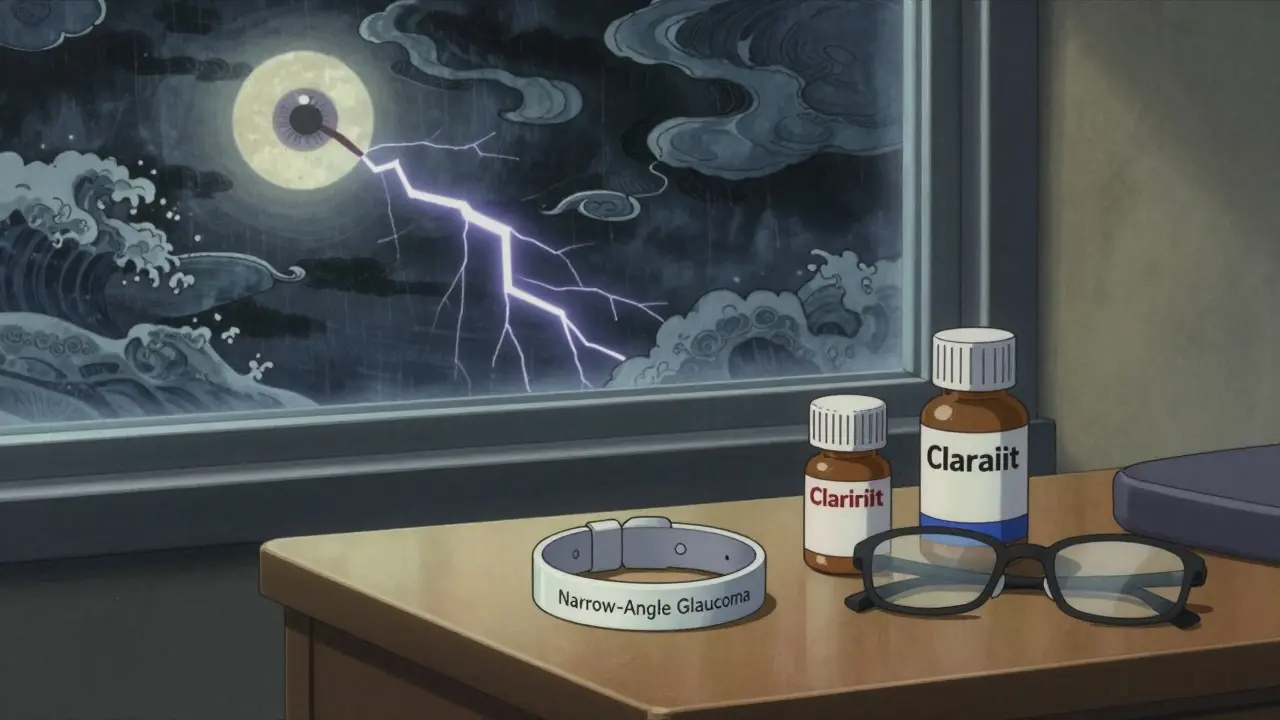
- Carry medical info. If you have narrow-angle glaucoma, wear a medical ID bracelet. If you end up in the ER with sudden eye pain and blurred vision, they need to know immediately.
The Bigger Picture
About 3 million people in the UK alone have glaucoma. Between 300,000 and 450,000 of them have narrow angles. And nearly one in five people suffer from hay fever. That’s a huge overlap. Millions are taking allergy meds without knowing they’re playing Russian roulette with their vision.Regulators don’t require clear warnings on OTC labels. The FDA doesn’t mandate glaucoma alerts. So the burden falls on you - and your eye doctor. Many patients don’t realize their eye doctor is their best defense against this. A routine check-up isn’t just about reading an eye chart. It’s about protecting your future sight.
What About Natural Alternatives?
Some people turn to “natural antihistamines” like quercetin, stinging nettle, or vitamin C. But there’s no solid evidence they work as well as prescription or OTC meds - especially for severe allergies. And they’re not regulated. If you’re considering them, talk to your doctor. They might not be safer.One promising area: statins. Two studies found people taking statins for high cholesterol had lower rates of open-angle glaucoma progression. It’s not a treatment - but it might be a protective side effect. More research is needed.
Final Thought
You don’t need to stop allergy treatment. You just need to be smarter about it. Glaucoma isn’t a death sentence. But it can become one if you take the wrong pill. The difference between losing vision and keeping it? Knowing your type. Asking your doctor. And reading the label - not just the brand.Can I take Benadryl if I have glaucoma?
If you have narrow-angle glaucoma, no. Benadryl contains diphenhydramine, a strong anticholinergic that can trigger acute angle-closure glaucoma - a medical emergency. Even if you don’t know your glaucoma type, it’s safest to avoid it. Switch to a second-generation antihistamine like Claritin or Zyrtec, and always check with your eye doctor first.
Are Zyrtec and Claritin safe for glaucoma patients?
Yes, generally. Loratadine (Claritin) and cetirizine (Zyrtec) are second-generation antihistamines with very low anticholinergic activity. They’re much less likely to affect your eye’s drainage system. But “generally safe” doesn’t mean “safe for everyone.” If you’ve had prior eye surgery, have very narrow angles, or are on other medications, consult your ophthalmologist before using them.
Can steroid nasal sprays cause glaucoma?
Yes, especially with long-term use. Steroids - even nasal sprays - can cause increased eye pressure over time by blocking the drainage channels with protein buildup. This is more common in people with open-angle glaucoma, but anyone can be affected. Limit use to under 10 days unless your eye doctor monitors your pressure. Always schedule a follow-up pressure check after prolonged use.
How do I know if I have narrow-angle glaucoma?
You need a gonioscopy - a painless test where your eye doctor uses a special lens to look at the drainage angle in your eye. Routine eye exams often miss this. Ask specifically for gonioscopy if you’re over 40, have a family history of glaucoma, or are farsighted. Many people don’t know they have narrow angles until they have a sudden attack after taking an allergy med.
Can laser surgery fix narrow-angle glaucoma?
Yes. A laser peripheral iridotomy creates a small hole in the iris, allowing fluid to flow more freely and preventing sudden pressure spikes. If you’ve had this procedure, your risk from antihistamines drops significantly - but it’s not zero. Always check with your eye doctor before using any new medication, even after surgery.
What symptoms signal an acute glaucoma attack?
Sudden blurred vision, severe eye pain, headache, nausea, seeing rainbow-colored halos around lights, and a red, hard-feeling eye. This is a medical emergency. Go to the ER immediately. Delaying treatment by even a few hours can cause permanent vision loss.
Don’t wait for symptoms. If you have glaucoma - or are over 40 and haven’t had a full eye exam - schedule one. Your eyes can’t tell you when they’re in danger. But your doctor can.

Aisling Maguire
February 27, 2026 AT 17:00Just took Zyrtec for the first time last week after my eye doc said it was safe - and honestly? I cried. Not from allergies, but from relief. I’ve been avoiding meds for years because I didn’t know which ones were safe. This post saved my vision. Thank you.
Gigi Valdez
February 28, 2026 AT 11:30The clinical data presented here is both accurate and critically underpublicized. Regulatory agencies must prioritize patient safety by mandating clear contraindications on over-the-counter pharmaceutical packaging. The current lack of standardized warning labels constitutes a systemic failure in public health communication.
Sumit Mohan Saxena
March 1, 2026 AT 19:21As an ophthalmology resident in Mumbai, I see at least two cases per month of acute angle-closure triggered by OTC antihistamines. Most patients are unaware they have narrow angles - they think their red eyes are just ‘dry’ or ‘allergic.’ We routinely screen all patients over 40 with gonioscopy now. It takes 90 seconds. It’s cheap. It’s non-invasive. And it prevents blindness. Please, if you’re over 40 and have any eye condition - ask for it. Don’t wait for an emergency.
Also, steroid nasal sprays: I had a patient lose vision after 6 weeks of fluticasone. No symptoms. No pain. Just gradual blur. By the time she came in, it was too late. Monitoring pressure every 3 weeks during prolonged use is non-negotiable.
Vikas Meshram
March 1, 2026 AT 23:41U guys are overreacting. I took Benadryl for 15 years with glaucoma and never had a problem. My uncle’s cousin’s neighbor had narrow angles and took Zyrtec and still went blind from diabetes. So what’s the real cause here? Big Pharma wants you scared so they can sell you expensive ‘safe’ meds. Also, statins help? Then why aren’t they prescribing them? Hmmm. Coincidence?
Ben Estella
March 3, 2026 AT 01:26Why is America letting this happen? We’re the richest country on Earth and we still let drug companies slap ‘for occasional use’ on bottles that can blind you? This isn’t a health issue - it’s a crime. My grandma lost sight in one eye because she took Tylenol PM. She didn’t even know it had diphenhydramine. Someone needs to sue these companies into oblivion.
Jimmy Quilty
March 4, 2026 AT 12:14Did you know the FDA is controlled by the same lobbyists who own the pharmaceutical companies? This whole ‘narrow-angle glaucoma’ thing? It’s a scam to sell more eye drops. They invented the term so you’d panic and buy $200 tests. I checked my drainage angle with my phone flashlight and a mirror - looks fine. Also, my neighbor says the 5G towers are making people’s eyes swell. Coincidence? I think not.
Sneha Mahapatra
March 4, 2026 AT 18:52Reading this made me think about how we treat our bodies like machines we can just plug and play with - pop a pill, fix the symptom, ignore the system. But eyes… they’re not just sensors. They’re windows to something deeper. I’ve watched my mother lose sight slowly, not from pressure, but from fear. Fear of asking. Fear of being a burden. This post isn’t just about meds - it’s about courage. To ask. To check. To say, ‘I need to know.’
💛
Byron Duvall
March 6, 2026 AT 03:41So wait - you’re telling me my allergy meds are secretly trying to kill me? And the government doesn’t care? I knew it. This is why I stopped trusting doctors. They’re all in on it. I’ve been using apple cider vinegar and garlic for allergies for 7 years. No side effects. No eye pressure. Just vibes. Also, I think the moon is controlling the drainage angles. Just saying.
Angel Wolfe
March 6, 2026 AT 22:21My cousin’s ex-boyfriend’s roommate had glaucoma and took Claritin and went blind overnight. They didn’t even test him first. The hospital said it was ‘uncommon’ - yeah right. This is all part of the Great Eye Control Agenda. They want you dependent on drops so they can sell you lifetime subscriptions. I’m not taking anything. I’m just staring at the sun now. It’s working. Vision’s sharper. Also, why are there no warnings on Zyrtec ads? Because they’re paid off. I’ve seen the documents.