
Every year, Americans fill over 4 billion prescriptions for generic drugs. They’re cheaper, widely available, and trusted - or so we thought. But right now, shelves are empty for essential medications like epinephrine, levothyroxine, cisplatin, and even acetaminophen. These aren’t rare glitches. They’re systemic failures. And the reason isn’t a lack of demand - it’s a broken economic model that rewards the lowest price above all else.
The 90/20 Paradox
Generic drugs make up 90% of all prescriptions filled in the U.S. But they account for only about 20% of total drug spending. That sounds efficient. Until you realize that this low cost is what’s killing the supply. Manufacturers aren’t making a profit - they’re barely breaking even. When a company can only earn a few cents per pill, there’s no money left for modern equipment, quality checks, or even keeping the lights on.It’s not that no one wants to make these drugs. It’s that the system punishes anyone who tries to make them well. Group purchasing organizations (GPOs) and pharmacy benefit managers (PBMs) negotiate contracts based on price differences smaller than a tenth of a cent per tablet. If you’re a manufacturer and you can’t undercut your competitor by half a penny, you lose the contract. So you cut corners. You delay maintenance. You skip upgrades. And eventually, you shut down.
Where Your Medicine Is Made
Most people don’t realize that over 90% of the active ingredients in U.S. generic drugs come from just two countries: China and India. The FDA says 97% of antibiotics, 92% of antivirals, and 83% of the top 100 generic drugs have no domestic source. That means if a factory in Shanghai shuts down because of a power outage, or if India halts exports over a regulatory dispute, American hospitals suddenly run out of life-saving drugs.The supply chain isn’t just global - it’s fragmented. One company makes the active ingredient in Mumbai. Another mixes it with fillers in Singapore. A third coats the tablets in Germany. Then it’s shipped to the U.S. for packaging. Each step adds risk. One inspection failure, one batch of contaminated raw material, and the whole line stops. In 2022, the FDA pulled cisplatin - a key cancer drug - off the market after finding "enormous and systematic quality problems" at Intas Pharmaceuticals in India. Patients didn’t just face delays. They faced life-threatening gaps in treatment.
The Cost of Compliance
Building a single FDA-compliant manufacturing facility in the U.S. costs between $250 million and $500 million. It takes 3 to 5 years. In India, the same facility costs $50 million and can be built in 18 months. That’s not a difference in technology - it’s a difference in regulation.U.S. manufacturers must maintain documentation for 5 to 7 years. They face unannounced inspections. If the FDA issues a Form 483 - a list of violations - fixing it can cost $1.7 million and take over a year. Meanwhile, foreign facilities often operate under looser oversight. FDA audits from 2021-2022 found that U.S. manufacturers had 95%+ accuracy in batch records. Some foreign facilities? As low as 78%.
And when a facility fails? The FDA can’t force them to fix it. They can only call and ask. As one industry expert put it: "The FDA’s main tool for fixing shortages is politeness."
Why Price Competition Kills Supply
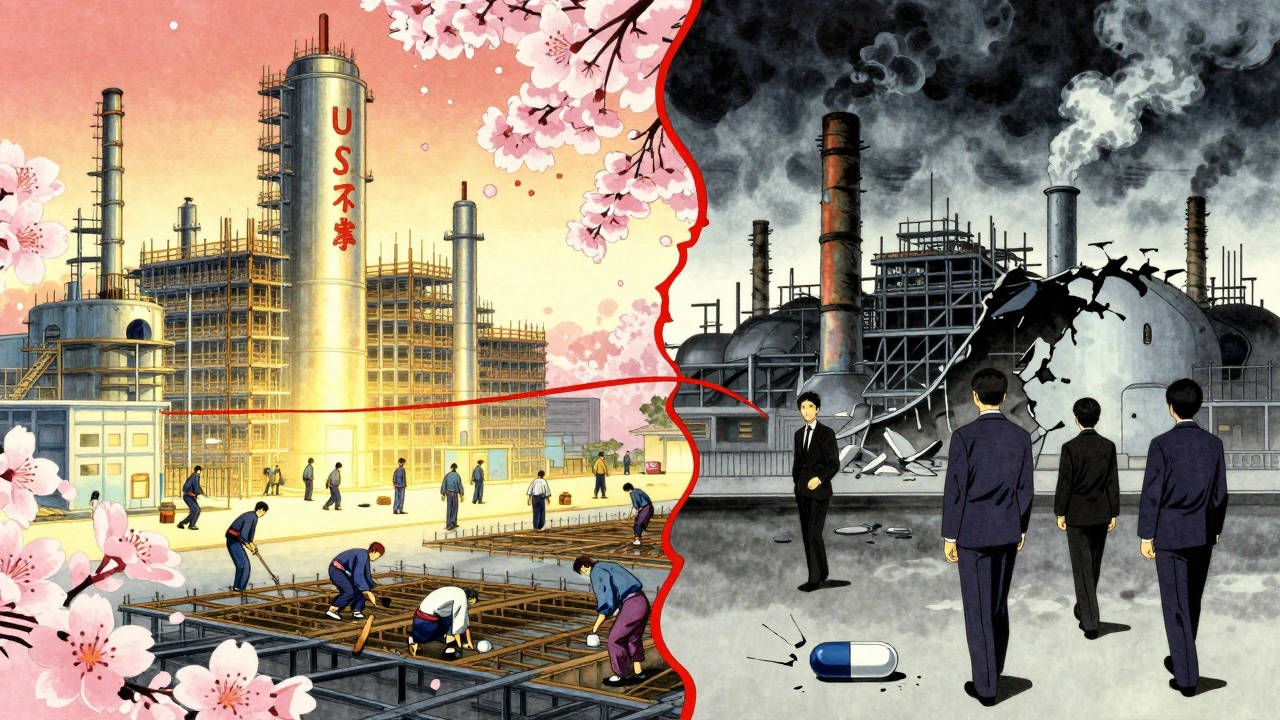
Branded drug companies make 70-80% gross margins. Generic manufacturers? 15-20% - and sometimes below 5%. That’s not a business. It’s a survival race.When a new company enters the market, they slash prices to win contracts. Others follow. Soon, everyone’s selling at a loss. Akorn Pharmaceuticals, once a major U.S. generic maker, went bankrupt in 2023. They stopped production. Overnight, dozens of drugs vanished. No backups. No alternatives. Just silence.
This isn’t an accident. It’s the design. The system rewards the cheapest supplier - not the most reliable, not the safest, not the most resilient. And when a manufacturer can’t make money, they exit. Since 2010, the number of U.S.-based generic manufacturers has dropped by 37%. The top five companies now control nearly half the market. That’s not competition. That’s consolidation after collapse.
The Human Cost
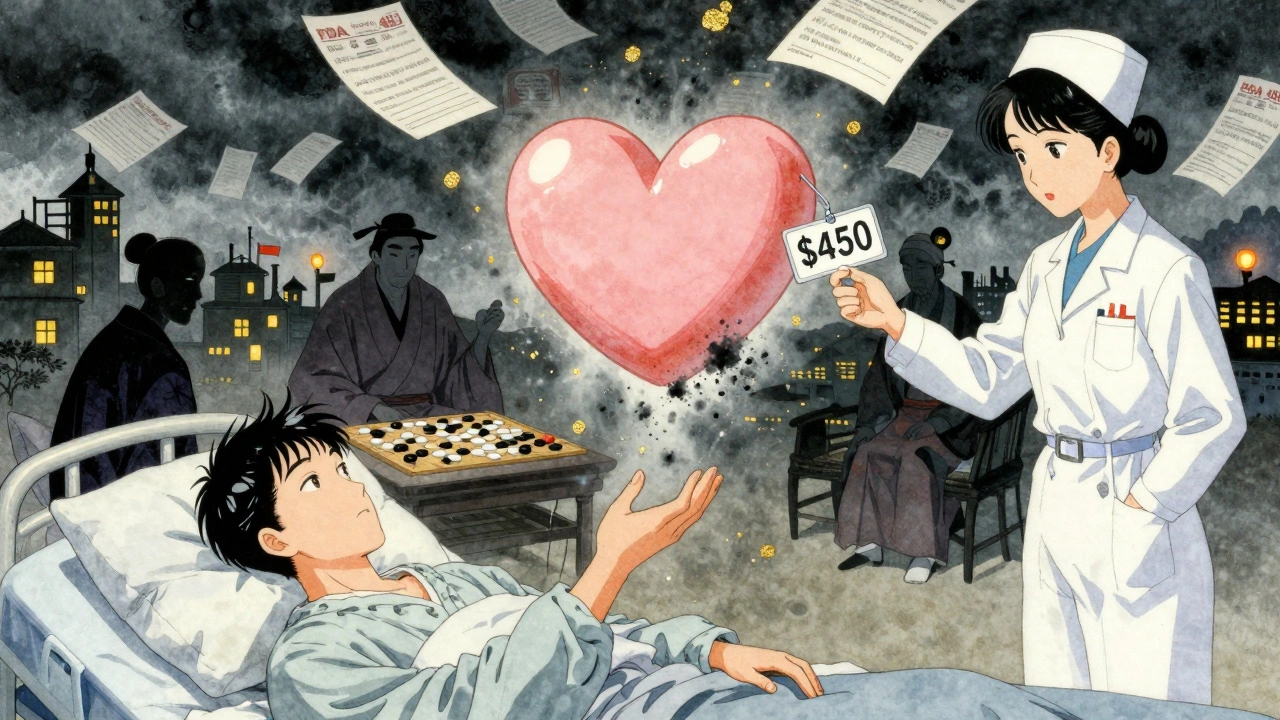
Behind every shortage is a patient. A nurse who has to switch 89 thyroid patients to a different brand because the generic ran out. A cancer patient forced to wait weeks for a replacement drug because the only supplier is under inspection. A Medicare beneficiary whose heart medication jumped from $10 to $450 a month when the generic disappeared.On Reddit’s r/pharmacy, pharmacists share stories daily: "We’ve had to substitute antibiotics for 17 different infections in six months." On the FDA’s drug shortage portal, complaints rose 327% between 2019 and 2022. A 2023 study found generic drugs made in India were linked to 54% more serious adverse events - including hospitalizations and deaths - than identical drugs made in the U.S. Correlation isn’t causation, but when quality control is inconsistent, the risk rises.
What’s Being Done - And Why It’s Not Enough
The FDA created a Drug Shortage Task Force. Congress passed the CREATES Act to stop branded companies from blocking generic competition. The Biden administration added $80 million to inspect foreign facilities - a 12% increase, despite a 40% rise in overseas sites needing checks.These are band-aids. The real fix? Change the economics.
Some hospitals are starting to bypass GPOs and buy directly from manufacturers, locking in fairer prices. The FDA’s Emerging Technology Program has approved 12 new continuous manufacturing lines - faster, safer, more efficient. But they account for less than 3% of total production.
There’s bipartisan support in Congress for tax incentives to bring API production back to the U.S. and create strategic stockpiles of critical drugs. But without changing how these drugs are priced, none of it will stick.
The Path Forward
We can’t go back to making all our drugs in America overnight. But we can stop pretending that the lowest price is the best price.What if contracts were awarded not just on cost, but on reliability, quality scores, and domestic content? What if manufacturers had a minimum profit margin guaranteed - just enough to invest in better equipment and safety checks? What if we treated essential medicines like we treat clean water or electricity - as public infrastructure, not commodities?
The system isn’t broken because of bad actors. It’s broken because it was built for efficiency, not resilience. And in a world where a single factory in India can trigger a national shortage of antibiotics, efficiency isn’t enough. We need stability. We need trust. We need to stop letting pennies decide who lives and who dies.
Jennifer Blandford
December 9, 2025 AT 11:15So this is why my grandma’s thyroid med kept switching brands last year - and why she cried because she couldn’t find the one that didn’t make her heart race. It’s not just about money. It’s about people. We treat medicine like a commodity when it’s literally life or death.
I’m from a small town in Ohio. We don’t have big hospitals. We have one pharmacy. And when the generic runs out? We wait. And wait. And pray.
Someone needs to fix this before someone dies because a CEO cared more about a 0.02 cent difference in bid price.
Shubham Mathur
December 9, 2025 AT 22:22Look I get it but you Americans always act like India is the villain here. We make 80 percent of your generics because YOU outsourced everything to cut costs. Now you cry when the system you built collapses?
We have FDA level labs. We have trained chemists. But your GPOs won’t pay us enough to keep them running. So what do you expect? We’re not evil. We’re just trying to survive too.
Stop blaming us. Fix your broken pricing model. And maybe stop treating medicine like a Walmart sale.
Stacy Tolbert
December 11, 2025 AT 06:58I worked in a hospital pharmacy for 12 years. I saw a 78-year-old man go into cardiac arrest because his generic digoxin was contaminated. The batch came from a factory that had been flagged 3 times. The FDA sent a polite letter. They didn’t shut it down.
That man didn’t die because of bad luck. He died because someone decided a penny was more important than a life.
I haven’t slept right since I quit. I still see his face every night.
Ronald Ezamaru
December 12, 2025 AT 17:54Let’s be clear - this isn’t about China or India. It’s about the U.S. healthcare system’s obsession with cost extraction over public health.
The FDA has the authority to prioritize inspections based on risk. They don’t. They inspect based on rotation, not need.
There are 1,200+ generic manufacturers globally. The FDA inspects about 200 per year. That’s one inspection every 6 years per facility - if they’re lucky.
We’re not failing because we’re lazy. We’re failing because we’ve normalized neglect as efficiency.
Fix the inspection model. Fund it. Then talk about tariffs.
Ryan Brady
December 12, 2025 AT 19:51Make America Great Again - by making our drugs in America. No more outsourcing to communist China or corrupt India. Build the factories. Pay the workers. Stop letting foreign countries hold our medicine hostage.
If we can spend $2 trillion on wars we can’t win, we can spend $5 billion to make sure people get their heart pills.
Stop being soft. This is national security.
🇺🇸
Raja Herbal
December 13, 2025 AT 07:45Oh so now the U.S. wants to play victim? You pay us 3 cents per pill for cisplatin, then act shocked when we can’t afford to fix the air conditioning in the lab?
My cousin works at a plant in Hyderabad. He wears the same gloves for three weeks because the company won’t buy new ones.
Don’t lecture us about quality when your GPOs are the ones squeezing us dry. We’re not the problem. Your greed is.
Suzanne Johnston
December 13, 2025 AT 15:44There’s a philosophical contradiction here: we demand perfect safety and perfect affordability simultaneously. But perfection in safety requires investment. Perfection in affordability requires sacrifice.
We’ve chosen affordability. Then we’re surprised when safety crumbles.
It’s not a failure of policy. It’s a failure of values. We treat medicine like a product, not a right. And now we’re reaping the consequences of that moral laziness.
Maybe the real question isn’t how to fix the supply chain - but how to rebuild our moral framework around care.
Graham Abbas
December 13, 2025 AT 21:09I’m British and we have the NHS - we still get shortages. But we have a national stockpile. We have price guarantees for essential meds. We don’t let the lowest bidder win when lives are on the line.
What’s fascinating is that the U.S. could fix this tomorrow if it wanted to. It’s not a technical problem. It’s a political one.
People keep saying ‘it’s complicated.’ But it’s not. It’s just inconvenient for the people who profit from the chaos.
Stop pretending you don’t have the power to change this.
And yes - I’m calling out both parties. This isn’t red or blue. It’s human.
Haley P Law
December 15, 2025 AT 16:40OMG I JUST REALIZED MY MOTHER’S ACETAMINOPHEN JUST WENT FROM $5 TO $120 BECAUSE THE ONLY U.S. FACTORY THAT MADE IT SHUT DOWN LAST YEAR.
I’M CRYING RIGHT NOW.
AND MY DOCTOR SAID ‘TRY THIS BRAND’ - IT’S THE SAME THING BUT IT’S NOT BECAUSE THE FILLERS ARE DIFFERENT AND IT GIVES HER HIVES.
WHY IS NO ONE DOING ANYTHING?!
Someone call the media. This is a horror movie and we’re all stuck in it.
Andrea DeWinter
December 17, 2025 AT 15:03My sister is a pharmacist in rural Kentucky. She told me last week they had to substitute 14 different generics in one week because of shortages.
She doesn’t have time to explain every substitution to patients. So they just take what’s there.
There’s no way to track if the new version has different fillers. No way to know if it’s safe for diabetics or people with allergies.
We’re playing Russian roulette with people’s health and calling it ‘market efficiency.’
It’s not. It’s negligence.
And if you think this won’t come for your medication next - you’re already in denial.