
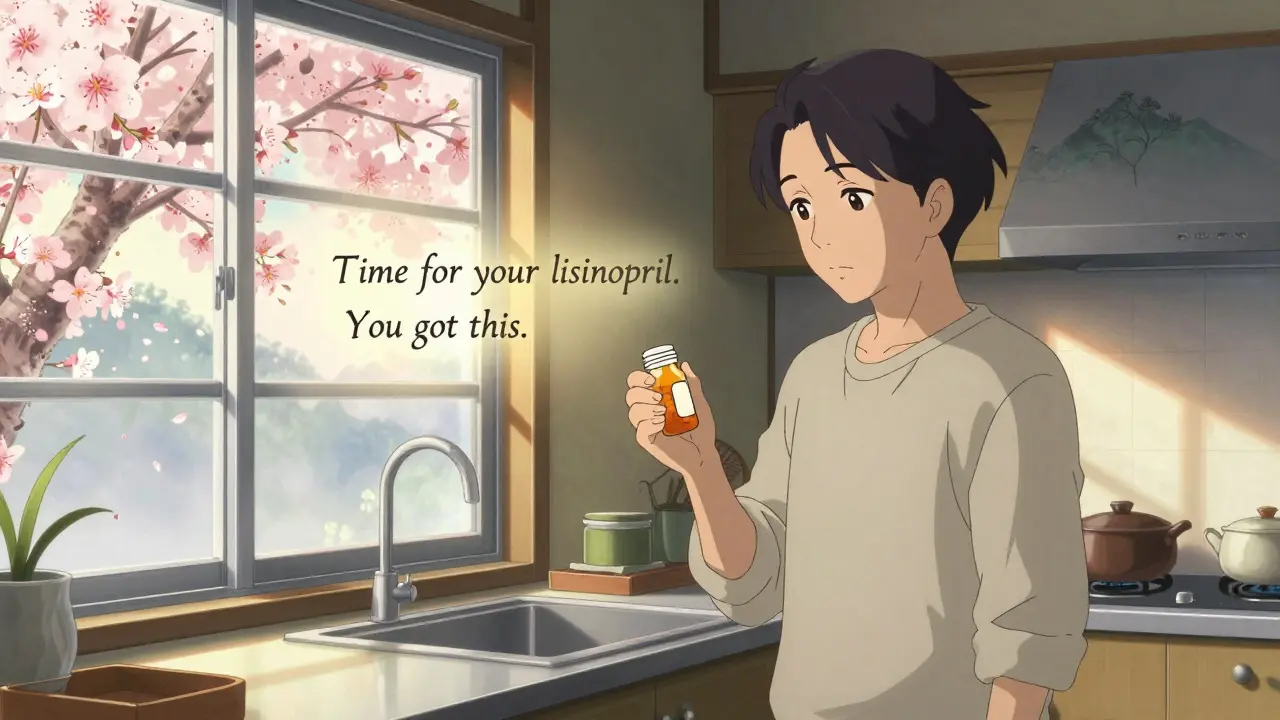
Missing a dose of your blood pressure pill because you forgot? You’re not alone. Around 30-50% of people with chronic conditions don’t take their meds as prescribed. That’s not just a personal problem-it’s a global health crisis costing billions each year. But here’s the good news: simple text message reminders can make a real difference-if they’re done right.
Why Text Reminders Work (When They Work)
Text messages aren’t magic. They don’t cure anything. But they do something simple: they show up when you need them. Studies show that for people with HIV, asthma, or heart disease, daily text reminders can boost adherence by up to 14 percentage points compared to no reminders at all. That means someone who was missing 4 out of 10 doses might now miss only 1 or 2. The key? Timing and personalization. A reminder that pops up 30 minutes before your usual pill time? That works. A generic message saying “Take your meds!” at 8 AM when you take your pills at 7 PM? It gets ignored-or worse, deleted.How to Set Up Effective Text Reminders
You don’t need an app or a fancy device. Most people can start today with their phone’s built-in tools. Here’s how to do it right:- Identify your exact medication schedule. Write down the name of each pill, the dose, and the time you’re supposed to take it. Don’t guess. Check your prescription label or ask your pharmacist.
- Choose the right time. Set the reminder 15-30 minutes before your usual pill time. That gives you a buffer. If you take your blood pressure pill at 7 AM, set the text for 6:30 AM. Not 7:05 AM. Not 11 AM.
- Make it personal. Don’t just type “Take meds.” Type: “Hi, it’s 6:30 AM. Time for your lisinopril 10mg. You got this.” Adding your name or a little encouragement makes it feel human, not robotic.
- Use a repeat function. Set the reminder to repeat daily, weekly, or however often you take the pill. Most phones let you do this in the Clock or Calendar app.
- Test it. Turn on the reminder for one day and see if it actually goes off at the right time. If your phone dies overnight or goes silent, you need a backup.
What Doesn’t Work
A lot of people try text reminders and give up after a week. Why? Because they set them up wrong.- Too many messages. Sending 5 reminders a day for 5 different pills? You’ll get annoyed. Group them. One message: “7 AM: Lisinopril, Atorvastatin. 8 PM: Metformin.”
- Generic messages. “Take your medicine.” That’s what everyone gets. People tune it out. Personalize it. Use your name. Mention the drug. Add a smiley if it helps.
- Wrong timing. If you take your pills at night, don’t send a reminder at 9 AM. It’s useless. And if you’re asleep? The message won’t help.
- One-size-fits-all. Someone with diabetes needs daily reminders. Someone on a weekly cholesterol pill? Weekly is enough. Over-reminding leads to fatigue. After 3-6 months, people start ignoring texts-even if they still need the meds.

When Text Reminders Fall Short
Here’s the truth: text reminders aren’t enough for everyone. A 2023 study of over 9,500 heart patients found that even the best text systems didn’t improve medication refills after a year. Why? Because the problem wasn’t forgetting-it was cost, side effects, confusion, or depression. If you can’t afford your pills, a text won’t fix that. If you feel dizzy after taking your medicine and stop because of it, a text won’t help. Text reminders work best when:- You’re generally motivated but forgetful.
- Your schedule is stable.
- You have a phone and consistent signal.
- You’re managing one or two key meds.
Advanced Options: Apps and Smart Systems
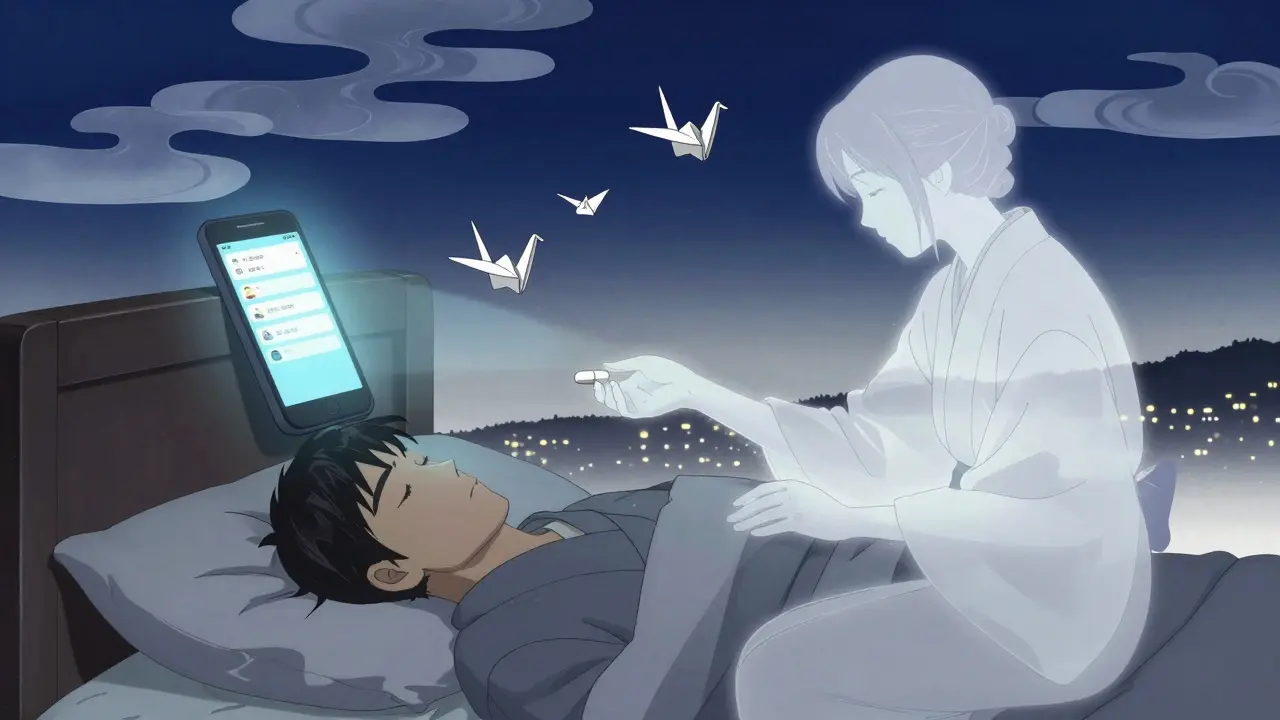
If you’re tech-savvy or want more than a basic text, there are better tools. Apps like Medisafe or MyTherapy do more than send texts. They:- Track when you take your pills (you tap a button to confirm).
- Send alerts if you miss a dose.
- Sync with your doctor’s system to report adherence.
- Offer weekly summaries and encouragement.
How to Avoid Message Fatigue
The biggest reason people stop using text reminders? They get boring. After 3-6 months, the novelty wears off. You start ignoring them. Here’s how to fight that:- Change the message every 2 weeks. Try: “Your heart thanks you.” or “You’ve taken your meds 27 days in a row. Keep going!”
- Turn off reminders for meds you’ve been taking for years without missing. If you’ve taken your thyroid pill daily for 5 years? Maybe you don’t need a text anymore.
- Use voice reminders. If you’re tired of reading texts, set up a voice alert on your phone or smart speaker: “Alexa, remind me to take my metformin at 8 PM.”
- Pair it with a habit. Take your pill right after brushing your teeth. Or right after your morning coffee. The habit becomes the trigger, not the text.
What to Do If It’s Not Working
You’ve tried texts. You’ve set the times. You’ve personalized the messages. But you’re still missing doses? Don’t blame yourself. Talk to your doctor or pharmacist. Ask:- “Is there a once-daily version of this pill?”
- “Can I switch to a lower-cost brand?”
- “Do I really need all these pills?”
- “Can you help me set up a pill organizer?”
Final Thought: Texts Are a Tool, Not a Cure
Text message reminders are one of the simplest, cheapest, and most widely available tools we have to help people take their meds. But they’re not a fix-all. They work best when they’re part of a bigger plan-with support from your care team, your family, and your own routine. Start small. Pick one pill. Set one reminder. Make it personal. See how it feels. If it helps, add another. If it doesn’t, try something else. Your health is worth the effort.Can I use free text message services for medication reminders?
Yes. Your phone’s built-in alarm or calendar app can send daily text reminders for free. You don’t need to pay for an app or service. Just make sure the message is personalized and timed correctly. Avoid services that require you to sign up with personal health data unless you trust the provider and know how your data is protected.
What if I don’t have a smartphone?
You still can use text reminders. Any mobile phone that can receive SMS messages-even a basic flip phone-can get them. You just won’t be able to use apps that track your doses. But a simple daily text from a family member or clinic can still help. Ask your doctor if they offer a free text reminder service for patients without smartphones.
Are text reminders safe for my privacy?
Standard SMS texts aren’t encrypted, so they’re not fully secure. Avoid sending detailed medical info like “Take your 20mg warfarin” in a text. Instead, use codes like “Take med 3” or “Take blue pill.” If your clinic sends texts, ask if they use a HIPAA-compliant platform. For personal use, keep messages vague and never include your full name or diagnosis in the message.
How long should I keep using text reminders?
Use them as long as you need them. For most people, 6-12 months is enough to build a habit. After that, you can reduce frequency-switch from daily to weekly-or turn them off entirely. If you start missing doses again, turn them back on. There’s no rule that says you have to use them forever.
Can I set up reminders for someone else?
Yes, if they’re okay with it. Many families set up reminders for aging parents or loved ones with memory issues. Just make sure the person knows you’re doing it and agrees to the messages. Don’t send reminders to someone who doesn’t want them-it can feel controlling. Instead, offer to help them set it up themselves.

josue robert figueroa salazar
December 27, 2025 AT 13:09Text reminders? Yeah right. I set one for my blood pressure pill and it went off at 3 AM. I deleted it. Done.
Jody Kennedy
December 29, 2025 AT 12:25Used to miss meds all the time. Set up a text for my statin at 8 PM. Now I take it like clockwork. No app needed. Just my phone’s alarm. Changed my life.
Also, I call it ‘The Blue Pill Reminder.’ Makes it feel less clinical.
Joanne Smith
December 29, 2025 AT 17:38Let’s be real-most people don’t even know how to set a damn alarm on their phone. I helped my mom set up a daily text for her metformin. She thought it was a prank at first. Now she asks me to change the message because ‘Take your blue pill, you legend’ makes her smile.
That’s the magic. Not tech. Humanity.
Prasanthi Kontemukkala
December 31, 2025 AT 13:08As someone from India where many elders don’t have smartphones, I’ve seen how simple SMS from family works wonders. My aunt takes her insulin because my uncle sends a message every day at 7:30 AM: ‘Aunty, time for your shot. I love you.’
No fancy app. Just love wrapped in a text. Maybe that’s the real secret.
Lori Anne Franklin
January 1, 2026 AT 18:51I tried text reminders and they felt so robotic… until I made one say: ‘Hey you gorgeous human, your heart needs you right now 💖’
Now I look forward to it. Weird? Maybe. Effective? Absolutely.
Ryan Cheng
January 3, 2026 AT 14:52One thing no one talks about: if you’re on 5+ meds, group them. One text: ‘7 AM: BP pill, statin, thyroid. 8 PM: metformin, aspirin.’
Less noise. More compliance. I learned this the hard way after 17 missed doses in a month. Oof.
Jeanette Jeffrey
January 4, 2026 AT 19:13Text reminders? Cute. Until you realize 80% of people who need them can’t afford data, have no phone, or are too depressed to care.
It’s not a solution-it’s a band-aid on a hemorrhage. The real problem? Pharma prices. Not forgetfulness.
Shreyash Gupta
January 6, 2026 AT 13:48Wait, you’re telling me texting yourself works better than just… putting the pills next to your toothbrush? 😏
Why are we overcomplicating this? My grandma takes hers after coffee. No texts. Just habit. You’re welcome.
Dan Alatepe
January 8, 2026 AT 02:02Bro… I set a text that says: ‘Lisinopril time, king 👑. The world needs your heart alive.’
My phone buzzes. I pause. I take it. I feel like a damn superhero.
My cousin in Lagos saw me doing it and now he sends me voice notes with his own reminders. We’re a whole support group now. Texts aren’t tech-they’re love with a notification sound.
christian ebongue
January 9, 2026 AT 04:35Text reminders work… until you miss a dose and the app pings you 10 times like you’re a dog who peed on the rug. Then you turn off notifications for a week and forget again.
Automation is great until it feels like harassment.
jesse chen
January 9, 2026 AT 07:12I’ve been using Medisafe for 14 months. It tracks my doses, sends gentle nudges, and even gives me weekly stats. But honestly? The part I love most is the little ‘You’re doing great!’ pop-up after 7 days straight.
It’s not just tech-it’s emotional support with a dashboard.
Alex Ragen
January 10, 2026 AT 20:06Text reminders are the neoliberal solution to systemic healthcare failure: ‘Here’s a push notification. Now go fix your socioeconomic reality.’
Meanwhile, the real issue-lack of access, cost, stigma-is left untouched. We’re optimizing the symptom, not the disease.
wendy parrales fong
January 11, 2026 AT 00:53I used to hate reminders. Felt like I was being scolded.
Then I started saying out loud every time I took my pill: ‘I’m choosing to live today.’
Now I don’t need texts. I just say it. And it helps.
Maybe the real reminder was inside me all along.
Ellie Stretshberry
January 11, 2026 AT 05:19i set a text for my blood pressure pill and it worked for 2 weeks then i just… stopped checking my phone
now i keep my pills in my purse and take them when i grab it
simple. no tech. no stress. just life
Bryan Woods
January 11, 2026 AT 06:18As a nurse, I’ve seen patients use everything from sticky notes to smartwatches. The most effective tool? Consistency. Not the method.
One woman took her pills every morning after lighting her candle. No phone. Just ritual. That’s the real reminder: a moment of intention.