
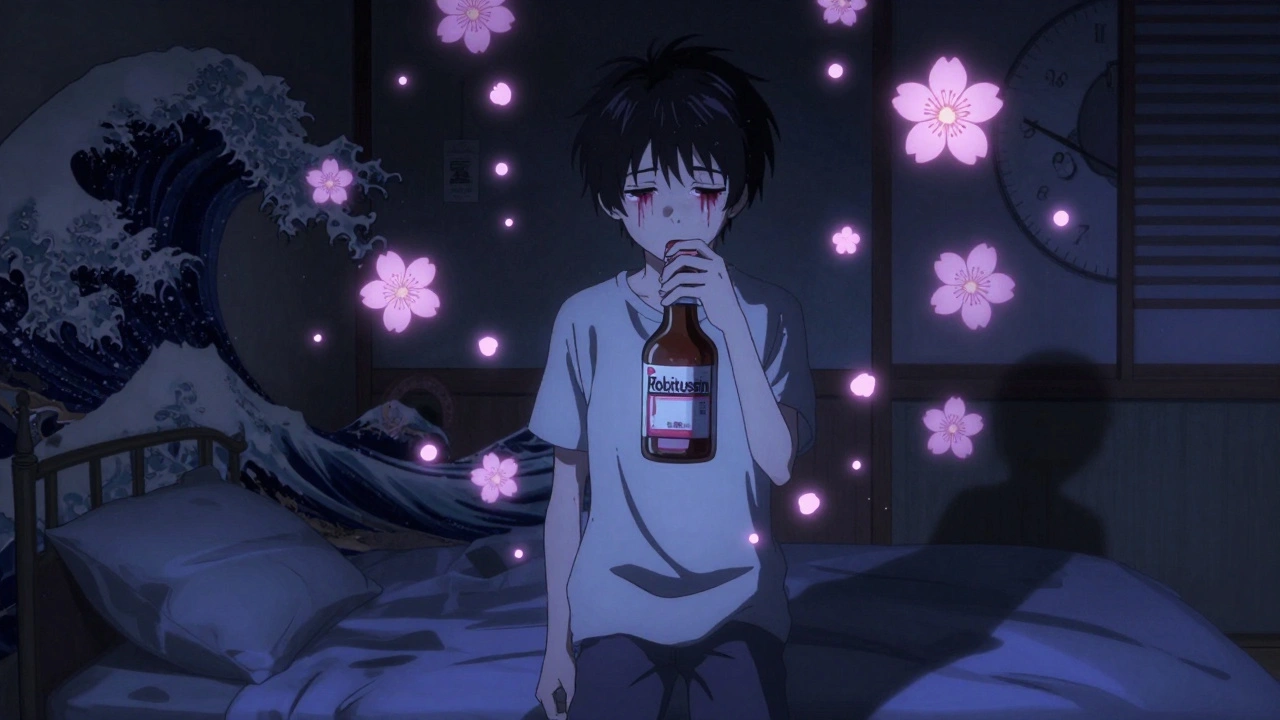
It’s easy to overlook a bottle of cough syrup sitting on your medicine cabinet. After all, it’s OTC-over the counter. No prescription. No doctor visit. Just grab it when you’ve got a bad cold. But for some, especially teens and young adults, that bottle isn’t for coughs anymore. It’s a shortcut to a high. And the ingredient behind it? Dextromethorphan, or DXM.
What DXM Is-And What It’s Not
Dextromethorphan is a synthetic cough suppressant. It’s been in OTC cold medicines since the 1950s. Unlike codeine, it doesn’t relieve pain or cause physical dependence when taken as directed. That’s why it was originally marketed as a safer alternative. The label says: take 15-30 mg every 4 to 8 hours. That’s it. That’s the safe range. But DXM has a hidden side. At doses far beyond what’s recommended-240 mg, 500 mg, even 1,500 mg-it starts acting like a dissociative drug. Think hallucinations, out-of-body feelings, distorted time and sound. That’s not a side effect. That’s the point for people abusing it. They call it "robo tripping," "dexing," or "candy." Some even refer to it as "the poor man’s PCP," because the effects mimic the illegal drug phencyclidine, but without the cost or legal risk.How People Abuse It
Abuse doesn’t happen by accident. It’s intentional. And it’s often done in ways that make it easy to hide. The most common method? Drinking multiple bottles of cough syrup at once. Products like Robitussin DM, NyQuil, Coricidin, and Dimetapp DM all contain DXM. Many are labeled with "DM" on the front. Some people drink entire 8-ounce bottles in one sitting. That’s 300 mg of DXM-ten times the recommended dose. There’s also the "robo shake." Users chug a large amount of syrup, then make themselves throw up. Why? To get rid of the other ingredients-like acetaminophen or antihistamines-that cause nausea, drowsiness, or liver damage. But DXM absorbs quickly through the stomach lining. So they keep the high, ditch the side effects. Even more dangerous? Extracting pure DXM. Some users follow online guides to chemically strip the active ingredient from syrup, turning it into powder or capsules. They then swallow it, snort it, or even inject it. This removes all safety buffers. One wrong measurement and you’re looking at an overdose.The Plateaus: What Happens When You Take Too Much
DXM doesn’t just make you feel "buzzed." It hits in stages, called plateaus. Each one is more intense-and more dangerous.- First plateau (100-200 mg): Mild euphoria, slight dizziness, altered perception. Feels like a strong cold medicine buzz.
- Second plateau (200-400 mg): More intense. Visual distortions, numbness, loss of coordination. Users report feeling "detached" from their body.
- Third plateau (400-600 mg): Hallucinations, time distortion, out-of-body experiences. Some users describe it as a near-death or spiritual trip.
- Fourth plateau (600+ mg): Complete dissociation. Loss of motor control, delirium, coma risk. This is where overdoses happen.

Why Teens Are Turning to It
It’s cheap. It’s legal. It’s everywhere. A bottle of Robitussin costs less than $10. It’s sold in pharmacies, gas stations, grocery stores. No ID check. No questions asked. For teens who can’t afford marijuana, LSD, or even alcohol, DXM is the only option that gives them a strong, mind-altering experience. According to the National Institute on Drug Abuse, about 3% of teens admit to abusing OTC cough medicine to get high. That’s 1 in 30. And in 2015, nearly 5% of high school seniors had tried it in the past year. Those numbers haven’t dropped. In fact, with pure DXM powder now available online, access is easier than ever. Some kids don’t even realize they’re abusing a drug. They think they’re just "taking extra cough syrup" because they "really needed it." But when the goal shifts from treating a cough to chasing a hallucination, it’s no longer medical use.The Hidden Dangers
Most people think: "It’s just cough medicine. How bad can it be?" Here’s the reality:- Liver damage: Many cough syrups contain acetaminophen. Too much of it-especially when combined with alcohol-can cause fatal liver failure.
- Cardiac arrest: DXM can cause dangerously high blood pressure and irregular heart rhythms.
- Brain damage: High doses, especially with other stimulants like MDMA, can trigger hyperthermia-body temperature so high it cooks brain tissue.
- Addiction: Even though some sources say DXM isn’t addictive, treatment centers like Greenhouse Treatment report increasing cases of dependence. Users report cravings, withdrawal symptoms, and compulsive use.
- Psychological trauma: Dissociative states can trigger lasting anxiety, paranoia, and psychosis-even in people with no prior mental health issues.
What’s Being Done?
Some states have passed laws restricting sales of DXM products to minors. Others require pharmacies to keep cough syrups behind the counter. The CHPA (Consumer Healthcare Products Association) has partnered with abuse prevention groups to educate parents and retailers. But enforcement is patchy. A teenager in Sydney, Australia, can still walk into a pharmacy and buy a bottle of Benylin DM without showing ID. Online retailers sell pure DXM powder with no questions asked. And here’s the irony: the very thing that made DXM popular-its accessibility-is what makes it so dangerous. There’s no control. No oversight. No warning label that says: "This can break your brain."What You Can Do
If you’re a parent: Check your medicine cabinet. Look for bottles labeled "DM," "Tuss," or "Cough Suppressant." Count them. Notice if any are missing. Talk to your kids-not with fear, but with facts. Ask what they’ve heard about "robo tripping." Most don’t realize how deadly it is. If you’re a teen: Don’t experiment. What you think is a harmless party trick could end your life-or ruin your brain. The effects don’t always go away. If you’re a friend of someone who’s abusing DXM: Don’t wait for them to hit rock bottom. Talk to them. Get them help. There are treatment centers that specialize in OTC drug addiction. DXM isn’t a gateway drug. It’s a trapdoor. One bottle. One bad decision. And then you’re down a path you can’t come back from.Frequently Asked Questions
Can you get addicted to DXM?
Yes. While DXM isn’t physically addictive like opioids, repeated abuse can lead to psychological dependence. Users report cravings, increased tolerance, and compulsive use-even after negative consequences. Treatment centers are seeing more cases of DXM addiction, especially among teens who use it weekly.
Is DXM abuse only a problem for teens?
No. While teens are the most common group, adults also abuse DXM, especially those with a history of substance use or mental health issues. The rise of pure DXM powder online has made it easier for older users to access it without cough syrup. It’s not just a "teen problem." It’s a public health issue.
What are the signs someone is abusing DXM?
Look for empty cough syrup bottles, unexplained drowsiness, slurred speech, poor coordination, dilated pupils, or sudden mood swings. They may act confused, detached, or overly excited. Some users wear long sleeves to hide red, itchy skin-a common side effect of high-dose DXM.
Can you overdose on DXM?
Absolutely. Overdose symptoms include extreme dizziness, vomiting, seizures, slowed breathing, hallucinations, and unconsciousness. Pure DXM powder is especially risky because dosing is imprecise. Even small errors can be fatal. If someone collapses after taking cough syrup, call emergency services immediately.
Is it safe to mix DXM with alcohol or other drugs?
No. Mixing DXM with alcohol, antidepressants, stimulants like MDMA, or even common painkillers like acetaminophen can cause deadly interactions. Alcohol increases the risk of respiratory failure. MDMA raises body temperature to dangerous levels. Acetaminophen can cause liver failure. There is no safe combination.
Are there legal consequences for buying DXM cough syrup?
In most places, buying OTC cough syrup is legal-even if you intend to abuse it. But some states and countries have started restricting sales to minors or requiring pharmacist consultation. Selling pure DXM powder online may violate drug laws, depending on local regulations. The DEA has considered classifying DXM as a controlled substance due to rising abuse rates.
Olivia Portier
December 9, 2025 AT 02:14Yo, I used to do this in high school back in Manchester-just chugged NyQuil till my vision got all wobbly. Thought it was cool. Turns out I was just poisoning my liver and screaming at ceiling fans. Don’t do it. Your brain doesn’t get a do-over.
Raja Herbal
December 10, 2025 AT 23:58So you’re telling me the same syrup my grandma uses for her cold is basically liquid PCP? That’s wild. India’s got it behind the counter now-pharmacist asks why you need 5 bottles. Still, kids find ways. Sad.
Jennifer Blandford
December 11, 2025 AT 09:57I’m from LA and I’ve seen so many kids walk into 7-Elevens like it’s a gas station snack run-grab a bottle of Robitussin, wink at the clerk, and bounce. No one bats an eye. It’s not just a teen thing-it’s a cultural blind spot. We treat addiction like it’s a moral failure instead of a systemic failure. We need better education, not just laws.
Lola Bchoudi
December 12, 2025 AT 03:33As a recovery coach, I’ve had three clients in the last year who started with DXM. One was 14. They don’t call it abuse-they call it "experimenting." The brain’s still developing until 25. You’re not just messing with your high, you’re rewiring your reward system. It’s not a party trick-it’s neurochemical roulette.
Simran Chettiar
December 13, 2025 AT 08:41It is a profound existential paradox, this phenomenon of the pharmaceutical sublime: the very substances designed to heal us become the conduits of our dissolution. We live in an age where the pharmacy shelf is the new altar, and the sacrament is dissociation. The modern child, deprived of myth, seeks transcendence in syrup-because the gods have left the temples, and now they reside in the acetaminophen-laced elixirs of Big Pharma. One must ask: is the high the escape, or is the escape the high?
Rich Paul
December 13, 2025 AT 12:49LMAO yall actin like DXM’s some new devil drug. It’s been around since 1958. The real issue is parents who don’t monitor meds. Also, people who think "pure DXM powder" is safe? Bro, you’re not a chemist. That shit’s 10x more dangerous than syrup. And no, you don’t "extract it yourself" like some TikTok alchemist. You just end up in the ER with a heart rate of 180. 🤡
Morgan Tait
December 14, 2025 AT 20:44Did you know the government knows about this? They let it slide because they’re afraid of the pharmaceutical lobby. I’ve got a cousin who works at a FDA subcontractor-they told me they’ve had internal memos since 2012 about classifying DXM. But the money’s too big. Also, I saw a guy on Reddit who said he saw a van with no plates dropping off "DXM kits" in school parking lots. Coincidence? I think not.
Tiffany Sowby
December 16, 2025 AT 17:02Why is this even a thing? In America, we have a problem with kids thinking everything is a game. You don’t drink 10 bottles of cough syrup to get high-you drink it because you’re bored and your parents don’t care. We need to stop treating teens like they’re adults with bad judgment and start treating them like they’re kids who need boundaries.
Brianna Black
December 17, 2025 AT 22:12I’m Indian-American and I’ve seen this in my own family. My cousin’s friend died at 17 from DXM + alcohol. No one knew it was even possible. We need more South Asian parents to talk about this-not just "don’t do drugs," but "here’s what this actually does to your body." We’re so scared of sounding like we’re lecturing, we end up silent. Silence kills.
Darcie Streeter-Oxland
December 18, 2025 AT 20:08The statistical prevalence of dextromethorphan abuse among adolescents remains statistically insignificant in comparison to other substances such as cannabis or alcohol, and thus the alarmist tone of this article appears disproportionate to the empirical data. Furthermore, the conflation of recreational use with pathological dependence is methodologically unsound.
Kathy Haverly
December 20, 2025 AT 07:32Wow. Another fear-mongering article designed to make parents panic and politicians look like they’re "doing something." The real problem? Kids are lonely. They’re bored. They’re not getting real connection. So they find a way to feel something-even if it’s a hallucination. Blaming syrup is lazy. Blaming teens is cruel. Fix the damn system.
Ryan Brady
December 21, 2025 AT 13:02My little sister did this last year. She’s fine now, but I had to drag her to the hospital. She thought it was "just a trip." Now she’s in therapy. I just want people to know: it’s not a joke. It’s not "edgy." It’s a one-way ticket to trauma. And yeah, I’m a dude. I don’t cry about it. But I still think about it every damn day.