
Store Pills Properly: How to Keep Your Medications Safe and Effective
When you store pills properly, the way you keep your medications affects how well they work, how long they last, and whether they stay safe to use. Also known as medication storage, this isn’t just about keeping bottles in a cabinet—it’s about controlling heat, moisture, light, and access to prevent damage or accidents. Many people don’t realize that even a hot bathroom or a sunny windowsill can break down active ingredients over time, making your pills less effective—or worse, unsafe. The same goes for moisture: humidity turns tablets into mush and capsules into sticky messes, and that’s not just messy, it’s risky.
Think about drug degradation, the slow chemical breakdown of medication due to environmental exposure. Also known as pharmaceutical stability, this process is why shelf life matters. A generic version of levothyroxine or warfarin might be chemically identical to the brand, but if it’s stored in a steamy bathroom for months, its potency drops. Studies show that some drugs lose up to 30% of their strength past their expiration date when exposed to poor conditions. And it’s not just old pills—new ones bought from a warehouse shipped in summer heat can start degrading before they even reach your medicine cabinet. Then there’s shelf life, the official period a medication remains safe and effective under proper storage. Also known as expiration date, this isn’t just a marketing trick—it’s based on real stability testing. But here’s the catch: manufacturers test under ideal lab conditions. Your kitchen counter? Not ideal. That’s why storing pills in a cool, dry place like a bedroom drawer, away from sinks and showers, makes a real difference. And don’t forget pill safety, the practices that protect people, especially kids and pets, from accidental poisoning. Also known as childproof storage, this means locking up medications, using original containers with labels, and never leaving pills on nightstands or countertops. Over 50,000 children under six are treated in U.S. emergency rooms each year from accidental medicine ingestion. Most of those cases happen because the pills weren’t stored securely.
What you’ll find below are real, practical guides on how to handle your meds from the pharmacy to your daily routine. You’ll learn how to spot signs your pills have gone bad, why some drugs need refrigeration, how to dispose of expired meds safely, and what to do if you’ve been storing them wrong for years. No fluff. No guesswork. Just clear, tested advice that matches what’s in your medicine cabinet right now.
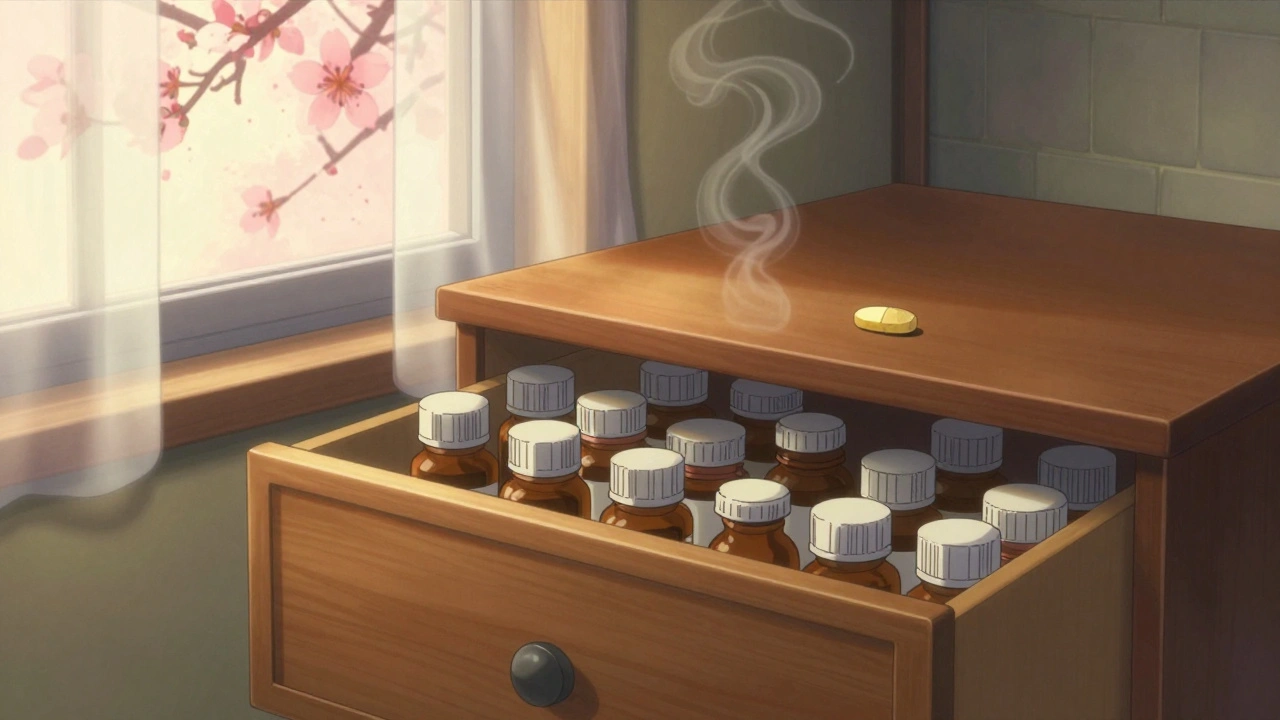
How to Store Medications to Prevent Early Expiration
Learn how to store medications properly to prevent early expiration, avoid waste, and ensure your pills remain safe and effective. Discover where not to keep them-and what to do with expired meds.