
Generic Pharmaceuticals: What They Are, How They Work, and Why They Matter
When you pick up a prescription, you might see a different name on the bottle than what your doctor wrote. That’s because you’re holding a generic pharmaceutical, a medication that contains the same active ingredient as a brand-name drug but is sold under its chemical name after the patent expires. Also known as generic drugs, they work the same way, in the same amount of time, with the same risks and benefits — but often cost 80% less. This isn’t a loophole or a downgrade. It’s the law. The FDA requires generic pharmaceuticals to meet the same strict standards for strength, purity, and performance as their brand-name counterparts.
Behind every generic pharmaceutical is a complex system of manufacturing, testing, and regulation. Companies don’t need to repeat expensive clinical trials because the original drug’s safety and effectiveness are already proven. Instead, they prove bioequivalence, the scientific proof that the generic delivers the same amount of active ingredient into the bloodstream at the same rate as the brand-name version. This is why switching between different generic versions of the same drug is usually safe — unless you’re taking something with a narrow therapeutic index, a category of drugs where even tiny differences in blood levels can cause serious harm, like warfarin or levothyroxine. For those, consistency matters more than cost.
But cost isn’t the only reason generics exist. They’re the backbone of global access to medicine. In countries where people pay out-of-pocket, generics make chronic conditions like high blood pressure or diabetes manageable. Even in the U.S., where insurance covers much of the cost, generics save the system over $300 billion a year. And while some worry about where these drugs are made — especially with China producing most of the active ingredients — the FDA still inspects facilities and tracks recalls. The real risk isn’t always the drug itself, but inconsistent storage, expired stock, or accidental switches without warning.
What you’ll find here isn’t marketing fluff. It’s the real talk: how generic pharmaceuticals are made, why some cost pennies while others still carry a premium, when switching between them can be dangerous, and how to spot a legitimate product from a shady one. You’ll learn how to read a pill label, what to do if your generic suddenly feels different, and why your pharmacist might swap your medication without asking. We’ll also cover the hidden truths about shelf life, manufacturing quality, and what happens when a drug recall hits. This isn’t about choosing between brand and generic. It’s about understanding what’s in your hand — and making sure it’s doing exactly what it’s supposed to.
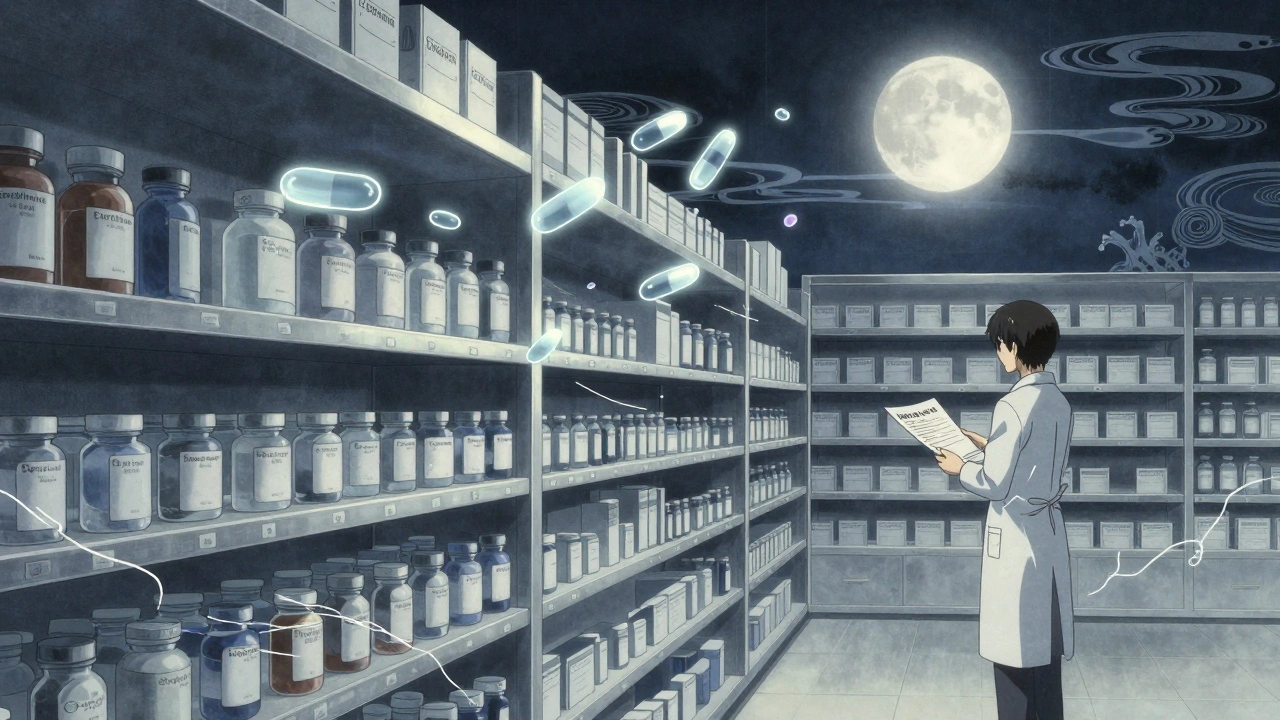
Why Generic Drugs Are Vanishing: The Hidden Crisis Behind Drug Shortages
Generic drugs make up 90% of prescriptions but only 20% of spending - and that’s why they’re vanishing. A broken pricing system, foreign supply chains, and weak oversight are causing life-threatening shortages.