

Sirolimus Wound Healing Risk Calculator
This tool helps determine the recommended timing for starting sirolimus after surgery based on your individual risk factors. Proper timing is critical to minimize wound complications like dehiscence, infection, and lymphocele formation.
Your Risk Factors
Results
Recommended Start Time:
Key Recommendations
Important: These recommendations are based on general guidelines and may vary based on your specific medical situation. Always consult with your transplant team.
Sirolimus is a powerful immunosuppressant used after organ transplants to keep the body from rejecting the new organ. But there’s a problem: it can seriously slow down how fast your body heals after surgery. This isn’t just a theoretical concern-it’s something surgeons and transplant teams deal with every day. If you’re on sirolimus or considering it, you need to know when to start it after surgery, and how to reduce the risk of complications like wound dehiscence, infections, or lymphocele formation.
How Sirolimus Slows Down Healing
Sirolimus works by blocking a protein called mTOR. That’s great for stopping immune cells from attacking your new kidney or liver. But mTOR is also critical for wound healing. It helps fibroblasts multiply, encourages new blood vessels to grow, and tells your body to lay down collagen-the structural glue that holds cuts and incisions together. Studies in rats show that when sirolimus is given at therapeutic doses (2.0 to 5.0 mg/kg/day), wound breaking strength drops by up to 40%. Collagen deposits fall significantly. Blood vessel growth in the wound area is cut by half. Why? Because sirolimus suppresses VEGF-vascular endothelial growth factor-which is the main signal your body uses to recruit cells that build new tissue. Without VEGF, your wound doesn’t get the blood supply or the building blocks it needs. This isn’t just lab data. In human tissue, sirolimus concentrations in wound fluid are two to five times higher than in the bloodstream. That means the drug is literally bathing your healing incision in a high dose, even if your blood levels look fine.The Real Risk: What Happens in Patients
The Mayo Clinic studied 26 transplant patients on sirolimus who had dermatologic surgeries. The results were sobering: 19.2% got infections compared to 5.4% in those not on sirolimus. Wound dehiscence-where the cut reopens-happened in 7.7% of the sirolimus group. Zero in the control group. The odds ratio was 7.7. That’s a big jump. But here’s the twist: those numbers weren’t statistically significant. Why? Because the sample was small. Only 26 people. In medicine, small studies often miss real effects. That doesn’t mean the risk isn’t there-it means we need better data. Larger observational studies and meta-analyses confirm the trend. Sirolimus increases the risk of wound complications by 2 to 3 times compared to other immunosuppressants like tacrolimus. The risk spikes even higher in patients with obesity, diabetes, or poor nutrition. One study found that for every 5-point increase in BMI, the chance of wound problems went up by nearly 50%.When to Start Sirolimus After Surgery
There’s no universal rule. But most transplant centers follow a cautious path: wait at least 7 to 14 days after surgery before starting sirolimus. Why wait? The first week after surgery is when healing is most fragile. That’s when fibroblasts are rushing in, new capillaries are forming, and the wound is still weak. Introducing sirolimus during this window is like shutting off the water supply while the foundation is still drying. Some centers delay until day 14, especially after major abdominal surgeries like kidney or liver transplants. Others, particularly academic hospitals, start as early as day 7 if the patient is low-risk: younger, non-smoker, normal BMI, no diabetes, good protein intake. The American Society of Transplantation’s 2021 guidelines say it clearly: don’t use a one-size-fits-all timeline. Base your decision on the type of surgery, the patient’s health, and their surgical recovery progress.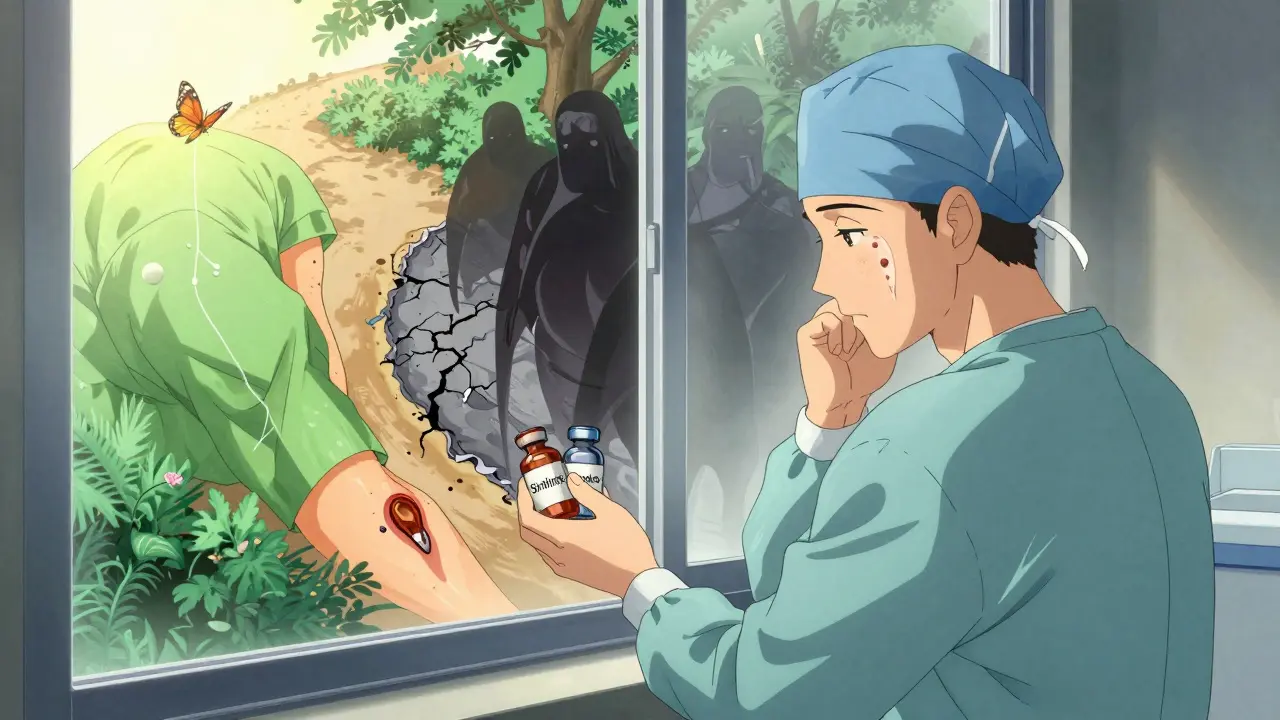
Who Should Avoid Sirolimus Early On
Not everyone is the same. Some people are at much higher risk. Here’s who you need to be extra careful with:- Patients with BMI over 30 - Obesity is the single biggest non-modifiable risk factor. Fat tissue has poor blood flow and is more prone to fluid buildup (lymphocele), which sirolimus makes worse.
- Diabetics with HbA1c over 7.5% - High blood sugar slows healing and weakens the immune response in wounds.
- Smokers - Nicotine constricts blood vessels. Add sirolimus on top, and you’re cutting off oxygen to the healing tissue.
- Patients with low albumin or protein deficiency - Collagen needs protein. If you’re malnourished, your body can’t rebuild.
- Those on multiple immunosuppressants - Combining sirolimus with steroids, ATG, or mycophenolate multiplies the risk.
What You Can Do to Lower the Risk
You can’t change your age or your BMI overnight. But you can control other factors. Here’s what works:- Stop smoking at least 4 weeks before surgery. Studies show this cuts wound complication rates in half.
- Optimize your nutrition. Aim for 1.2 to 1.5 grams of protein per kilogram of body weight daily. If you’re not eating enough, talk to a dietitian. Protein shakes, eggs, lean meats, and dairy help.
- Control your blood sugar. If you’re diabetic, get your HbA1c under 7% before surgery. Even a small drop makes a difference.
- Keep your sirolimus trough level below 6 ng/mL in the first 30 days. Research shows that keeping levels low during early healing reduces complications without increasing rejection risk.
- Use alternative immunosuppressants during early recovery. Many centers start with tacrolimus or cyclosporine right after surgery, then switch to sirolimus after 2-4 weeks once the wound is stable.

The Changing View: From Fear to Management
Ten years ago, sirolimus was often avoided altogether in transplant patients because of wound healing fears. But things have changed. New data shows that with careful patient selection, proper timing, and controlled dosing, the risks can be managed. A 2022 review in Wiley called earlier concerns about sirolimus and wound healing “old myths.” It’s not that the risks disappeared-they’re just better understood now. Doctors who use sirolimus regularly say the drug’s benefits often outweigh the risks. It doesn’t damage kidneys like tacrolimus. It lowers the chance of skin cancer, which is a huge deal for transplant patients. And it reduces CMV and other viral infections. The key isn’t avoiding sirolimus. It’s using it wisely.What If You’re Already on Sirolimus and Have a Wound Problem?
If you’re on sirolimus and your incision isn’t healing, or you notice redness, swelling, or fluid leaking, don’t wait. Contact your transplant team immediately. Sometimes, temporarily lowering the sirolimus dose (to 1-2 mg/day) or pausing it for 7-10 days can help the wound recover. Once healing resumes, you can restart at a lower dose. In some cases, switching to another immunosuppressant like belatacept (which doesn’t affect mTOR) is an option. But that’s not always possible-it depends on your rejection risk and kidney function.Bottom Line: Timing Matters More Than You Think
Sirolimus isn’t a drug you take the day after surgery. It’s not a drug you start without checking your BMI, your blood sugar, and your protein levels. It’s a tool-powerful, but dangerous if misused. The best outcomes happen when timing, patient selection, and dosing work together. Start too early? Risk infection and dehiscence. Start too late? Risk rejection. The sweet spot is usually between day 7 and day 14, but only if you’re low-risk. If you’re high-risk, wait longer. Optimize your health first. Talk to your team about alternatives. Don’t assume sirolimus is the only option-or the best one for you right now. The goal isn’t just to survive the transplant. It’s to heal well, stay infection-free, and live a long, active life after. Sirolimus can help with that-but only if you use it at the right time, in the right way.Can sirolimus cause wounds to open up after surgery?
Yes. Sirolimus can increase the risk of wound dehiscence-where the surgical cut reopens-especially if started too soon after surgery. Studies show wound dehiscence rates can be up to 7-8% in sirolimus users compared to near-zero in those on other immunosuppressants. The risk is highest in the first week after surgery and in patients with obesity, diabetes, or poor nutrition.
How long should I wait to start sirolimus after a kidney transplant?
Most transplant centers wait 7 to 14 days after a kidney transplant before starting sirolimus. For high-risk patients-those with a BMI over 30, diabetes, or smoking history-waiting 14 to 21 days is often recommended. The goal is to let the surgical wound begin healing before introducing the drug that slows tissue repair.
Is sirolimus safer than tacrolimus for wound healing?
No. Sirolimus is worse for wound healing than tacrolimus. Tacrolimus doesn’t directly block mTOR, so it doesn’t interfere with collagen production or blood vessel growth the same way. However, tacrolimus can damage kidneys over time, while sirolimus doesn’t. So the choice often comes down to balancing wound healing risk against long-term kidney protection.
Can I take sirolimus if I’ve had skin cancer before?
Yes-in fact, sirolimus is often preferred for transplant patients with a history of skin cancer. It has antineoplastic properties that reduce the risk of new skin cancers developing. But you should delay starting it until your surgical wounds are fully healed, and you should have regular skin checks every 3-6 months while on the drug.
What’s the ideal sirolimus level during early recovery?
During the first 30 days after surgery, aim for a sirolimus trough level between 4 and 6 ng/mL. Levels above 8 ng/mL significantly increase the risk of wound complications. Lower levels still provide enough immunosuppression to prevent rejection while minimizing harm to healing tissue.

jesse chen
December 27, 2025 AT 10:34This is one of the clearest, most practical summaries I’ve seen on sirolimus timing-seriously, thank you. I’ve seen too many residents start it on day 3 and wonder why the incision looks like a science fair project gone wrong.
Joanne Smith
December 28, 2025 AT 16:41Let’s be real: sirolimus isn’t the villain-it’s the overachiever who shows up too early and ruins the party. The real issue? We treat immunosuppression like a light switch, not a dimmer. You don’t flip it on at full blast when the wound’s still bleeding. You ease it in. Like pouring syrup into coffee, not dumping the whole jar.
And yes, BMI over 30? That’s not just a number-it’s a red flag waving in a hurricane. I’ve seen lymphoceles the size of grapefruits form because someone started sirolimus before the drains came out. Don’t be that person.
Also, protein intake isn’t optional. If your albumin’s below 3.5, you’re not healing-you’re just waiting for infection to RSVP.
And yes, smoking? Quit. Four weeks before. Not ‘maybe next month.’ Not ‘after the wedding.’ Four weeks. Your wound will thank you. Your lungs will thank you. Your surgeon will stop side-eyeing you.
Finally-trough levels under 6 ng/mL in the first month? That’s the golden rule. Above that? You’re not being aggressive-you’re being reckless. And no, ‘but my rejection risk is high’ doesn’t override ‘my wound is open.’
Sirolimus isn’t the enemy. Ignorance is.
Shreyash Gupta
December 30, 2025 AT 16:03Bro, why are we even talking about this? 🤔 Sirolimus is just another drug that big pharma pushed because it’s profitable. Tacrolimus is fine. Just use that. 🙃
Jeanette Jeffrey
January 1, 2026 AT 13:14Oh wow, another ‘evidence-based’ post from someone who thinks ‘meta-analyses’ are a breakfast cereal. Let me guess-you also believe in ‘hydration is healing’ and ‘vitamin D cures everything’? 😒
Wound dehiscence is 7.7%? Big whoop. That’s still less than the chance you’ll get hit by lightning while eating a burrito. Meanwhile, sirolimus cuts skin cancer mortality by 40%. But sure, let’s all wait 14 days because ‘safety.’
Also, ‘protein shakes’? Really? You think collagen is made of whey? Your body doesn’t care if you drink a shake or eat a steak-it cares if you’re alive. Stop treating patients like protein-deprived toddlers.
And don’t even get me started on ‘BMI over 30.’ You’re just gatekeeping transplants to skinny people now? That’s not medicine. That’s elitism with a stethoscope.
Alex Ragen
January 2, 2026 AT 10:20It’s fascinating-mTOR is the linchpin of cellular homeostasis, yes, but its inhibition doesn’t merely ‘slow healing’; it fundamentally disrupts the epigenetic orchestration of tissue regeneration. The VEGF suppression isn’t incidental-it’s ontological. We’re not just delaying re-epithelialization; we’re altering the very narrative of wound repair at the transcriptional level.
And yet, we reduce this to ‘wait 7–14 days’ like it’s a recipe for lasagna. Where’s the systems biology? The computational modeling? The single-cell RNA-seq of wound biopsies under sirolimus exposure?
Our clinical guidelines are relics of a pre-genomic era. We need precision timing-not arbitrary windows-based on dynamic biomarkers: fibrinogen degradation products, MMP-9/TIMP-1 ratios, even circulating exosomal miR-21 levels.
Until then, we’re just guessing in the dark. And calling it ‘best practice’ doesn’t make it science.
Prasanthi Kontemukkala
January 3, 2026 AT 13:58I’ve seen so many patients stressed about this-especially those who’ve waited years for a transplant. They’re scared to start sirolimus, scared to delay it. But the truth? Your care team isn’t trying to make things harder. They’re trying to help you live longer, not just survive the first month.
If you’re diabetic, focus on your sugars. If you smoke, take this as your sign to quit-for you, not for anyone else. If you’re not eating enough protein, that’s fixable. Talk to a dietitian. Seriously. They’re not just there to count calories.
And if you’re unsure? Ask. Don’t assume. Don’t Google and panic. Your transplant team wants you to succeed. They’re not hiding secrets-they’re just trying to get the timing right.
You’ve come this far. Don’t let the next step be the one that trips you up.
Lori Anne Franklin
January 5, 2026 AT 04:48ok so i just had a kidney transplant last week and my dr said sirolimus starts tomorrow… i’m kinda panicking now?? 😅 is it too late to ask for tacrolimus instead??
Bryan Woods
January 6, 2026 AT 08:56While the data presented is compelling, one must consider the heterogeneity of surgical techniques and postoperative care protocols across institutions. The 7–14 day window is a reasonable heuristic, but not universally applicable. For instance, minimally invasive transplants with reduced tissue trauma may permit earlier initiation. Context matters.
Additionally, the reliance on trough levels as the sole metric for safety is outdated. Pharmacodynamic monitoring-such as assessing mTOR pathway inhibition via phospho-S6K levels-may offer a more nuanced approach to dosing.
That said, the emphasis on nutritional optimization and smoking cessation remains critical. These are low-cost, high-impact interventions that should be prioritized regardless of immunosuppressant choice.
Ryan Cheng
January 7, 2026 AT 15:28For anyone reading this and thinking ‘I’m not high-risk’-you might be wrong. I had a 28-year-old patient, non-smoker, BMI 24, normal sugars. Started sirolimus on day 7. Wound broke open on day 10. Turned out he was secretly vegan and hadn’t touched protein since surgery. Didn’t even know he was deficient.
Don’t assume. Get checked. Get help. Eat the eggs. Drink the shake. Stop ignoring the basics because you think you’re ‘fine.’
And if your doctor doesn’t ask about your diet? Find a new one.
wendy parrales fong
January 8, 2026 AT 02:12Healing isn’t a race. It’s a quiet, slow dance between your body and time. Sirolimus doesn’t have to be the villain-it can be part of the music. But you have to let the first few notes play before you turn up the volume.
Take care of yourself. Eat. Rest. Breathe. Talk to your team. You’ve got this.
jesse chen
January 9, 2026 AT 11:41Replying to Lori Anne: You’re not too late. Call your team right now. Tell them you read this and are nervous. Most centers will delay if you ask-especially if you’re worried. They’d rather delay than risk a wound opening. You’re not being ‘difficult.’ You’re being smart.