

When your child is sick, the last thing you want is a battle over medicine. But if you’ve ever spent 20 minutes trying to get a toddler to swallow a spoonful of bitter syrup-only to have half of it end up on the floor, their shirt, or the ceiling-you know how frustrating it can be. And yet, many parents still assume liquid medicine is the only option for kids. That’s not true anymore. In 2026, tablet medications for children are not just an alternative-they’re often the smarter, safer, and more effective choice.
Why the Old Assumption Is Wrong
For decades, doctors and parents defaulted to liquid medicine because kids couldn’t swallow pills. It made sense. But today’s pediatric medications have changed. Mini-tablets as small as 2mm wide now exist-small enough for a 6-month-old to swallow safely. These aren’t crushed pills. They’re specially designed, taste-masked, and stable solid forms made just for children. The European Medicines Agency has been pushing this shift since 2013, and research shows that 67% of liquid prescriptions for kids could be replaced with tablets without losing accuracy or safety.When Liquid Still Makes Sense
That doesn’t mean liquids are obsolete. For babies under 6 months, liquids are still the standard. Their swallowing reflex isn’t fully developed, and dosing needs to be ultra-precise-often based on weight in grams. Liquid formulations allow you to give 0.1mL increments, which is critical for drugs like levothyroxine or chemotherapy agents. If your child needs daily dose adjustments, liquids give you that flexibility. Liquids also help when a child is vomiting or has trouble keeping food down. A quick syringe dose can go in before the next episode. And for some medications, like certain antibiotics, liquids are absorbed 15-30% faster than tablets, which matters in acute infections. But here’s the catch: those same liquids often taste awful. A 2007 study found 68% of children refuse liquid meds because they taste like chemicals, not strawberry or bubblegum. Even if the label says “strawberry flavor,” if it doesn’t actually taste like the fruit your kid knows, they’ll spit it out. Pharmacy reviews show liquid pediatric meds average 2.7/5 stars. Tablets? 4.5/5.Why Tablets Are Winning
Tablets have three big advantages: accuracy, stability, and cost. First, dosing errors. The FDA reports that 12-18% of parents make mistakes measuring liquid doses. A half-spoon too much or too little can be dangerous. With tablets, you give one. Period. No syringes. No spills. No guessing. Second, shelf life. Liquid antibiotics often expire 14-30 days after mixing. If your child finishes the course early, the rest goes in the trash. Tablets last 2-3 years at room temperature. No refrigeration. No waste. A 2018 study found tablets cost 25-40% less per dose than liquids. Third, adherence. A 2022 JAMA Pediatrics meta-analysis showed kids on tablet meds for chronic conditions (like asthma or epilepsy) were 22% more likely to stick to their schedule. Why? Because parents don’t dread giving them. One parent on Reddit said, “My 4-year-old would rather swallow a mini-tablet than take the ‘strawberry’ antibiotic that tasted like chemicals.”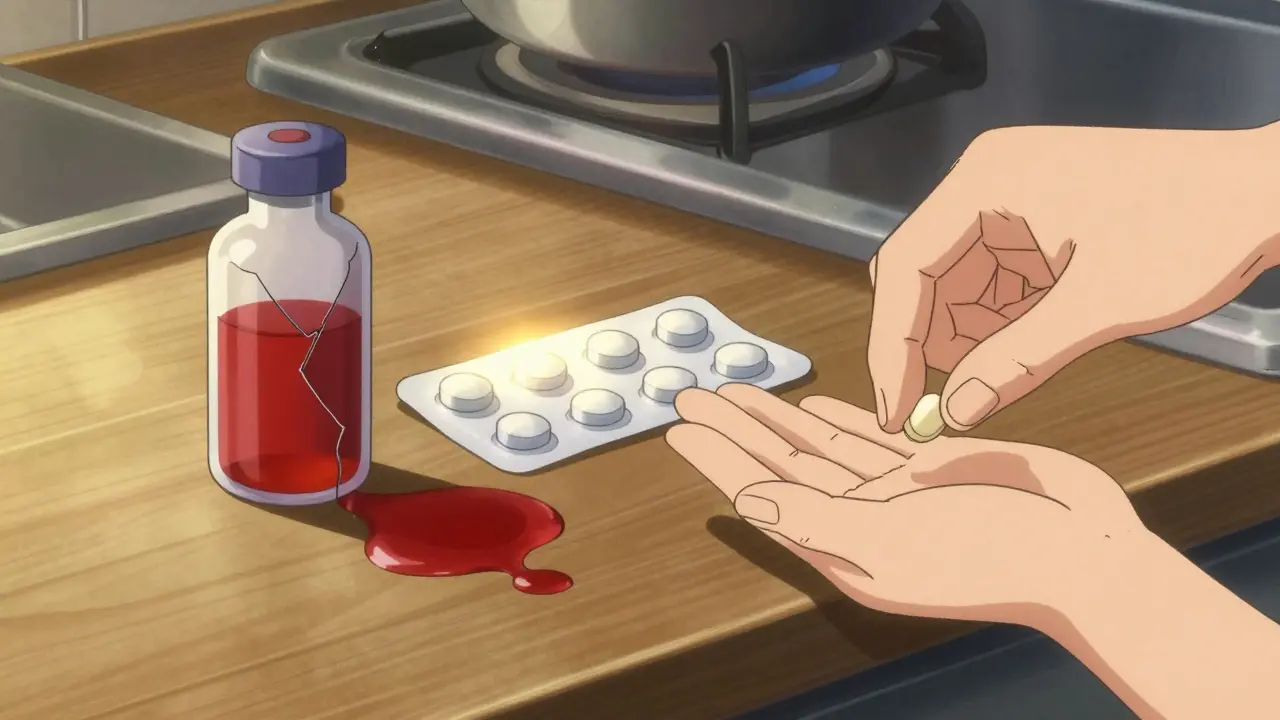
Can My Child Really Swallow a Tablet?
Yes-even if they’re only 3. You don’t need to wait until they’re 6. The American Academy of Pediatrics says kids as young as 2 can learn with practice. Start with mini-marshmallows or small bread balls. Let them practice swallowing something soft and safe. Once they get the hang of it, move to actual mini-tablets under supervision. There’s a trick called the “pop-bottle method.” Have your child take a sip of water from a bottle, then place the tablet on their tongue. As they swallow, they’ll naturally suck the tablet down with the water. Studies show this works over 90% of the time-even for kids as young as 3. Choking? Extremely rare. FDA data from 2010-2020 shows choking incidents with properly sized pediatric tablets occur in fewer than 0.002% of cases. That’s less likely than choking on a grape.What About Crushing Tablets?
Don’t do it. Crushing a tablet to mix with applesauce might seem like a shortcut, but it’s risky. Time-release medications can become dangerous if crushed. Some lose potency. Others become bitter or toxic. A 2011 study found 30-40% of parents who crush tablets make errors that change how the drug works. If your child can’t swallow a tablet, ask for an orodispersible version. These dissolve on the tongue in 30 seconds-no water needed. Or ask for a sprinkle formulation. New micro-tablets as small as 1mm can be mixed into yogurt or applesauce without affecting the drug’s action.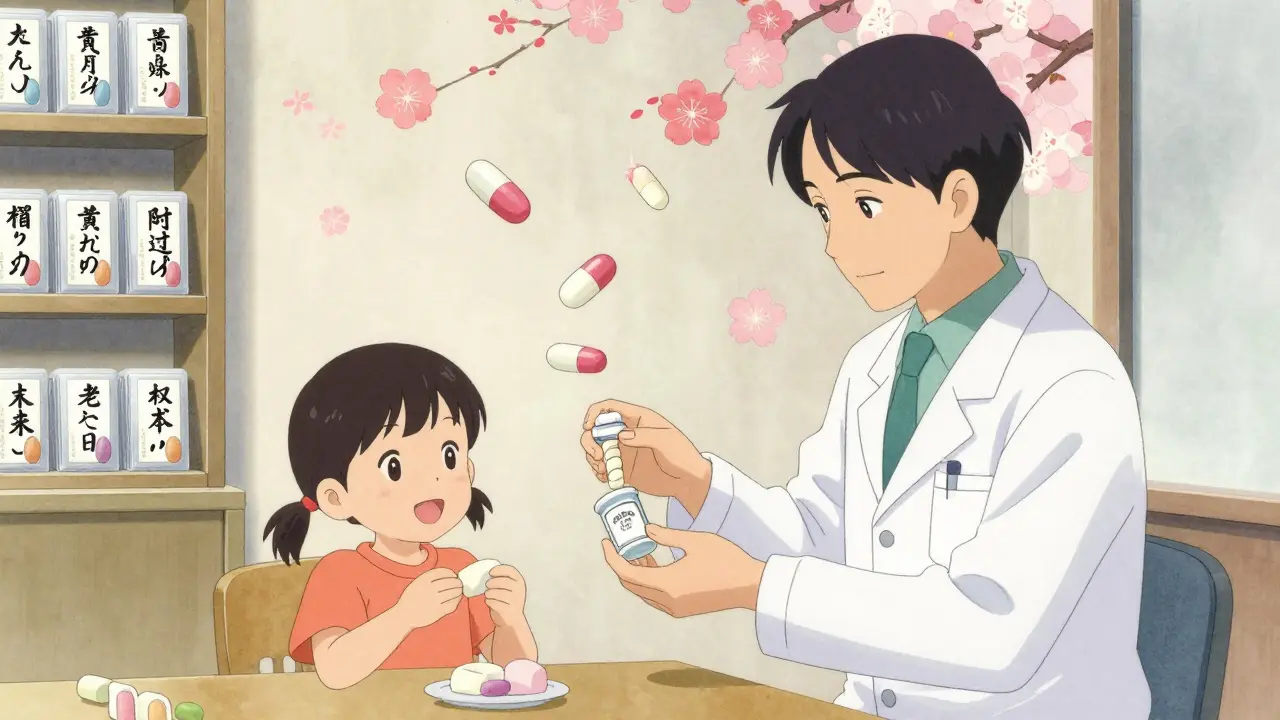
Cost and Availability
In the UK, the NHS estimated that switching just 10,000 pediatric liquid prescriptions to tablets saves £7,842 annually. For a hospital, that’s over £50,000. In Australia, similar savings are possible-especially since many liquid meds require refrigeration, increasing storage costs. But availability is still uneven. Only 35% of pediatric prescriptions today are tablets, even though 75% of adult meds are. Why? Manufacturing. Making stable, palatable mini-tablets needs special equipment. Only 32% of generic drug makers have it. So if your doctor prescribes a liquid, it might not be because it’s better-it’s because the tablet version isn’t made yet. The good news? The FDA and EMA are pushing for more solid forms. Between 2008 and 2022, the EU approved 47 new pediatric tablets. Only 12 new liquids. The trend is clear.What Should You Do?
Ask these questions next time your child’s medication is prescribed:- Is there a tablet or mini-tablet version available?
- Can we try it instead of the liquid?
- Does the tablet need refrigeration? (If yes, it’s probably not better than a liquid.)
- Can you show me how to teach my child to swallow it?
Final Thought
The idea that kids can’t swallow pills is outdated. The real issue isn’t ability-it’s assumption. Too many doctors still default to liquid because it’s what they’ve always done. Too many parents assume it’s the only option. But with modern formulations, tablets are often the better choice. They’re more accurate. Less wasteful. Less messy. And honestly? Less stressful for everyone. Your child doesn’t need to grow up on syrup. They can grow up on a tablet.Can I crush my child’s tablet to mix it with food?
No, unless the medication is specifically labeled as crushable. Crushing can destroy time-release coatings, change how the drug is absorbed, or make it taste worse. Some medications become unsafe when crushed. Always check with your pharmacist before crushing any tablet.
Are pediatric tablets safe for toddlers?
Yes, when they’re the right size and form. Modern pediatric tablets are designed to be swallowed whole by children as young as 6 months. Mini-tablets as small as 2mm are common, and orodispersible or sprinkle versions exist for those who aren’t ready to swallow. Choking incidents are extremely rare-less than 0.002% according to FDA data.
Why do liquid medications taste so bad?
Many liquid meds use artificial flavors that don’t match real fruit or candy. A “strawberry” flavor that doesn’t taste like actual strawberries will be rejected by kids. Studies show taste aversion affects 68% of children. The best liquids use real flavor extracts or are designed to mimic familiar tastes. If your child hates the taste, ask for a different brand or switch to a tablet.
How do I teach my child to swallow a tablet?
Start around age 3 with practice. Use mini-marshmallows or small bread balls. Once they can swallow those, try actual mini-tablets. Use the “pop-bottle method”: have your child take a sip of water from a bottle, place the tablet on their tongue, and swallow as they drink. Most kids learn within a week. Ask your pharmacist for a demonstration.
Are tablets cheaper than liquid medicine?
Yes, often by 25-40% per dose. Liquids require preservatives, refrigeration, and specialized packaging. Tablets last longer, don’t need cold storage, and have less waste. In the UK, switching 10,000 prescriptions to tablets saved £7,842 in one year. Hospitals save even more.
Should I always choose a tablet over a liquid?
Not always. For babies under 6 months, liquids are still necessary. For medications requiring precise daily adjustments (like thyroid or seizure drugs), liquids offer more flexibility. But for most antibiotics, pain relievers, and chronic condition meds, tablets are the better choice-safer, more accurate, and easier to use. Always ask your doctor if a tablet version is available.





Michael Burgess
January 3, 2026 AT 07:58My 5-year-old used to throw tantrums over liquid antibiotics-like, full-on screaming, crying, flailing. Then we tried the mini-tablets with the pop-bottle trick. First try? Swallowed it like a champ. No more mess, no more battles. I swear, it’s like switching from manual transmission to automatic. 🙌
Brittany Wallace
January 4, 2026 AT 00:18It’s wild how we still treat kids like they’re fragile little robots that can’t handle solid food-even medicine. We teach them to chew, swallow, eat broccoli… but then we assume they can’t swallow a pill? 🤔 Maybe it’s not about ability. Maybe it’s about our own assumptions. Just food for thought.
Palesa Makuru
January 4, 2026 AT 14:56Ugh. I can’t believe people are still debating this. Of course tablets are better. If you’re still using liquid meds for a 4-year-old, you’re probably also still using VHS tapes. 😴
Hank Pannell
January 5, 2026 AT 14:55There’s a semiotic rupture here: the symbolic weight of the liquid form as ‘care’ versus the material efficiency of the tablet as ‘optimization.’ We’ve pathologized parental resistance not as fear, but as epistemic inertia. The pharmaceutical industrial complex has been quietly reconfiguring pediatric pharmacology for a decade-yet cultural narratives lag behind. The real crisis isn’t adherence-it’s paradigmatic entrenchment.
veronica guillen giles
January 6, 2026 AT 02:18Oh wow, so now we’re shaming moms who use liquids? Congrats, you just invented the ‘mom guilt’ version of the ‘vaccine dad’ trope. 🙄
Liam Tanner
January 7, 2026 AT 19:31I’ve been giving my 3-year-old mini-tablets for 8 months now. We started with crushed Cheerios as practice. Now she asks for them like candy. Seriously. No drama. No measuring. No expired meds. It’s a game-changer.
Lori Jackson
January 8, 2026 AT 22:42Anyone who recommends crushing tablets is either dangerously naive or actively endangering children. This isn’t ‘parenting hack’ territory-it’s pharmacology 101. If you don’t know the difference between immediate-release and enteric-coated, you shouldn’t be making decisions about your kid’s meds.
Wren Hamley
January 10, 2026 AT 13:45My kid used to gag on ‘strawberry’ syrup that tasted like battery acid. Then we got the sprinkle version-tiny beads you mix into yogurt. He ate it like it was sprinkles on ice cream. No one’s talking about these. Why? Because Big Pharma doesn’t make enough profit on them. 🤷♂️
innocent massawe
January 12, 2026 AT 03:59Here in Nigeria, we still struggle to get even basic liquid meds. Tablets? Rare. But I get what you mean. My niece swallowed her first tablet at 4. She was proud. We all were. 😊
Ian Ring
January 12, 2026 AT 19:00Brilliant breakdown. I’ve been advocating for this shift in my pediatric clinic for years. The cost savings alone-especially in underserved areas-are staggering. And the reduction in dosing errors? Life-changing. 👏
erica yabut
January 14, 2026 AT 03:27It’s not about tablets vs. liquids-it’s about how we infantilize children. We treat them like they can’t handle responsibility, then wonder why they’re anxious. Swallowing a pill is a rite of passage. Let them grow.
Tru Vista
January 14, 2026 AT 14:30Tablets? Nah. My kid pukes if you look at a pill wrong. Liquids. Always. 😴
Vincent Sunio
January 15, 2026 AT 01:56The assertion that ‘tablets are safer’ is empirically unsubstantiated without controlling for formulation type, bioavailability, and developmental stage. You conflate convenience with clinical superiority-a common fallacy in consumer-driven medicine. Moreover, the FDA’s 0.002% choking statistic is misleading without context of ingestion methodology. This post is dangerously reductive.
Haley Parizo
January 15, 2026 AT 17:42You think this is new? My grandmother gave me pills at age 3 in 1978. We didn’t have ‘orodispersible’ nonsense. We had grit, water, and a stern look. Kids adapt. Stop treating them like porcelain dolls.
Ian Detrick
January 16, 2026 AT 06:30Just tried the pop-bottle trick with my 3.5-year-old. Took three tries. On the fourth? Swallowed it like a pro. Now he asks for ‘pill time’ before bed. I’m not crying, you’re crying. 😭👏