

When your child is sick, the last thing you want is a battle over medicine. But if you’ve ever spent 20 minutes trying to get a toddler to swallow a bitter liquid antibiotic, only to have half of it spill down their shirt, you know how frustrating it can be. For years, doctors and parents assumed liquid medicine was the only safe option for kids. But that’s changing - fast. Today, solid tablets, especially tiny ones designed just for children, are not just an option - they’re often the better choice. The question isn’t whether liquids are easier. It’s whether they’re truly the best.
Why Liquids Have Been the Default - and Why That’s Changing
For decades, pediatricians reached for liquid medications because it seemed logical: small bodies need small doses. Liquids could be measured precisely - 2.5 mL, 5 mL - using a syringe or cup. That precision mattered, especially for newborns and infants. But here’s the catch: liquid medications are often the source of dosing errors. A 2019 FDA review found that 12-18% of parents mismeasure liquid doses, often because they use kitchen spoons or don’t read the label carefully. Even a small mistake can mean too little medicine (and no healing) or too much (and risk of side effects). And then there’s the taste. Many liquid antibiotics and fever reducers are labeled “strawberry” or “cherry,” but they don’t taste like real fruit. They taste like chemicals. A 2007 study found that 68% of children refuse liquids because of bad taste. One parent on Reddit wrote: “My 4-year-old would rather swallow a mini-tablet than take the ‘strawberry’ antibiotic that tasted like chemicals.” That’s not an outlier. Pharmacy review sites show liquid pediatric meds average 2.7 out of 5 stars - while tablet versions get 4.5. The shift isn’t just about taste or accuracy. It’s about cost and stability. Liquid medicines often need refrigeration and expire within 14-30 days after opening. Tablets? They last 2-3 years at room temperature. In Australia, where many families live far from pharmacies, that’s a big deal. A 2021 NHS analysis estimated that switching from liquid to tablet forms for common pediatric prescriptions saves £7,842 per 10,000 doses. Multiply that across hospitals and clinics - and the savings become tens of thousands annually.Tablets Are Safer Than You Think - Even for Toddlers
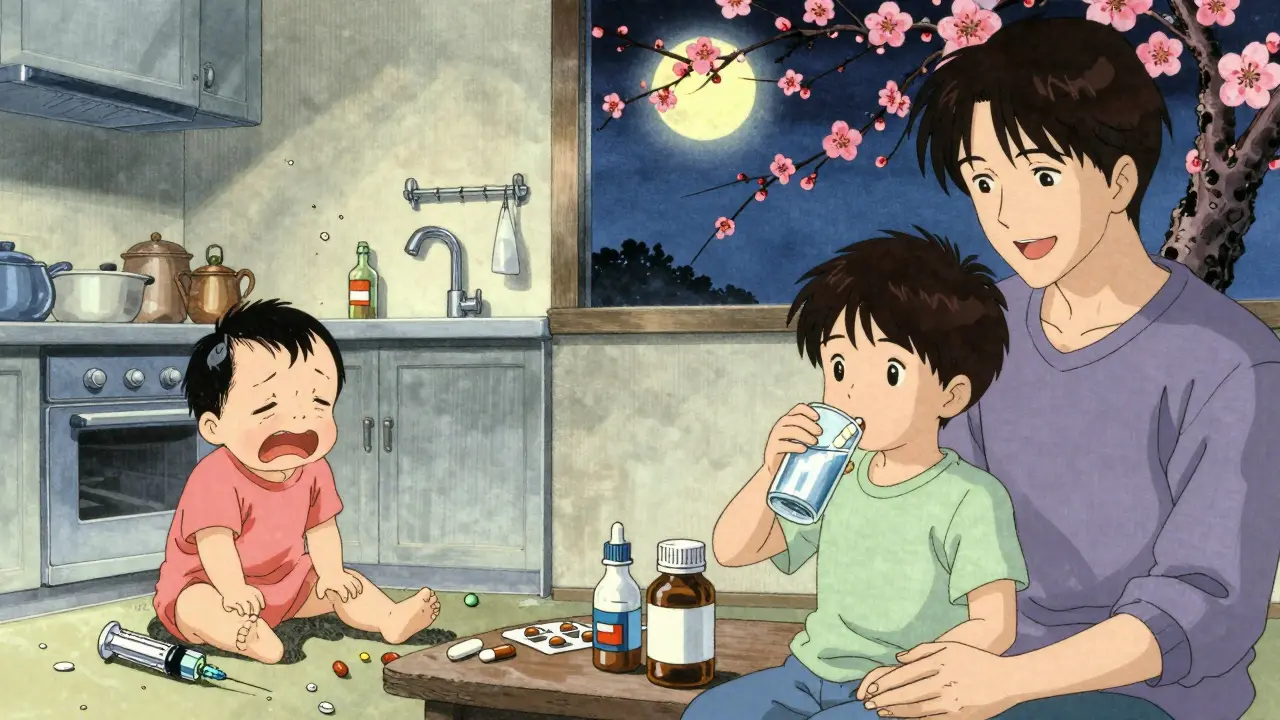
The biggest fear parents have about tablets is choking. And it’s understandable. But the risk is extremely low. According to FDA adverse event data from 2010 to 2020, choking incidents with properly sized pediatric tablets occur in fewer than 0.002% of cases. That’s rarer than being struck by lightning. Modern pediatric tablets aren’t the big, hard pills adults swallow. They’re mini-tablets - as small as 2mm in diameter, about the size of a sesame seed. Some are orodispersible, meaning they dissolve in your child’s mouth in under 30 seconds, no water needed. Others are film-coated to mask bitter tastes. A 2012 study by Spomer et al. followed 60 children aged 6 months to 6 years and found that mini-tablets were just as well accepted as liquids, even in babies under one year old. In fact, in the 0.5-1 year group, 40% of kids refused liquid medicine, but only 15% refused tablets. The American Academy of Pediatrics now says children as young as 2 can be trained to swallow tablets. By age 4, most can handle 2-4mm mini-tablets. By 6 or 7, they can manage standard 6-8mm tablets. The key? Practice. Start with soft, bite-sized foods - mini-marshmallows, bread balls, or even tiny pieces of gummy candy. Teach them to take a sip of water, place the tablet on their tongue, and swallow. Use the “pop-bottle method”: have them hold a water bottle with both hands, take a big sip, then place the tablet on their tongue just before swallowing. Success rates jump to over 90% with this technique.When Liquids Are Still Necessary
This isn’t a blanket replacement. There are times when liquid is the only safe or effective option. Infants under 6 months still need liquids. Their swallowing reflexes aren’t fully developed, and tablets are too risky. Also, for medications that require precise, daily titration - like levothyroxine for thyroid conditions or warfarin for blood clotting - liquids allow for tiny dose adjustments (down to 0.1 mL) that tablets can’t match. In these cases, even the best mini-tablet won’t work. Some medications simply don’t come in tablet form yet. About 42% of pediatric drugs still lack official dosing guidelines for solid forms, especially for children under 6. That makes doctors hesitant to switch, even if they know it’s better. And let’s be honest - if your child has a severe gag reflex, is developmentally delayed, or has a medical condition that affects swallowing, liquids may still be the only option. But for the vast majority of healthy kids - especially those over age 2 - tablets are not just safe. They’re often superior.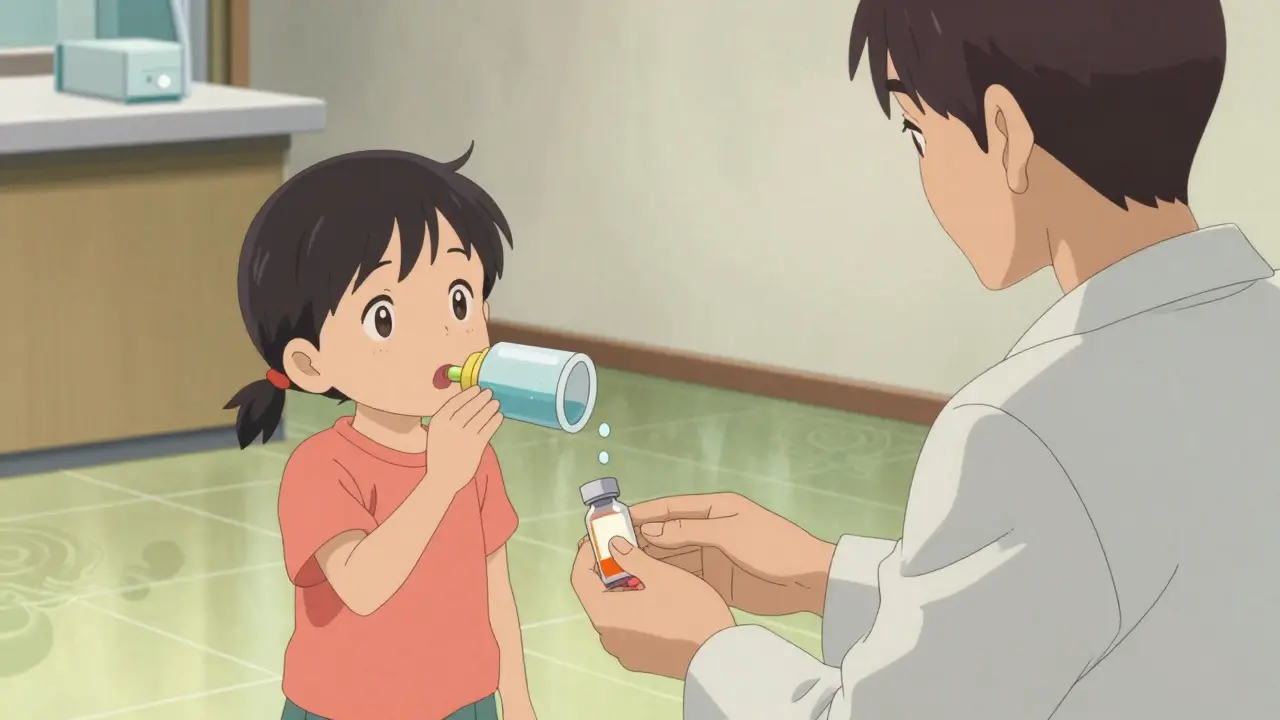
Cost, Convenience, and Compliance: The Real Advantages
Think about a typical course of amoxicillin. A 10-day liquid prescription might cost $15, but you’ll likely have half a bottle left over - and it expires in 14 days. You throw it out. That’s waste. A tablet version of the same dose? You give exactly what’s needed. No leftovers. No refrigeration. No measuring. Adherence is another huge factor. A 2022 JAMA Pediatrics meta-analysis found that children on solid medications had 22% higher adherence rates over time, especially for chronic conditions like asthma or ADHD. Why? Because it’s easier. No need to carry a syringe and a bottle. No spills in the car. No stinky medicine in the fridge. One parent told a pediatric clinic: “I used to dread giving medicine. Now I just hand her a tablet and she swallows it like candy.” Also, tablets reduce waste. The NHS estimates that up to 66.7% of prescribed liquid pediatric meds could be replaced with tablets without losing effectiveness. That’s not just money saved - it’s less plastic waste, fewer refrigerated shipments, and less environmental burden.What You Can Do Today
You don’t have to wait for your doctor to suggest it. Here’s how to take action:- Ask your pharmacist: “Is there a tablet form of this medication?” Many pharmacies now stock mini-tablets for common drugs like amoxicillin, azithromycin, and ibuprofen.
- If your child is over 2, ask your pediatrician about training them to swallow tablets. Bring practice items - mini-marshmallows or small candies - to the next visit.
- Check the label. If the liquid requires refrigeration, ask if a tablet version exists. If it’s expired after 14 days, a tablet might be more practical.
- Don’t crush tablets unless instructed. Crushing can destroy time-release coatings, alter absorption, and make dosing inaccurate. In fact, 30-40% of crushing errors lead to under- or overdosing.
- Use an oral syringe only for liquids - never guess with kitchen spoons.
What the Experts Are Saying
Dr. Jane Standing, a pediatric pharmacologist at Great Ormond Street Hospital, put it plainly: “The automatic preference for liquid formulations in children is not evidence-based and often counterproductive to long-term medication adherence.” The European Medicines Agency has recommended training children to swallow pills from age 3 since 2013. The World Health Organization now encourages solid forms for children as young as 2 in its 2024 Essential Medicines List. Even the FDA’s 2023 draft guidance pushes manufacturers to develop age-appropriate tablets instead of defaulting to liquids. Yet, a 2021 survey of 500 U.S. pediatricians found that 62% still automatically prescribe liquids for kids under 8 - mostly because parents ask for them. That’s the real barrier: perception, not science.Final Decision: What to Choose
For children under 6 months: Stick with liquids. No alternatives yet. For children 6 months to 2 years: Liquids are still common, but mini-tablets are now available for many common drugs. Ask your doctor. If your child tolerates solids well, try them. For children 2 years and older: Tablets are usually the better choice. They’re safer, more accurate, cheaper, and easier to use. With proper training, most kids can swallow them without issue. For chronic conditions requiring precise dosing: Liquids may still be needed - but confirm with your doctor. Some newer tablet formulations now allow for fine-tuned dosing too. The bottom line? Don’t assume liquid is better. Ask. Try. Train. Your child - and your sanity - will thank you.Can I crush my child’s tablet if they won’t swallow it?
Only if the label or your pharmacist says it’s safe. Many tablets are designed to release medicine slowly over time. Crushing them can cause a dangerous spike in drug levels. Others have coatings to mask taste or protect the stomach - crushing ruins that. If your child truly can’t swallow a tablet, ask your doctor for a different formulation, not a crushed one.
Are there any tablets made specifically for young children?
Yes. These are called mini-tablets and are typically 2-4mm in diameter. Some dissolve in the mouth without water. Others are film-coated to hide bitter tastes. Brands like Spomer, Otsuka, and several generic manufacturers now produce pediatric-specific tablets approved for children as young as 6 months. Ask your pharmacist for age-appropriate options.
Why do some liquid medicines taste so bad?
Many liquid medications are flavored with artificial additives that don’t match real fruit flavors. A 2023 study from BC Children’s Hospital found that when liquids were labeled “strawberry” but didn’t taste like actual strawberry, refusal rates jumped by 50%. The best pediatric liquids now use real fruit extracts and natural sweeteners - but they’re still rare. If taste is a problem, ask for a tablet version.
How do I know if a tablet is the right dose for my child?
Your doctor or pharmacist will calculate the dose based on your child’s weight or age. Mini-tablets often come in fixed strengths - like 5mg, 10mg, or 20mg - and you may need to give more than one. Never split tablets unless they’re scored and your provider says it’s safe. Always double-check the total daily dose before giving it.
Is it safe to store tablets in the fridge?
Only if the label says to. Most pediatric tablets are stable at room temperature (15-30°C). Refrigerating them can cause moisture buildup, which may break down the tablet. Store them in a cool, dry place like a cabinet - not the bathroom or near the stove.





Michael Burgess
January 4, 2026 AT 04:57I used to think liquids were the only way until my 3-year-old started refusing everything. We tried mini-tablets with the pop-bottle method-she swallowed her first one like a pro. No more mess, no more stinky fridge bottles. Game changer. 🎉
Brittany Wallace
January 4, 2026 AT 17:20It’s wild how we cling to tradition even when the data says otherwise. We treat kids like fragile glassware, but they’re way more adaptable than we give them credit for. The real issue isn’t their ability to swallow-it’s our fear of letting go of the ‘safe’ default. Maybe it’s not about medicine… it’s about control. 😊
Hank Pannell
January 4, 2026 AT 17:22Let’s unpack the pharmacokinetics here: liquid formulations have higher inter-individual variability due to gastric emptying time, viscosity-dependent absorption, and flavor-induced gag reflexes altering swallowing mechanics. Meanwhile, mini-tablets offer predictable dissolution profiles, reduced variability in bioavailability, and eliminate the placebo effect of ‘taste’ on compliance. The 22% adherence increase in JAMA isn’t anecdotal-it’s biostatistically significant. We’re not just changing delivery methods; we’re optimizing therapeutic outcomes. 🧠
Palesa Makuru
January 4, 2026 AT 19:14Oh please. You’re telling me we’re just gonna hand toddlers pills like they’re gummy bears now? My cousin’s kid choked on a M&M last year-do you really think a 2mm tablet is safer? This is the kind of ‘innovation’ that happens when people stop respecting pediatric physiology. You’re not a doctor, you’re just a blog reader with a new gadget obsession. 😒
Wren Hamley
January 6, 2026 AT 12:55My 5-year-old used to scream like a banshee at the sight of a syringe. We started with mini-marshmallows, then moved to 3mm tablets. Now she asks for her ‘medicine candy’ before bed. No more crying. No more laundry disasters. And my pharmacist gave me a free sample pack-zero cost. Why are we still doing this the hard way? 🤷♂️
innocent massawe
January 8, 2026 AT 01:28Back home in Nigeria, we’ve been giving crushed tablets in porridge for years. But I never knew there were actual mini-tablets made for kids. This changes everything. No more running to the clinic every time the liquid runs out. Thank you for sharing this. 🙏
Lori Jackson
January 9, 2026 AT 22:37It’s so frustrating how lazy parenting has been normalized. If your child can’t swallow a pill, maybe you should’ve been teaching them table manners, not letting them watch cartoons while you force-feed them chemical-flavored sludge. This isn’t progress-it’s capitulation to incompetence. And don’t get me started on the environmental cost of all those single-use plastic bottles. 🙄
Liam Tanner
January 10, 2026 AT 18:13Just wanted to add: my daughter’s pediatrician gave us a little handout with step-by-step tablet training pics. We did it over two weeks-no pressure, just practice. Now she swallows her ADHD meds like it’s nothing. The key? Make it a game. And don’t rush. Kids pick up on your anxiety. We didn’t force it-we invited it. And it worked. 🤝