
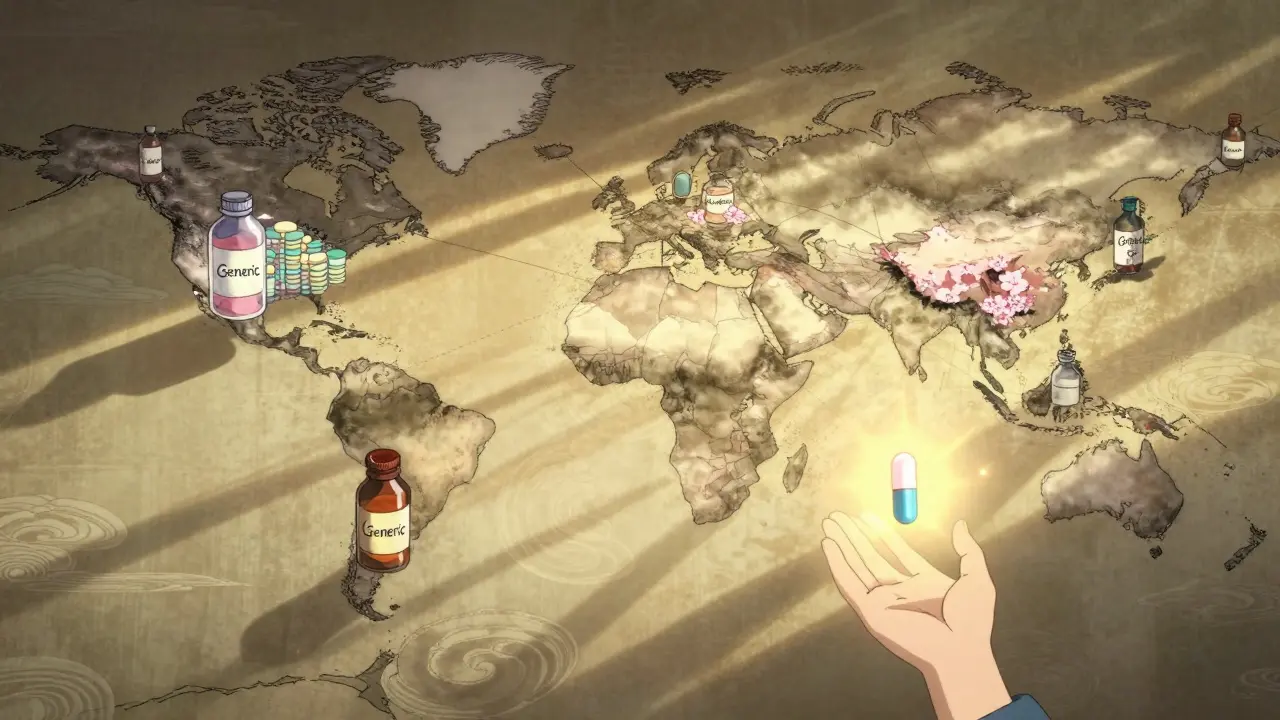
By 2025, the world will spend over $1.6 trillion on medicines. That’s more than the GDP of most countries. Yet, nearly half of all prescriptions filled globally are for generics - the same drugs, cheaper versions of brand-name pills. Why does this matter? Because without generics, global healthcare spending would be unaffordable for most people, especially in low-income countries where families pay out of pocket just to survive.
Generics Are the Hidden Backbone of Global Health
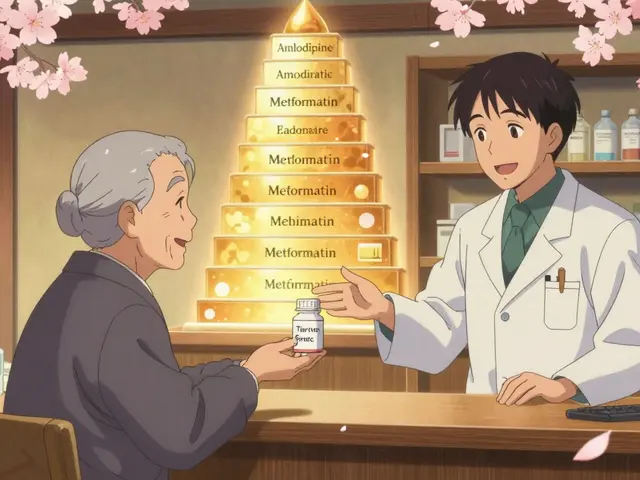
When you take a generic version of ibuprofen, metformin, or lisinopril, you’re not getting a lesser drug. You’re getting the exact same active ingredient, proven safe and effective by regulators like the FDA and EMA. But you’re paying 80-90% less. In the U.S., where brand-name drugs can cost hundreds or even thousands per month, generics keep millions from skipping doses or going bankrupt. In India, Nigeria, or Bangladesh, generics are often the only reason people can access treatment for diabetes, hypertension, or HIV.
According to IQVIA, generics make up the majority of prescriptions in nearly every high-income country. In the U.S., over 90% of prescriptions are filled with generics - but they account for just 15% of total drug spending. That’s the power of scale and competition. When a patent expires, multiple manufacturers jump in. Prices drop fast. A 30-day supply of simvastatin, once sold for $150, now costs $4. That’s not luck. It’s market dynamics.
Why Healthcare Spending Keeps Rising - Even With Generics
Here’s the paradox: despite generics holding down costs, global healthcare spending is still climbing. In 2025, the U.S. alone will spend $5.6 trillion on health care - $1.7 trillion of that on prescription drugs by 2033. Why? Because the new drugs are getting wildly expensive.
Biologics, gene therapies, and specialty drugs for cancer, obesity, and autoimmune diseases now cost $100,000 a year or more. These aren’t pills you can copy. They’re complex molecules made from living cells. That’s where biosimilars come in - the generic version of biologics. But they’re harder to make, harder to approve, and slower to enter the market. In the U.S., only a handful of biosimilars have been approved for the most expensive drugs. In Europe, adoption is better, but still limited.
Meanwhile, insurers and governments are stuck. They can’t stop people from needing these drugs. So they pay. In the Middle East and Africa, medical costs are rising at 12% per year - the fastest in the world. Why? Because new technologies are the top driver of cost, according to 88% of insurers in the Americas. Generics help, but they can’t fix everything.
The Real Crisis: Out-of-Pocket Spending
Two billion people worldwide pay for health care with cash in hand. No insurance. No safety net. In Turkmenistan, Afghanistan, and Nigeria, more than 75% of healthcare costs come straight from people’s pockets. That’s not a policy failure. It’s a humanitarian emergency.
When you’re poor and need insulin, you don’t ask if it’s brand or generic. You ask: can I afford it today? That’s where generics aren’t just helpful - they’re lifesaving. In countries with weak public health systems, generics are the only reason people aren’t dying from treatable conditions. A generic version of insulin can cost $10 a month instead of $300. That’s the difference between living and dying.
Human Rights Watch found that in 2022, no low-income country spent more than 1.2% of its GDP on health care. The global average was 3.8%. High-income countries spent 5.8%. That gap isn’t just numbers. It’s people without medicine. And generics are the only tool that can bridge it at scale.
China and the Changing Global Market
For years, generics were dominated by India and other low-cost manufacturers. But now, China is changing the game. Post-pandemic, China’s pharmaceutical industry is accelerating - not just making cheap pills, but investing in high-quality generics and even biosimilars. It’s not just about price anymore. It’s about quality, scale, and export power.
China now supplies over 40% of the world’s active pharmaceutical ingredients (APIs). That’s the raw material for most pills. If China cuts back on production - whether due to regulation, pollution controls, or trade policy - drug shortages ripple across the globe. In 2024, a shortage of generic antibiotics in the U.S. was traced back to a Chinese factory shutdown. That’s how deeply interconnected this system is.
Meanwhile, countries like Brazil, Indonesia, and South Africa are building their own generic manufacturing capacity. They’re not just buying pills - they’re making them. That’s the next phase: local production. It’s not just cheaper. It’s more secure.
Why Some Countries Resist Generics
It’s not just about cost. It’s about trust, regulation, and power.
In some countries, doctors still prefer brand-name drugs - even when generics are available. Why? Because they’ve been trained by pharmaceutical reps. Because they’re worried about lawsuits. Because they don’t trust the quality. In parts of Latin America and Eastern Europe, this skepticism lingers. Patients, too, often believe “brand equals better,” even when there’s no scientific difference.
Regulatory delays also block access. In some African nations, it takes years to approve a generic drug, even if it’s already approved in the U.S. or EU. That’s not science. That’s bureaucracy. And it costs lives.
Meanwhile, patent evergreening - where drug companies tweak a drug slightly to extend their monopoly - keeps generics out longer. A 2023 study found that in the U.S., 70% of brand-name drugs had patent extensions that delayed generic entry by an average of 4.5 years. That’s billions in extra costs for patients and governments.
The Future: Generics in a World of Rising Costs
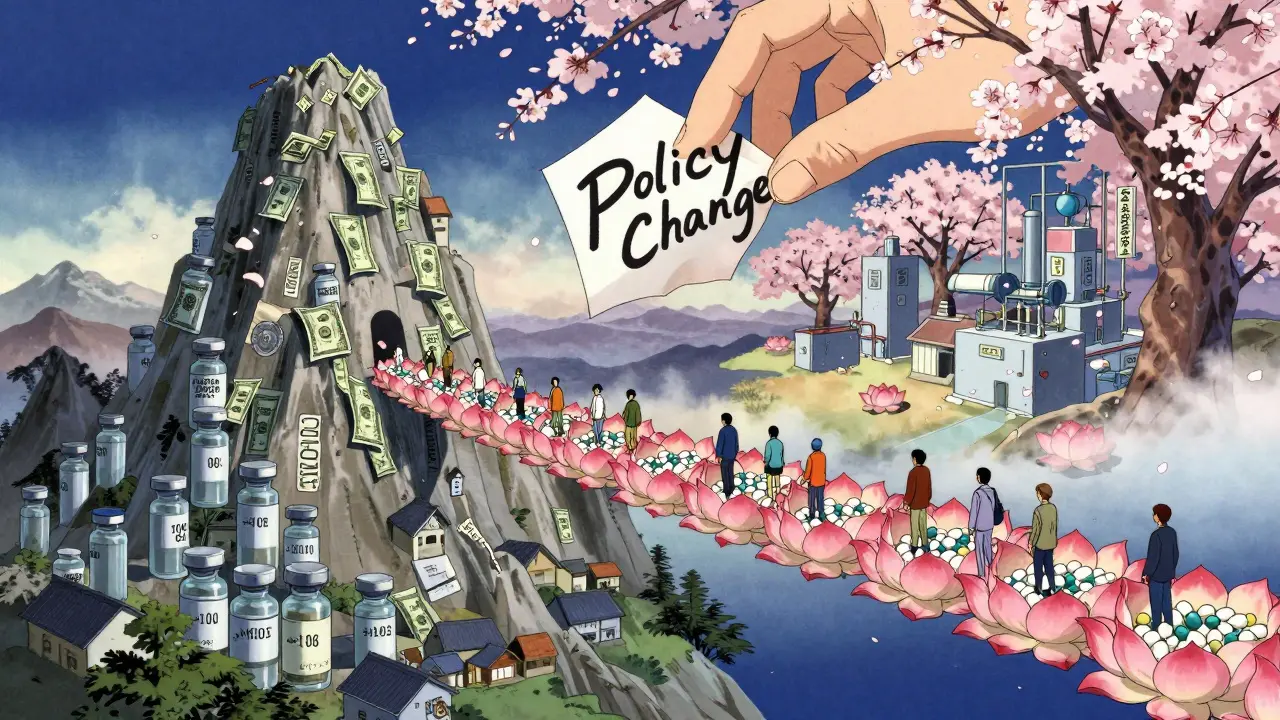
By 2030, global healthcare spending will hit $13 trillion. That’s not sustainable. Generics won’t solve everything, but they’re the most powerful tool we have to slow the climb.
Here’s what’s coming:
- More biosimilars entering the market - especially for arthritis, cancer, and diabetes drugs.
- Government policies pushing generic substitution - like automatic substitution at pharmacies unless the doctor says no.
- Global bulk purchasing agreements - countries banding together to buy generics in bulk, like the EU and African Union are starting to do.
- AI-driven manufacturing - speeding up production, reducing waste, and lowering costs further.
But none of this matters if we don’t fix the root problem: healthcare financing. If people still pay out of pocket, even a $1 generic can be too expensive. If governments don’t invest in public health systems, generics will remain a Band-Aid, not a cure.
What Can Be Done?
It’s not complicated:
- Remove regulatory barriers to generic approval - fast-track approvals for drugs already proven safe elsewhere.
- End patent evergreening - stop letting companies extend monopolies with minor changes.
- Support local generic manufacturing - especially in Africa and Southeast Asia.
- Expand public funding - so people don’t pay for medicine with their last dollar.
- Use data - track which generics are saving the most money, and push those first.
The data is clear. Generics save lives. They save money. They keep health systems from collapsing. But they’re not magic. They need policy, investment, and political will to work at scale.
For every dollar spent on a generic drug, five dollars are saved in overall health costs - fewer hospital visits, fewer complications, fewer emergencies. That’s not economics. That’s common sense.
Are generics as safe as brand-name drugs?
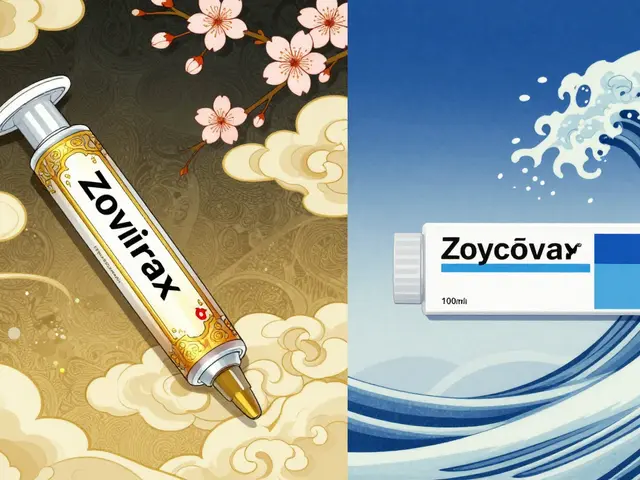
Yes. Generics must meet the same strict standards as brand-name drugs. They contain the same active ingredient, work the same way, and are tested for safety and effectiveness. The only differences are in inactive ingredients - like color or filler - which don’t affect how the drug works. The FDA, WHO, and EMA all require generics to be bioequivalent - meaning they deliver the same amount of medicine into your bloodstream as the brand.
Why are some generics more expensive than others?
When a patent first expires, several companies start making the generic. Prices drop fast. But if only one or two manufacturers make it, competition slows and prices stay higher. This often happens with complex drugs or when manufacturing is difficult. Sometimes, shortages occur - like with antibiotics or injectables - and prices spike. Buying in bulk, as governments do, helps keep prices low.
Do generics cause more side effects?
No. There’s no evidence that generics cause more side effects than brand-name drugs. The active ingredient is identical. Side effects come from the drug itself, not whether it’s branded or generic. If you notice a change after switching, it could be due to different inactive ingredients - like dyes or fillers - which rarely cause issues. Talk to your pharmacist or doctor if you’re concerned.
Why don’t all countries use generics more?
It’s a mix of policy, culture, and infrastructure. In some countries, doctors and patients distrust generics due to poor past experiences or misinformation. Regulatory systems are slow. Some governments rely on donations or imported drugs instead of building local manufacturing. And in places with weak health systems, even cheap generics may not reach rural areas. Fixing this requires investment in supply chains, training, and public education - not just cheaper pills.
Can generics solve the global health funding gap?
They’re the best tool we have - but not the only one. Generics can stretch limited budgets further, letting more people get treatment. But if governments don’t fund public health systems, if insurance doesn’t cover prescriptions, and if people still pay out of pocket, even $1 pills won’t help. Generics reduce cost - but real access requires systemic change in how health care is paid for.

Joanna Ebizie
December 16, 2025 AT 16:59Ugh, I swear people still think generics are ‘fake medicine’? Like, have you even read the FDA guidelines? Same active ingredient, same bioequivalence testing, same damn shelf life. If your doctor prescribes a brand because they got a free lunch from Pfizer, that’s not healthcare - that’s corporate bribery.
Elizabeth Bauman
December 17, 2025 AT 03:17China makes 40% of the world’s active ingredients? That’s not a supply chain - it’s a national security threat. We’re letting our medicine be controlled by a regime that’s spying on us, censoring us, and building missiles. If your insulin comes from a factory in Wuhan, you’re not just taking medicine - you’re trusting your life to an authoritarian state. We need to bring pharma back to America. NOW.
Tiffany Machelski
December 17, 2025 AT 04:45i just switched to generic metformin and my stomach has been weird… not sure if it’s the pill or just stress? anyone else? idk i’m just scared lol
SHAMSHEER SHAIKH
December 18, 2025 AT 14:04Dear friends, let us pause for a moment to honor the unsung heroes of global health - the generic drug manufacturers of India, China, and beyond. These are not mere corporations; they are lifelines. When a mother in Lagos must choose between feeding her child and buying insulin, it is the generic - humble, unbranded, affordable - that whispers, ‘You may live.’ This is not economics. This is dignity. Let us never forget that the next time we complain about a $4 pill.
Souhardya Paul
December 18, 2025 AT 19:11That point about patent evergreening is so real. I had a friend whose asthma inhaler went from $50 to $300 after they added a tiny plastic piece to the device - same drug, same dose, just a new patent. It’s insane. Why do we let them do that? The system’s broken, but at least generics are the closest thing we have to a fix.
anthony epps
December 19, 2025 AT 12:27so generics are just as good? cool. i always thought they were weaker. guess i was wrong.
Dan Padgett
December 21, 2025 AT 02:00Generics? They’re the quiet warriors of survival. In Nigeria, we don’t have fancy hospitals with neon lights - we have mothers walking ten kilometers with a plastic bag full of pills, praying the generic isn’t expired. The brand name? A dream. The generic? A prayer answered. We don’t need speeches. We need more of them. And less bureaucracy. Less greed. Just pills. And peace.
Hadi Santoso
December 21, 2025 AT 03:47wait so if china stops making apis, we get shortages? that’s wild. i had no idea my blood pressure med came from halfway across the world. kinda scary, honestly. we need more local stuff. like, in the usa. like, now.