

For people living with end-stage renal disease, dialysis isn’t just a medical procedure-it’s a lifestyle. And when it’s done at home, it changes everything. Home hemodialysis lets you choose when, where, and how often you get treated. No more rigid clinic schedules. No more commuting three times a week for hours. Just you, your machine, and the freedom to fit treatment into your life-not the other way around.
What Home Hemodialysis Actually Looks Like
Home hemodialysis (HHD) means doing your dialysis treatments in your own space-kitchen, bedroom, basement. You use the same machines as hospitals, but they’re designed for home use. You connect to your vascular access, run the machine, and let it clean your blood. It’s not magic. It’s mechanics. But it’s also deeply personal. Most people start with a care partner-someone who learns everything you do. That’s not optional. Federal guidelines require a trained person to be present during every treatment. Why? Because dialysis machines can alarm. Lines can kink. Blood pressure can drop. You need someone who knows what to do when things go sideways. You’ll need about 6 feet by 6 feet of clear space. A dedicated electrical outlet (120V, 20-amp), a water line with 40-80 psi pressure, and a drain. You’ll also need a reverse osmosis system to purify water. That’s non-negotiable. Dirty water means infection risk. Monthly cultures, annual chemical tests, logbooks-it’s all part of the job.Training Isn’t a One-Size-Fits-All Process
Training for home hemodialysis isn’t a quick weekend course. It’s a commitment. Most people spend between 3 and 12 weeks learning the ropes. Some finish in 3 weeks. Others take 6, 8, even 12. It depends on your health, your confidence, and how fast you pick up needle insertion. You’ll learn:- How to clean your access site and avoid infection
- How to set up the machine and check for leaks
- How to insert the needles into your fistula or graft
- How to calculate your fluid removal target
- How to read machine alarms and respond
- How to track your treatments and report problems
- How to order and store supplies without running out
Three Ways to Schedule Your Treatments
There’s no single right schedule. It’s about matching your body’s needs with your life. Conventional home hemodialysis is three times a week, 3-4 hours per session. It’s the closest to what you’d get at a clinic-but you pick the time. Maybe you dialyze Monday, Wednesday, Friday after work. Or Sunday nights so you’re free during the week. Short daily home hemodialysis is five to seven times a week, 2-3 hours each. This is where real changes happen. Studies show people on this schedule have better blood pressure control, less fluid overload, and a 28% lower risk of death compared to in-center dialysis. Your heart doesn’t get slammed with big fluid shifts once a week. It gets gentle, frequent cleanouts. Nocturnal home hemodialysis happens while you sleep. Six to ten hours, three to seven nights a week. You plug in before bed, wake up refreshed. This is the gold standard for clearing toxins like phosphate. One study found patients on nocturnal HHD dropped their phosphate levels by 42% and cut phosphate binder pills by 3.2 per day. That means fewer stomach issues, less itching, and better bone health.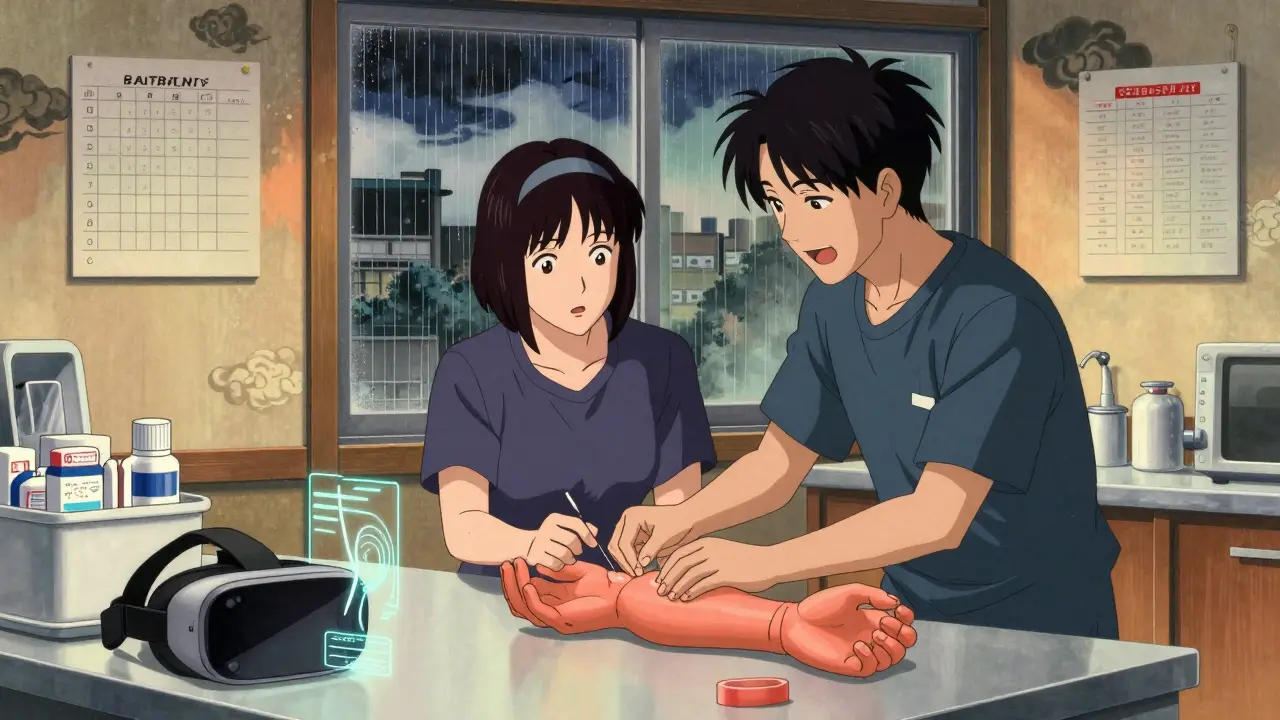
Outcomes: More Than Just Survival
People on home hemodialysis don’t just live longer-they live better. A 2019 review found home dialysis patients scored 37% higher on quality-of-life surveys than those in clinics. Why? Control. Freedom. No more waiting in a room with 10 other people. No more rushed meals. No more being told when you can eat or drink. Survival data from the U.S. Renal Data System shows a 15-20% lower death rate for home hemodialysis patients compared to in-center. But here’s the catch: that advantage disappears if you’re only doing three times a week. The real benefit comes with frequency. Short daily and nocturnal schedules are where the biggest gains happen. You’ll also notice energy. People report feeling less tired. Less nausea. Better sleep. One man in Sydney told me he started hiking again after six months of daily home dialysis. He hadn’t walked more than a block in years.The Hidden Costs: Care Partners and Mental Load
The biggest barrier to home hemodialysis isn’t the machine. It’s the person beside you. About 30% of potential candidates don’t have a reliable care partner. Spouses, adult children, siblings-they all need training. Same tests. Same drills. Same responsibility. That’s a heavy lift. One Reddit user wrote: “My wife learned everything. She’s the one who wakes up when the alarm goes off. I don’t know how she does it.” Relationship strain is real. 41% of users in one survey reported tension with their partner. It’s not about blame. It’s about exhaustion. Constant vigilance. The fear of making a mistake. And then there’s the mental load. You’re not just a patient. You’re a technician, a nurse, a logistics manager. You track supplies. You order tubing. You clean the machine. You log every treatment. You call your nephrologist when something feels off. It’s empowering. But it’s also exhausting.
Why More People Don’t Do It
Only 12% of U.S. dialysis patients are on home hemodialysis. That’s up from 8.9% in 2016, but it’s still too low. Why? Because most clinics don’t offer it. Only 12% of U.S. dialysis centers have training programs. Nephrologists say they lack staff time and reimbursement. Medicare pays for training, but not enough to cover the hours nurses spend teaching. One survey found 71% of doctors say training capacity is the main roadblock. There’s also fear. Patients worry about emergencies. Machines breaking. Being alone. But training works. Programs that focus on competency-not just time-see far fewer complications.What’s Changing in 2025
The future is shifting. In 2021, the Advancing American Kidney Health initiative set a goal: 80% of new ESRD patients should start on home dialysis or transplant by 2025. That won’t happen. But progress is real. New machines like the NxStage System One are portable. You can take them on trips. The WavelinQ endoAVF system, approved in 2022, makes creating a vascular access easier and less invasive. And in 2025, Medicare will start paying based on outcomes-not location. If you’re doing home dialysis and your blood pressure stays stable, your phosphate is low, and you’re not in the ER, you’ll be worth more to the system. That’s a game-changer.Is It Right for You?
Ask yourself:- Do you have someone who can be there every time you dialyze?
- Can you handle the daily responsibility of managing equipment and supplies?
- Are you comfortable learning new skills under pressure?
- Do you want more control over your time, energy, and routine?
Can you do home hemodialysis alone?
No, not under standard protocols. Federal guidelines require a trained care partner to be present during every treatment. Solo home hemodialysis is possible with special equipment and additional training, but it’s rare and tightly regulated. Most patients rely on a spouse, family member, or close friend to assist.
How long does home hemodialysis training take?
Training typically lasts between 3 and 12 weeks, with most people completing it in 4 to 6 weeks. The length depends on your comfort level, how quickly you learn needle insertion, and whether you’ve practiced self-needling before starting. Medicare covers up to 25 training sessions, and most patients need 20-30 supervised treatments before feeling confident.
What are the different types of home hemodialysis schedules?
There are three main types: conventional (3x/week, 3-4 hours), short daily (5-7x/week, 2-3 hours), and nocturnal (3-7x/week, 6-10 hours while sleeping). Short daily and nocturnal schedules offer better toxin removal, blood pressure control, and survival rates. Nocturnal dialysis also significantly lowers phosphate levels, reducing the need for binders.
Do you need special plumbing or electricity for home hemodialysis?
Yes. You need a dedicated 120-volt, 20-amp electrical circuit, a water line with 40-80 psi pressure, and a drain line. A reverse osmosis system is required to purify water, and it must be maintained with monthly water and dialysate cultures, annual chemical tests, and logbooks. These aren’t optional-they’re critical for safety.
Is home hemodialysis safer than in-center dialysis?
When done correctly, home hemodialysis has a 15-20% lower mortality rate than in-center dialysis, especially with frequent or nocturnal schedules. The key is consistent training and having a trained care partner. Risks include infection, machine malfunction, and low blood pressure-but these are minimized with proper preparation and monitoring.
Can you travel with a home hemodialysis machine?
It depends on the machine. Standard home hemodialysis machines are not portable. But systems like the NxStage System One are designed for travel. You can take them on trips if you plan ahead-arrange for water purification, power, and dialysis supplies at your destination. Some patients bring their machines on vacation. Others arrange treatments at local clinics while traveling.
What are the most common complaints from home hemodialysis patients?
The top complaints are machine alarms (67%), managing supplies and ordering them on time (58%), and dependency on a care partner (52%). Many also mention initial anxiety about handling emergencies and the mental burden of being responsible for their own treatment. But most also report improved energy, better sleep, and more freedom.
How do you know if you’re a good candidate for home hemodialysis?
Good candidates have stable health, reasonable medication compliance, physical and mental ability to manage care, and a reliable care partner. Psychological readiness matters as much as technical skill. If you’re motivated, organized, and willing to learn, you’re likely a strong candidate. Talk to your nephrologist about your lifestyle goals-not just your lab numbers.

Fabian Riewe
December 28, 2025 AT 16:41Just finished my 6th month of nocturnal HHD. I used to crash by 7 PM. Now I’m hiking in the Rockies on weekends. The freedom? Unreal. No more clinic fatigue. No more feeling like a lab rat. Just me, my machine, and my dog sleeping beside me. It’s not perfect-but it’s mine.
And yeah, the first needle stick made me cry. But after week three? I didn’t even flinch.
Alex Ronald
December 29, 2025 AT 10:32For anyone thinking about HHD: the real game-changer isn’t the machine-it’s the data. I log every treatment, fluid balance, BP, and phosphate level. My nephrologist said my numbers are the best in the clinic. Not because I’m special-because I’m consistent. Control isn’t just a buzzword. It’s survival.
Also, get a smart plug for your RO system. Auto-shutoff saved me twice when the water pressure dipped.
Joe Kwon
December 30, 2025 AT 20:21Training was brutal. But the VR needle simulator? Lifesaver. I was terrified of self-needling. Spent 3 weeks on the sim before touching my fistula. When I finally did it? Felt like I’d won a marathon.
Pro tip: Order supplies 3 weeks ahead. Never wait until you’re down to your last set. Trust me.
Henriette Barrows
December 31, 2025 AT 09:56I’m a care partner for my dad. He’s been on HHD for 2 years. I used to think I was just helping. Turns out I’m learning how to be a nurse, a technician, and a therapist all at once. Some nights I cry after his session. Not because I’m scared-but because I’m so damn proud of him.
And yes, I still check his lines before bed. Every. Single. Night.
Emma Duquemin
January 1, 2026 AT 11:24Let me tell you about the day my machine screamed like a banshee at 3 AM. I didn’t panic. I didn’t scream. I just grabbed my training manual, checked the arterial line, and found a kink. My husband was asleep. I fixed it. Then I made tea. And I felt like a goddamn superhero.
HHD doesn’t just change your body-it rewires your soul. You stop being a patient. You become a force.
David Chase
January 1, 2026 AT 20:54THIS IS WHY AMERICA IS FALLING APART. People want to do dialysis at home? Cool. But now we need a PhD just to change a filter?!
My cousin did it for 6 months. His wife had a nervous breakdown. He ended up back in the clinic. And now he’s on a transplant list. AGAIN. Why not just fix the system instead of making patients into engineers?!
Also, why is everyone so obsessed with 'freedom'? I want to nap without worrying about alarms. Is that too much to ask?! 😤😭🩸
Russell Thomas
January 3, 2026 AT 20:21Oh wow, so now we’re romanticizing home dialysis like it’s some yoga retreat? ‘I wake up refreshed’-yeah, right. You wake up to a machine beeping, your spouse’s exhausted face, and the smell of dialysate in your sheets.
And don’t get me started on the ‘mental load.’ You’re not a ‘technician.’ You’re a full-time unpaid nurse with a side hustle of being a human alarm clock.
And yes, I know you all think you’re heroes. But let’s be real: this system is broken. And you’re just the Band-Aid on a hemorrhage.
Teresa Rodriguez leon
January 5, 2026 AT 06:21My husband tried HHD. We lasted 3 weeks. The machine broke. We didn’t have a backup. We had to drive 45 minutes to the clinic at 2 AM. He was shaking. I was crying. And the nurse said, ‘You should’ve just stayed in-center.’
So now we’re back. And I’m never trusting another ‘freedom’ again.
Tamar Dunlop
January 6, 2026 AT 15:44As a Canadian living with ESRD, I can confirm that home hemodialysis is not a luxury-it is a right. Our public system provides full equipment coverage, training, and 24/7 telehealth support. The notion that this should be a personal burden is antithetical to healthcare as a human right.
While I admire the resilience of U.S. patients, the fact that access depends on insurance, geography, and care partner availability is morally indefensible. We must advocate for equitable, systemic solutions-not individual heroism.
Nisha Marwaha
January 7, 2026 AT 23:16From a nephrology nurse’s perspective: the 28% mortality reduction with short daily HHD is statistically significant (p<0.01, HR 0.72, 95% CI 0.61–0.85). But the real clinical advantage lies in reduced left ventricular hypertrophy and improved phosphate kinetics via higher Kt/V and longer dialysis duration.
Additionally, nocturnal protocols achieve ultrafiltration rates <10 mL/kg/hr, minimizing hemodynamic instability. The RO system’s endotoxin load must be <0.25 EU/mL per AAMI standards-failure to monitor this elevates IL-6 and CRP levels, contributing to chronic inflammation.
Training competency must be assessed via OSCE, not self-report. VR simulation improves procedural memory retention by 41% (p=0.003).
Greg Quinn
January 9, 2026 AT 19:02It’s not about being strong. It’s about being tired enough to stop pretending you’re okay.
I used to think home dialysis was about control. Now I know it’s about surrender. Surrender to the machine. Surrender to the silence after the alarm stops. Surrender to the fact that you’re still alive, even when you don’t feel like it.
And sometimes? That’s enough.
Fabian Riewe
January 11, 2026 AT 11:38^ This. I read that comment and cried. Not because it’s sad-but because it’s true. We don’t talk about the quiet parts. The 3 AM stillness. The way your hands shake when you’re alone. The pride you feel when you don’t need to say anything out loud.
Thanks for saying it.