
How to Prevent Expired Meds: Safe Storage, Tracking, and Smart Disposal
When you prevent expired meds, taking action before medications lose their effectiveness or become unsafe, you’re not just organizing your cabinet—you’re protecting your health. Many people keep old pills "just in case," but expired drugs can lose potency, break down into harmful compounds, or even promote bacterial growth. The drug degradation, the chemical breakdown of medication over time isn’t always obvious, and relying on an old antibiotic or painkiller could mean your treatment doesn’t work when you need it most.
One of the biggest mistakes is storing meds in the bathroom or near a window. Heat, humidity, and sunlight speed up drug degradation, the chemical breakdown of medication over time. The best place? A cool, dry drawer—not the medicine cabinet above the sink. Keep pills in their original bottles with labels intact. That way, you can check the expiration date and lot number if a recall happens. If you’re taking multiple meds, a brown bag medication review, a simple process where you bring all your pills to a doctor or pharmacist for a safety check every six months helps you spot what’s old, what’s unnecessary, and what’s still safe to use.
Don’t wait until your medicine cabinet looks like a pharmacy landfill. Set a reminder every three months to go through your meds. Toss anything with a faded label, strange smell, or changed color. If you’re unsure, don’t guess—ask your pharmacist. They can tell you if a drug is still safe past its printed date. For most pills, the expiration date is a manufacturer’s guarantee of full potency, not a hard cutoff. But for critical meds like insulin, epinephrine, or nitroglycerin, even a few days past expiration can be dangerous.
And when you do dispose of old meds, don’t flush them or toss them in the trash where kids or pets might find them. Many pharmacies and police stations have take-back bins. If none are nearby, mix pills with coffee grounds or cat litter in a sealed container before throwing them out. It’s not glamorous, but it keeps dangerous drugs out of water supplies and off the streets.
Preventing expired meds isn’t about perfection—it’s about awareness. It’s about knowing that your blood pressure pill from last year might not lower your pressure anymore. That your leftover antibiotics won’t help with this new infection. That a simple check-up with your pharmacist could save you from a bad reaction or a failed treatment. The posts below show you how to track what you have, understand why some drugs expire faster than others, and make smarter choices so you’re never guessing about what’s in your medicine cabinet.
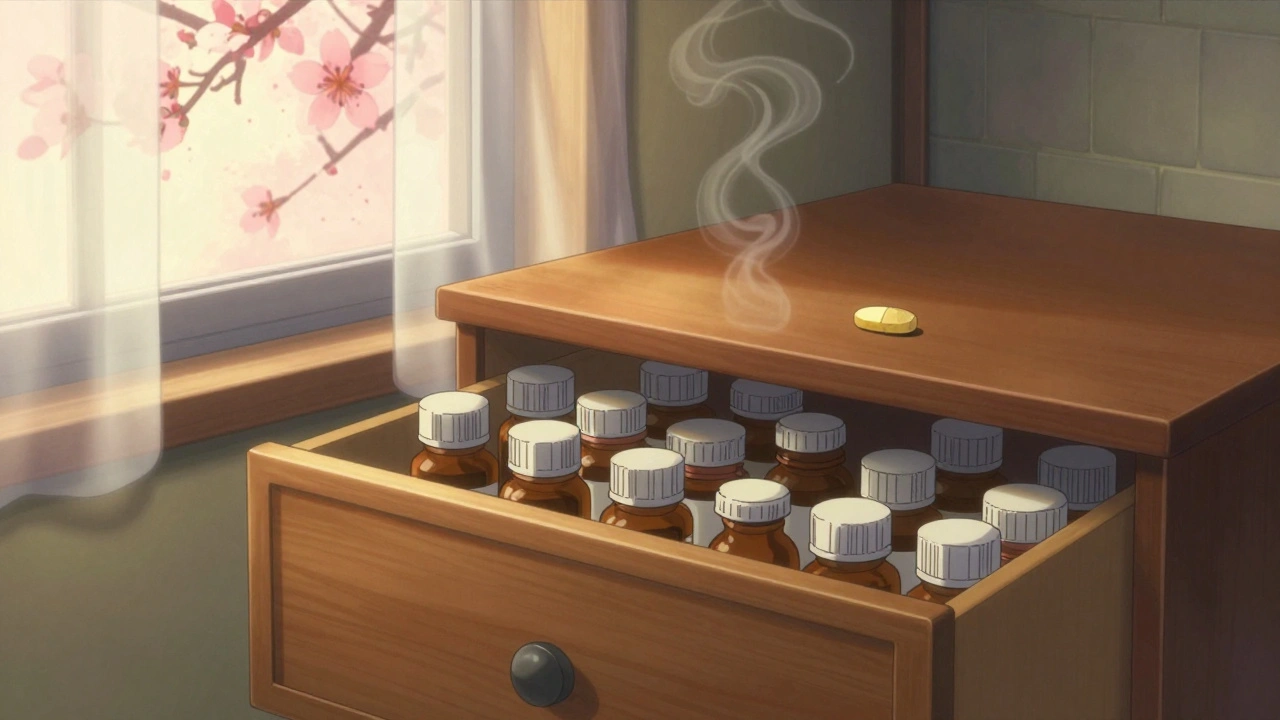
How to Store Medications to Prevent Early Expiration
Learn how to store medications properly to prevent early expiration, avoid waste, and ensure your pills remain safe and effective. Discover where not to keep them-and what to do with expired meds.