
Humidity and Medications: How Moisture Affects Your Pills and What to Do
When you store your medications in a bathroom cabinet or a dusty medicine drawer, you might not realize you’re exposing them to something that can break them down: humidity, the amount of water vapor in the air that can cause pills to absorb moisture and lose potency. It’s not just about expiration dates—high humidity can trigger chemical changes in your drugs long before the label says they’re bad. This isn’t theoretical. The FDA has documented cases where moisture caused tablets to crumble, capsules to stick together, or active ingredients to degrade into harmful byproducts. Even if your pills look fine, they might not work the way they should.
Drug stability, how well a medication maintains its chemical structure and effectiveness over time, is directly tied to environmental conditions. Heat and moisture are the two biggest enemies. For example, insulin, thyroid meds like levothyroxine, and nitroglycerin are especially sensitive. A study from the Journal of Pharmaceutical Sciences found that some generic tablets lost up to 15% of their potency after just 30 days in 80% humidity. That’s not a small drop—it’s enough to make your treatment fail. Medication storage, the practice of keeping drugs in cool, dry places away from light and moisture isn’t just a suggestion—it’s a safety rule. Your kitchen cabinet above the stove? Bad. Your bedroom drawer? Better. The bathroom? Avoid it. Even the humidity from your shower can seep into pill bottles over time.
It’s not just about where you keep your meds—it’s about what’s inside them. Drug degradation, the chemical breakdown of active ingredients due to environmental exposure doesn’t always show up as discoloration or weird smells. Sometimes, it’s silent. A pill that looks perfect might have lost its strength, leaving you with no relief from pain, blood pressure, or anxiety. That’s why shelf life isn’t just about the date on the bottle—it’s about how you’ve treated the drug since you bought it. If you’ve kept your asthma inhaler in a hot car or your antibiotics in a humid drawer, you’re not just risking inefficiency—you’re risking your health.
And here’s the thing: generic drugs aren’t immune. In fact, because they often use different fillers or coatings than brand-name versions, some generics are more vulnerable to humidity. That’s why pharmaceutical safety, the system of standards and practices that ensure medications remain effective and safe from manufacturing to use includes strict humidity controls in factories. But once it leaves the lab, the responsibility falls on you. Don’t assume your pharmacy’s advice is enough. Check the label. Look for storage instructions. If it says "store at room temperature"—that means below 77°F and below 60% humidity. If you live in a humid climate, consider a small desiccant pack in your pill container. Or better yet, keep your meds in a sealed container in a cool, dry closet. Your body doesn’t know the difference between a strong pill and a weak one. It just knows if it works—or doesn’t.
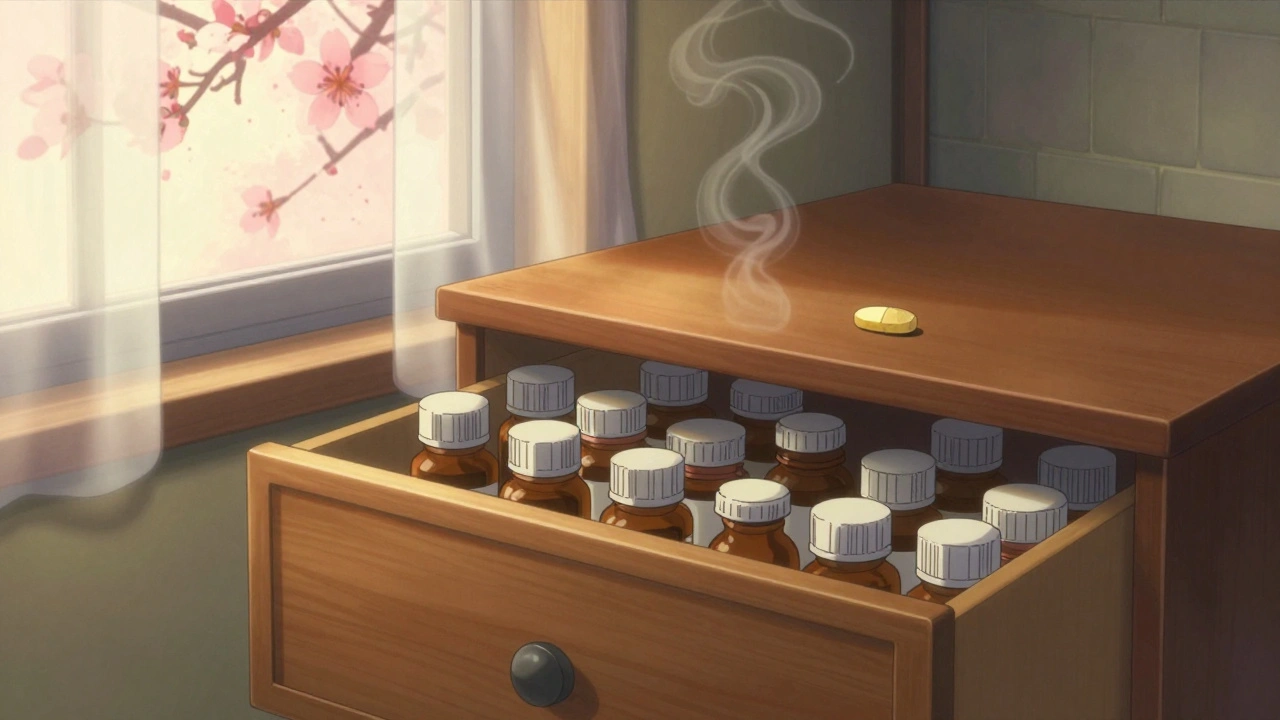
How to Store Medications to Prevent Early Expiration
Learn how to store medications properly to prevent early expiration, avoid waste, and ensure your pills remain safe and effective. Discover where not to keep them-and what to do with expired meds.