

Many people assume that because something is natural, it plays nicely with prescription medications. That assumption is dangerous when we talk about treating depression. SAMe is a naturally occurring compound known scientifically as S-adenosylmethionine that functions as a methyl donor in over 200 biochemical reactions. It is popular across Sydney and globally for boosting mood, but combining it with standard antidepressants introduces serious risks that many patients and even some clinicians overlook. By March 2026, we have clearer data on why medical supervision isn't just a suggestion-it's a necessity.
The Science Behind SAMe and Mood
To understand the risk, you first need to understand the mechanism. SAMe, originally isolated in 1952 by Italian scientist Giulio Cantoni, sits at the center of methylation processes. Your body uses these processes to synthesize neurotransmitters like serotonin, dopamine, and norepinephrine. Essentially, SAMe acts as fuel for the chemical messengers that regulate your emotional state. When levels drop, symptoms of depression often follow.
This biological role makes SAMe attractive for treatment-resistant cases. Giovanni Grieco's 1973 clinical trial was among the first to document its antidepressant properties, published back in Minerva Medica. Today, meta-analyses indicate response rates of 35-50% in mild-to-moderate depression cases. Compare that to conventional antidepressants which typically show 60-70% efficacy in broader populations. The trade-off lies in safety margins. Conventional drugs undergo rigorous FDA approval processes. SAMe falls under the Dietary Supplement Health and Education Act of 1994, meaning manufacturers don't prove efficacy before marketing products.
How SAMe Compares to Standard Antidepressants
If you are considering switching or adding, knowing how SAMe stacks up against your current medication is vital. It is not simply a stronger or weaker version of an SSRI. The onset of action differs significantly. Patients report feeling changes in 7-10 days with SAMe, whereas Selective Serotonin Reuptake Inhibitors (SSRIs) often require 2-4 weeks to show effects. However, severity matters.
| Metric | SAMe | Standard SSRIs |
|---|---|---|
| Onset of Action | 7-10 days | 2-4 weeks |
| Efficacy (Severe Depression) | Lower (18% remission) | Higher (42% remission) |
| Primary Mechanism | Methylation / Neurotransmitter synthesis | Reuptake inhibition |
| Regulatory Status | Dietary Supplement | Prescription Medication |
| Cost (Monthly) | $80-$120 USD | $20-$50 USD (generic) |
The table highlights a crucial gap. While SAMe moves faster, it fails more often in severe melancholic depression. A 2015 European Neuropsychopharmacology trial showed remission rates of only 18% compared to 42% for venlafaxine. This distinction matters if your depression is deep rather than reactive. Furthermore, quality control varies wildly. ConsumerLab.com found that in 2022, 32% of tested SAMe products failed potency tests. You might be taking a bottle that contains 25% less active ingredient than labeled.
The Critical Risk: Serotonin Syndrome
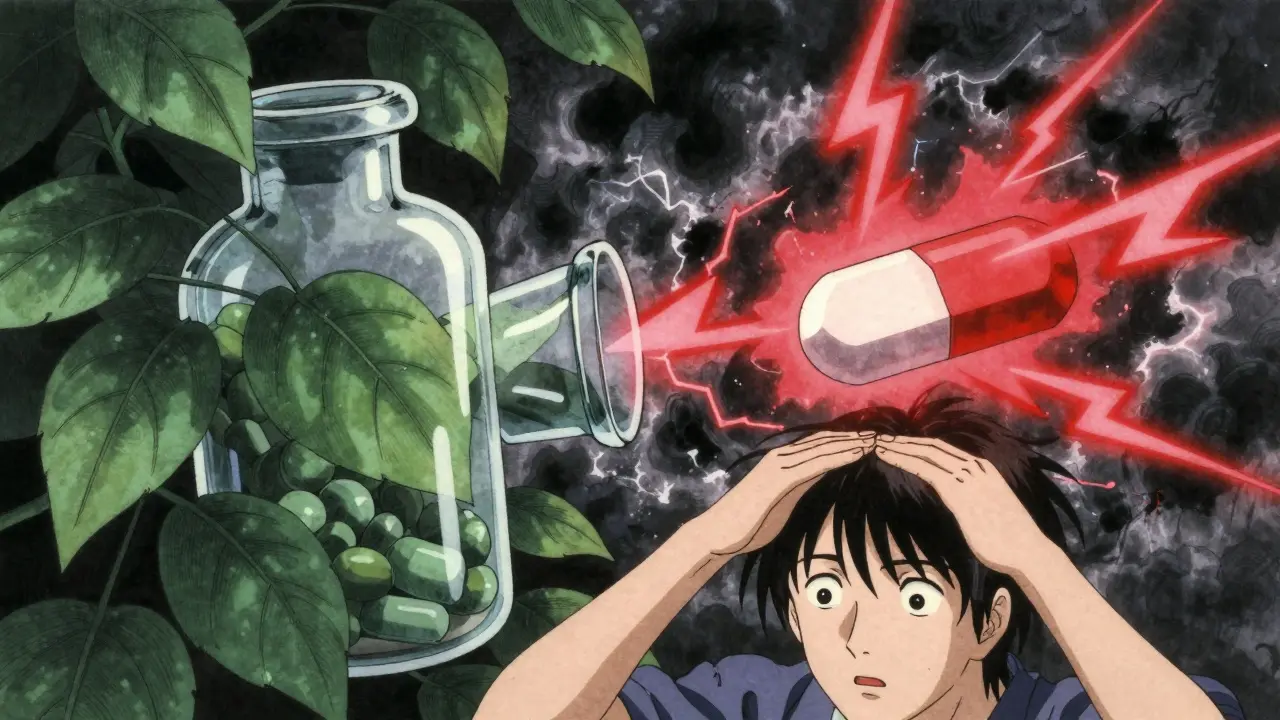
This is the section that requires full attention. Combining SAMe with serotonergic agents creates a theoretical risk of Serotonin Syndrome is a potentially life-threatening condition caused by excessive serotonin accumulation in the brain.. Dr. Maurizio Fava from McLean Hospital warns that the theoretical risk is substantial due to SAMe's dual action on both synthesis and reuptake inhibition. While documented case reports are relatively rare-only about 12 published cases between 2000 and 2022-the consequences are severe enough to warrant caution.
The Mayo Clinic's 2023 drug database explicitly warns against combining SAMe with antidepressants due to this specific interaction. If you look at the Hunter Criteria, symptoms include spontaneous clonus, agitation, diaphoresis, and high body temperature. Real-world data does not always match clinical trials perfectly. A Reddit user in r/depression shared a story in early 2023 where starting 400mg SAMe with 20mg Prozac led to racing heart and confusion within three days. An ER visit confirmed serotonin syndrome. Conversely, other users report success. SarahJ, on Healthline's forum, added SAMe to Zoloft under doctor supervision with no adverse issues over eight months.
This divergence shows why individual monitoring is non-negotiable. Dr. David Mischoulon notes that the risk of serotonin syndrome increases by approximately 35% when combined with SSRIs based on his team's 2020 case series. The variability comes down to metabolism. Some people process these compounds quickly; others build up toxic levels rapidly.
Navigating Dosage and Storage
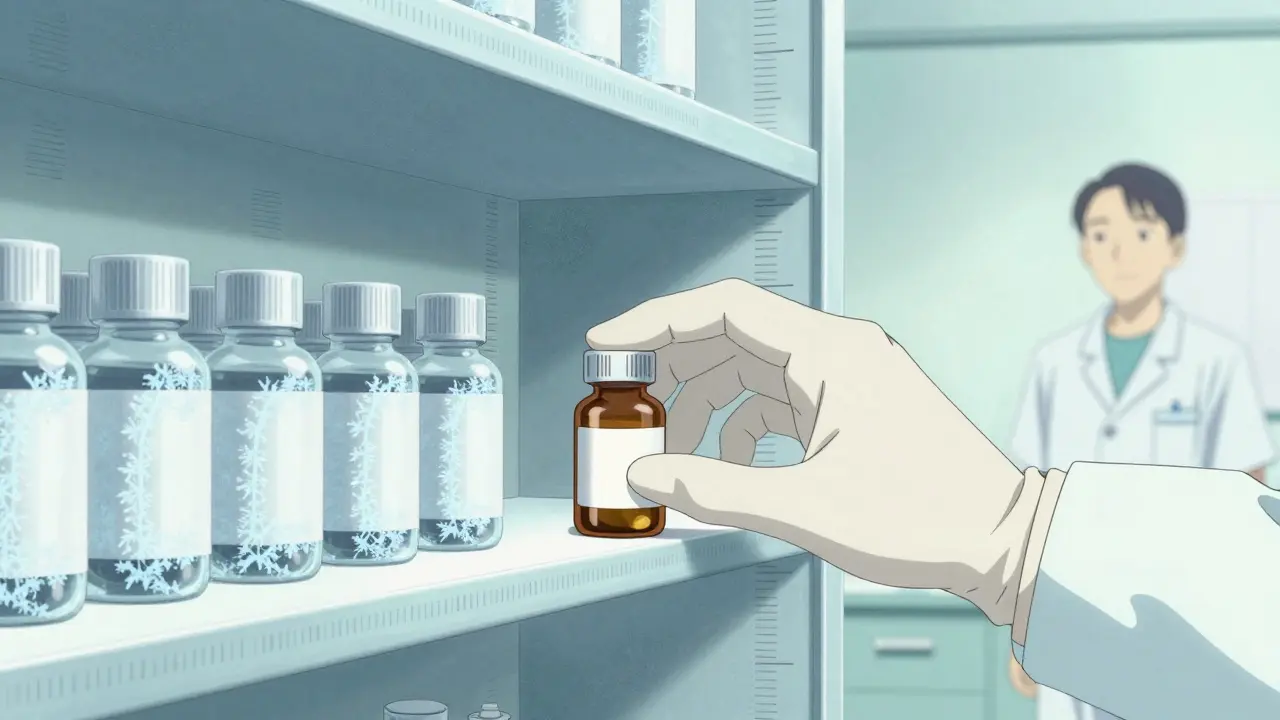
If your doctor approves this combination, you must treat SAMe with the same rigor as a prescription. Stability is a major issue. Enteric-coated tablets prevent stomach acid degradation, increasing bioavailability from 5% to roughly 95%. However, these tablets require refrigeration at 2-8°C to maintain stability. Leaving them in a humid bathroom cupboard renders them useless or ineffective after six months.
Dosing protocols generally start low. The American Society of Clinical Psychopharmacology recommends starting at 200mg twice daily when augmenting SSRIs. Increase by 200mg every five to seven days while watching for side effects. Many patients report gastrointestinal distress. Taking SAMe with food reduces these issues effectively in 65% of cases. Insomnia is another common complaint, affecting 18% of users. Splitting doses-morning and afternoon rather than night-often solves this problem.
Real-World Effectiveness and Market Reality
In 2026, the global antidepressant market remains robust, valued at $14.7 billion as of recent records. Complementary therapies like SAMe represent about 2.3% of depression treatment expenditures. Yet, adoption continues. NHANES data shows 4.7 million Americans used SAMe for depression in 2022 alone. About 68% were combining it with prescription antidepressants. This high rate of self-augmentation is concerning because only 37% of SAMe products include comprehensive interaction warnings on the label, according to a 2021 JAMA Internal Medicine analysis.
Insurance coverage adds another layer of complexity. Unlike approved drugs, SAMe is rarely covered. Monthly costs hover between $80 and $120 USD. For someone managing a chronic condition, this financial burden influences adherence. Plus, the regulatory landscape shifts. In 2023, the FDA sent warning letters to three manufacturers for making unapproved depression treatment claims. Meanwhile, the European Food Safety Authority banned SAMe supplements in 2015 due to insufficient safety data. This disparity in regulation means availability depends entirely on where you live.
Monitoring and Red Flags
Your safety relies on recognizing warning signs early. During the initial 2-4 week augmentation period, 85% of adverse events occur. Be vigilant about physical symptoms. Muscle rigidity, tremors, and sudden confusion are red flags that demand immediate medical attention. Some patients experience a biphasic response pattern where anxiety worsens before improvement happens, reported in 22% of cases in a 2019 Psychopharmacology Bulletin study. Distinguish between normal adjustment and toxicity.
Documentation is key. Track your dose, storage conditions, and any new symptoms. Blood work may not catch serotonin syndrome directly, but thyroid function and liver enzymes can offer clues about how your body handles the supplement. Long-term viability assessments remain mixed. Dr. Charles Raison predicts SAMe will stay a niche option until standardized formulations emerge. Others believe personalized psychiatry and pharmacogenetic testing will eventually identify who responds safely. Until then, strict oversight is the only reliable strategy.
Frequently Asked Questions
Can I take SAMe with my current antidepressant?
You should never start SAMe alongside antidepressants without medical supervision. The combination increases the risk of serotonin syndrome significantly. Consult your psychiatrist to weigh the benefits against the potential dangers.
How long does it take for SAMe to work?
Unlike traditional antidepressants that take weeks, SAMe often shows effects within 7 to 10 days. However, efficacy varies by individual and the severity of your depression.
What are the side effects of SAMe?
Common side effects include nausea, vomiting, diarrhea, dry mouth, and insomnia. More serious risks involve serotonin syndrome symptoms like confusion, rapid heartbeat, and muscle stiffness.
Does insurance cover SAMe supplements?
Generally, no. Because SAMe is classified as a dietary supplement rather than a drug, health insurance plans typically do not reimburse the cost, which ranges from $80 to $120 monthly.
Where can I buy high-quality SAMe?
Look for enteric-coated tablets from reputable brands that test for purity. Check labels for third-party verification seals and ensure the product is stored refrigerated to maintain potency.



emma ruth rodriguez
March 31, 2026 AT 04:10The data, indicates, a clear, correlation, between, serotonergic, activity, and, reported, adverse, events. Patients, should, understand, that, stability, requires, precise, environmental, controls. Enteric-coated, tablets, offer, improved, bioavailability, but, demand, refrigeration, protocols. Failure, to, maintain, proper, storage, renders, the, compound, inert. We, observe, significant, variance, in, commercial, product, quality, standards. Regulatory, oversight, remains, inconsistent, across, international, borders. This, situation, necessitates, heightened, vigilance, among, clinical, practitioners. Supervised, augmentation, ensures, patient, safety, remains, prioritized. Financial, barriers, may, impede, access, for, lower-income, demographics. Cost, effectiveness, studies, require, further, longitudinal, review. Evidence-based, guidance, must, replace, anecdotal, reporting, mechanisms.
Ruth Wambui
March 31, 2026 AT 15:07The big pharma giants surely hate seeing people find cheaper alternatives to their patented misery pills.
They flood the market with dangerous info to scare us into staying dependent on their chemical shackles.
SAMe is ancient wisdom repackaged, yet the regulators still try to bury the truth.
I saw a whistleblower claim that half the labels lie about potency just to protect profit margins.
Keep your eyes peeled when they try to ban another effective treatment under the guise of safety.
Angel Ahumada
April 2, 2026 AT 01:04the average consumer fails to grasp the biochemical intricacies involved in methylation pathways
they seek magic bullets rather than understanding the metabolic machinery
nature provides tools but usage requires intellectual sophistication
i find the populace dangerously ignorant regarding dosage titration schedules
most individuals simply swallow powder without reading the regulatory disclaimers
this lack of education perpetuates the cycle of poor outcomes
sanatan kaushik
April 2, 2026 AT 18:16just take the pills and do not waste money on supplements.
cost is high and results are uncertain.
stay safe and listen to your doctor instead of online strangers.
do not mix things without advice.
Katie Riston
April 3, 2026 AT 13:42The concept of natural versus synthetic is truly a false dichotomy we must dismantle because history has shown us that nature itself contains both poison and cure simultaneously. When we speak of methylation we are touching on the fundamental processes of life itself and it reminds me of how the ancients viewed the body as a vessel for spirit. Modern medicine attempts to fix parts while ignoring the whole system entirely and we see this in how supplements are marketed against prescribed drugs constantly. Perhaps the real issue lies in our expectation of immediate relief without cost and the human mind resists categorization into simple chemical buckets. Depression is not merely a lack of serotonin floating freely in the void and it is a state of being that encompasses social and spiritual contexts too. Ignoring the storage conditions of SAMe reveals a deeper societal negligence and we buy bottles we leave on shelves rather than keeping them cold. This mirrors how we treat our own health in general carelessly and safety warnings exist but we rarely read the fine print before ingesting anything. Ultimately we must decide what kind of relationship we want with our biology and trusting a label is different from trusting a doctor who knows your history. The interplay between regulation and innovation creates friction for patients seeking relief and we must navigate this minefield with extreme caution.
Beccy Smart
April 4, 2026 AT 20:58People need to think more about the ethics of supplement marketing 😤
It feels wrong that companies sell this stuff without strict rules 🙄
Just imagine how much suffering could be avoided if everyone was responsible ✨
We should all focus on doing the right thing instead of chasing quick fixes 💅
Christopher Curcio
April 6, 2026 AT 20:12Efficacy rates demonstrate significant variability across heterogeneous populations with comorbid psychopathology. Pharmacogenomic polymorphisms likely influence cytochrome P450 metabolism impacting drug interaction potential. Serotonin transporter gene variants modify susceptibility to serotonergic neurotoxicity during concomitant administration. Clinical monitoring parameters should include thyroid function tests alongside serum electrolyte panels to assess systemic burden. Adverse event reporting systems indicate underdiagnosis of subthreshold toxicity states requiring intervention. Neurotransmitter synthesis pathways exhibit dose-dependent saturation points limiting therapeutic windows. Clinicians must evaluate risk stratification prior to recommending augmentation strategies involving S-adenosylmethionine derivatives. Longitudinal tracking of symptom clusters helps differentiate pharmacological responses from placebo effects inherent to open-label trials.
Carolyn Kask
April 8, 2026 AT 17:45America really needs to stop letting people buy unregulated chemicals in the store like candy bars.
Jonathan Sanders
April 9, 2026 AT 03:20Another thread pretending supplements are actually safer than meds.
Everyone ignores the side effects until they end up in the ER complaining.
Serotonin syndrome kills you slowly and nobody talks about the pain involved.
Save your cash for therapy or actual proven treatments.
Rick Jackson
April 9, 2026 AT 23:23Balance is key in managing mental health challenges.
Both options have merit depending on individual circumstances.
Respectful dialogue helps us understand the best path forward.
Debbie Fradin
April 10, 2026 AT 12:34Hope springs eternal even when the medical literature looks bleak.
Optimism drives research forward despite current limitations.
Maybe new guidelines will emerge soon to clarify safe usage patterns.
Fewer accidents happen when patients take charge of their records.