
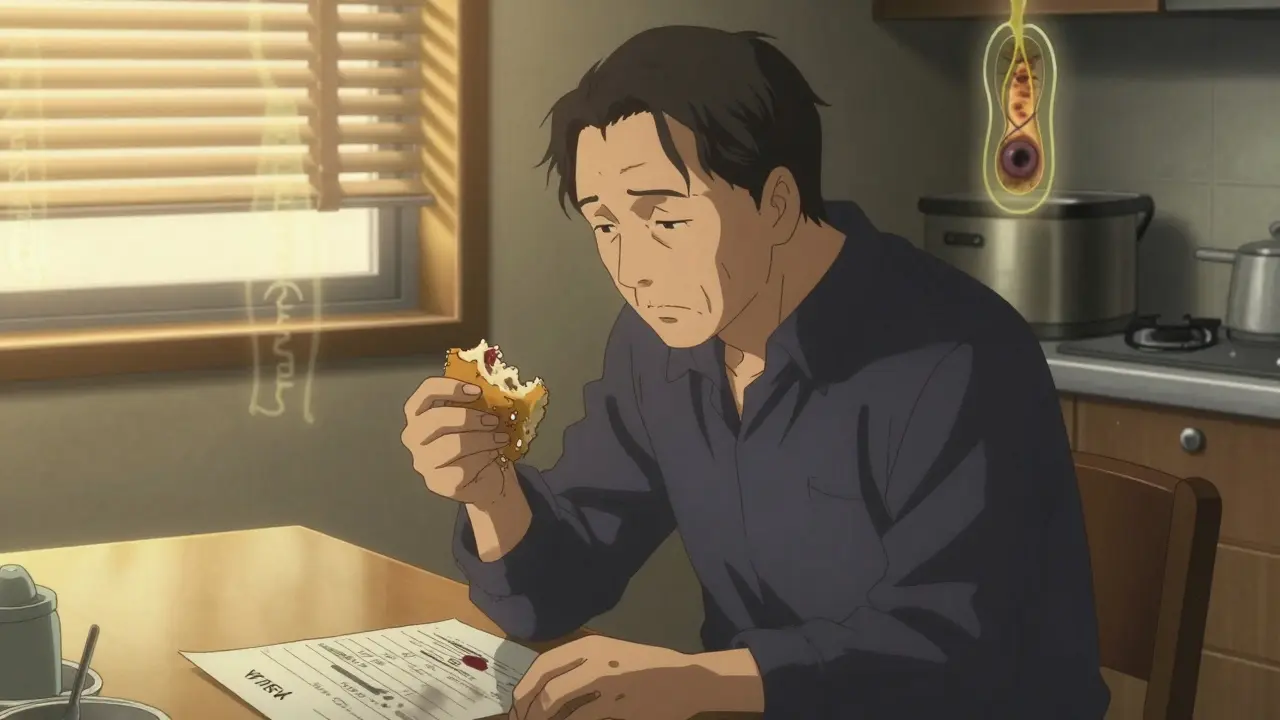
Pancreatic cancer is one of the deadliest cancers - not because it’s rare, but because it’s usually found too late. By the time most people feel sick enough to see a doctor, the cancer has already spread. The good news? We’re getting better at spotting it early, and new treatments are giving people more time - even when the disease is advanced.
Why Pancreatic Cancer Is So Dangerous
The pancreas sits deep behind the stomach, hidden from routine exams. It makes enzymes for digestion and hormones like insulin to control blood sugar. When cancer starts here, it doesn’t cause obvious symptoms until it’s grown large or spread. That’s why only 12% of people survive five years after diagnosis. But if caught before it leaves the pancreas, that number jumps to 44%. The problem? Only about 10% of cases are found this early.Early Symptoms You Shouldn’t Ignore
Most people don’t realize pancreatic cancer can show up in ways that seem unrelated. Here’s what to watch for:- Unexplained weight loss - Losing 10 pounds or more without trying is a red flag. In 60% of cases, this is one of the first signs.
- Jaundice - Yellow skin or eyes, dark urine, and pale, greasy stools aren’t just liver issues. They often mean a tumor is blocking the bile duct. About 70% of pancreatic head tumors cause this.
- Abdominal or back pain - A dull, constant ache that gets worse after eating or lying down. It’s often mistaken for gallstones or acid reflux.
- New-onset diabetes - If you never had diabetes before, and suddenly your blood sugar is high, it could be a sign. Research shows 80% of pancreatic cancer patients develop diabetes within 18 months of diagnosis. Fasting glucose levels jump from normal (under 100 mg/dL) to diabetic (over 126 mg/dL) in as little as six months.
- Loss of appetite and nausea - You might feel full after eating a little, or feel sick without any stomach bug. These happen in over 40% of cases.
- Depression or anxiety - This one surprises many. A 2018 study found that nearly half of pancreatic cancer patients had depression or anxiety months before physical symptoms appeared. For some, it was their first warning.
These symptoms don’t mean you have cancer. But if you have more than one - especially if you’re over 50, or have a family history - talk to your doctor. The average delay between first symptoms and diagnosis is over four months. Many patients are misdiagnosed with IBS, gallbladder disease, or acid reflux.

How Is It Diagnosed?
There’s no simple blood test for everyone. But for those at high risk - like people with BRCA gene mutations, hereditary pancreatitis, or a strong family history - doctors recommend regular screening with MRI or endoscopic ultrasound starting at age 50.For others, diagnosis usually starts with imaging:
- CT scan - Best for spotting tumors larger than 3 cm. But it misses smaller ones.
- Endoscopic ultrasound (EUS) - A thin tube with a camera is passed through the mouth into the stomach. It gives clear images of the pancreas and can take a tissue sample. This is the most accurate way to confirm cancer.
- CA 19-9 blood test - Not reliable for early detection. It’s elevated in only 30-50% of early-stage cases. But it’s useful to track how well treatment is working.
A biopsy is always needed to confirm. EUS-guided needle biopsies are accurate in 95% of cases.
Treatment Advances That Are Changing Outcomes
Surgery is still the only chance for a cure. The Whipple procedure removes the head of the pancreas, part of the small intestine, gallbladder, and sometimes part of the stomach. It’s complex, but survival rates have improved. For stage I cancer, 20-25% of patients live five years or more after surgery.But surgery isn’t always possible at diagnosis. That’s where treatment has changed dramatically.
- Neoadjuvant therapy - Chemotherapy before surgery shrinks tumors and kills hidden cancer cells. FOLFIRINOX (a mix of four drugs) works better than older regimens. In one trial, 58% of borderline tumors became operable after this treatment.
- For advanced cancer - Modified FOLFIRINOX boosted median survival from 20 months to over 54 months in a major 2022 trial. That’s more than four and a half years.
- Targeted therapies - If your cancer has a BRCA gene mutation, the drug olaparib can delay progression by 7.4 months compared to placebo. For the rare 3-4% with MSI-H/dMMR tumors, pembrolizumab (an immunotherapy) works well.
These aren’t cures, but they’re turning pancreatic cancer from a death sentence into a manageable condition for many.
What’s Coming Next?
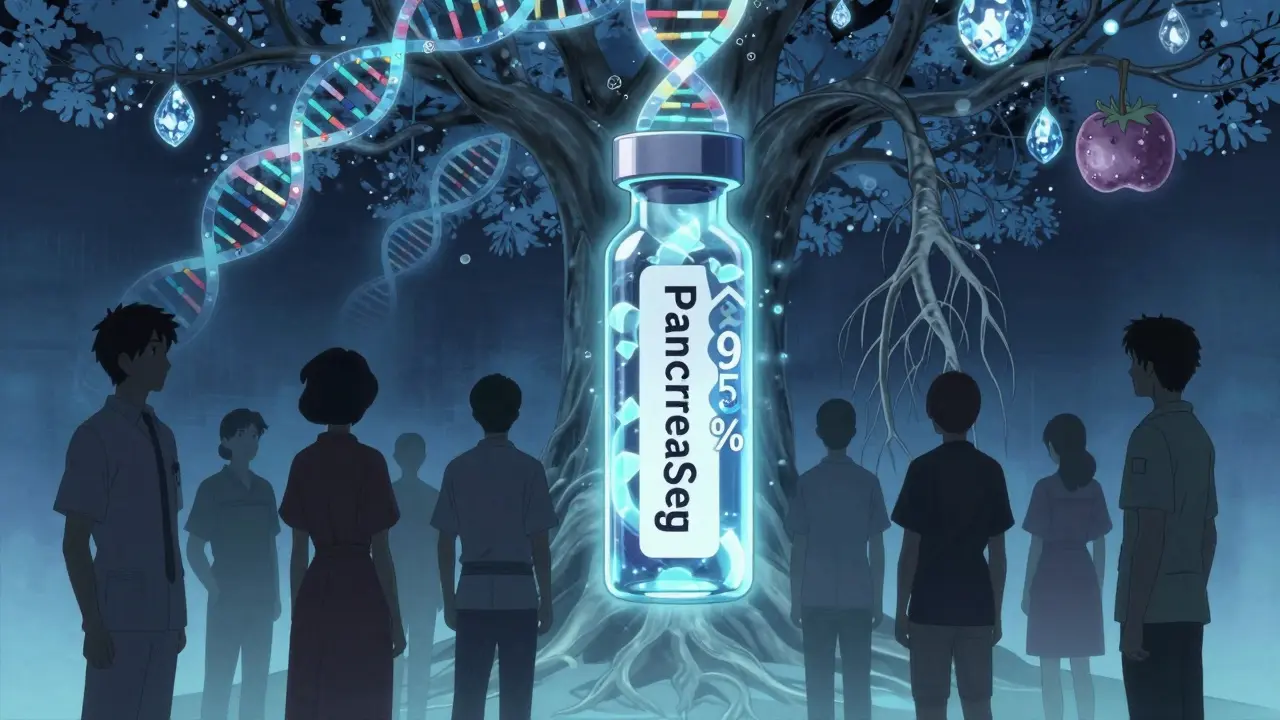
The biggest hope lies in early detection. A new blood test called PancreaSeq, developed at Johns Hopkins, detects mutant DNA from pancreatic tumors with 95% accuracy in high-risk people. Another test, being tested in the DETECTA trial, looks for protein markers and tumor DNA in blood. Early results show 85% accuracy.Artificial intelligence is helping too. Google’s LYNA algorithm can spot cancer cells on pathology slides with 99.3% accuracy. And researchers are exploring gut bacteria patterns - a 2023 study found that microbiome changes could detect pancreatic cancer with 80% accuracy.
Doctors are also pushing for smarter screening. If you’re over 50 and develop diabetes with no family history or obesity, get checked. That simple step could save lives.
The Bottom Line
Pancreatic cancer is still deadly. But the landscape is changing. We now know the early signs better than ever. Treatments are more effective. And tests are coming that could catch cancer before it spreads.If you’ve had unexplained weight loss, new diabetes, or persistent pain - don’t wait. Ask your doctor about a pancreatic evaluation. You might be the one who catches it early - and that makes all the difference.
Can pancreatic cancer be detected with a routine blood test?
No. Routine blood tests like a CBC or basic metabolic panel won’t detect pancreatic cancer. The CA 19-9 marker is sometimes used, but it’s not reliable for early detection - it’s only elevated in 30-50% of early cases and can also rise from non-cancer conditions like gallstones or liver disease. That’s why imaging and biopsy are still needed.
Is pancreatic cancer hereditary?
About 10% of pancreatic cancers are linked to inherited gene mutations. The most common include BRCA1, BRCA2, Lynch syndrome, and hereditary pancreatitis. If you have two or more close relatives with pancreatic cancer, or a known gene mutation, you may be a candidate for genetic counseling and screening.
What’s the survival rate if caught early?
If pancreatic cancer is found before it spreads outside the pancreas (localized stage), the five-year survival rate is about 44%. That’s why catching it early matters so much. But only 10-12% of cases are diagnosed at this stage. Once it spreads to distant organs, survival drops to just 3%.
Can you live without a pancreas?
Yes, but you’ll need lifelong care. The pancreas makes insulin and digestive enzymes. After removal, you’ll take insulin injections to control blood sugar and enzyme pills with every meal to digest food. With proper management, many people live full, active lives.
Why is jaundice a key symptom?
Jaundice happens when a tumor in the head of the pancreas blocks the bile duct. Bile builds up in the blood, turning skin and eyes yellow. Dark urine and pale stools go hand-in-hand with this. It’s one of the clearest signs that something’s wrong with the pancreas or bile system - and it’s often the first noticeable symptom.
Are there any new screening tests for average-risk people?
Not yet. Screening is only recommended for high-risk individuals - those with genetic syndromes or strong family history. But research is moving fast. Blood tests like PancreaSeq and DETECTA are showing promise, and experts believe a simple blood test for early detection could be available for high-risk groups within the next 3-5 years.


Marissa Staples
March 24, 2026 AT 05:34It’s wild how the body whispers before it screams, isn’t it? I’ve always thought cancer doesn’t just appear out of nowhere-it leaves a trail. Weight loss, new diabetes, even mood shifts… they’re not random. They’re clues. We just stopped listening because medicine trained us to wait for a lump or a spike in numbers. Maybe the real breakthrough isn’t in the lab-it’s in paying attention to the quiet stuff.
And yeah, depression before physical symptoms? That’s not fluff. It’s biology talking in a language we’ve ignored too long.
It’s not about fear. It’s about listening.
Just… listen.
Aaron Sims
March 25, 2026 AT 17:40Oh, so now we’re diagnosing cancer from ‘mood shifts’ and ‘unexplained weight loss’? Next, they’ll say your Instagram likes predict tumors.
Let me guess-this is one of those ‘trust your gut’ articles written by someone who hasn’t seen a pancreas since high school bio.
CA-19-9 isn’t perfect, sure. But it’s *something*. Meanwhile, you’re telling people to panic because they lost 10 pounds? What’s next? ‘If you sneeze on a Tuesday, get a CT scan.’
And don’t even get me started on ‘gut bacteria detecting cancer.’ That’s not science. That’s a TikTok ad for probiotics.
Stephen Alabi
March 27, 2026 AT 12:09While the article presents a compelling narrative regarding early detection and therapeutic advances, one must critically evaluate the epistemological foundations upon which these claims rest. The assertion that ‘depression precedes physical symptoms’ is not merely correlational-it is, in fact, a post hoc rationalization grounded in confirmation bias.
Moreover, the purported efficacy of FOLFIRINOX in extending survival to 54 months is derived from a single-phase, non-randomized cohort study with a selection bias toward younger, healthier patients.
Furthermore, the reliance on imaging modalities such as EUS and MRI presupposes access to tertiary care infrastructure, which is neither equitable nor globally scalable. Thus, while the tone is optimistic, the underlying assumptions are structurally flawed and potentially misleading to the lay public.
Agbogla Bischof
March 28, 2026 AT 02:24Excellent breakdown. I’m from Nigeria, and I’ve seen too many cases where people delay care because they assume symptoms like jaundice or weight loss are ‘just stress’ or ‘bad food.’
What’s missing in many public health campaigns is the cultural context. In some communities, talking about cancer is taboo. People see it as a death sentence, so they avoid doctors until it’s too late.
The real win here isn’t just the science-it’s education. We need community health workers, not just hospital brochures. And we need to teach people that early detection isn’t about fear-it’s about agency.
Also, the part about BRCA mutations? That’s huge. Genetic counseling should be part of routine care for families with history. Not just ‘if you’re rich enough to afford it.’
Pat Fur
March 29, 2026 AT 12:20My aunt had pancreatic cancer. She didn’t have pain. She didn’t have jaundice. She just stopped eating.
One day she said, ‘I don’t want my coffee anymore.’
That was it.
Three weeks later, she was gone.
That’s why this matters. Not because of stats. Because of the quiet things we forget to notice.
Anil Arekar
March 30, 2026 AT 20:15The scientific rigor presented in this post is commendable. The integration of clinical data with emerging diagnostic technologies demonstrates a holistic approach to oncology. However, I would like to emphasize the importance of socioeconomic context in the dissemination of such knowledge.
In India, access to endoscopic ultrasound or genetic testing remains limited to urban centers. Even when awareness exists, structural barriers prevent timely intervention.
Therefore, while the advancements are remarkable, equitable implementation must be the next frontier. Policy, not just innovation, will determine who survives.
Let us not mistake progress for justice.
Elaine Parra
April 1, 2026 AT 01:58Of course the government wants you to think this is ‘detectable.’ It’s not about saving lives-it’s about keeping insurance premiums low and pushing expensive screenings.
Do you know how many people die because they get a false positive and then get a biopsy that ruins their pancreas? Or because they’re told ‘you’re high risk’ and spend 10 years in anxiety?
And don’t even get me started on ‘gut bacteria.’ That’s Big Pharma’s new scam. They’ll sell you a $300 test and then charge you $20k for ‘treatment.’
Real talk: if you’re not rich, you’re just a data point. This isn’t medicine. It’s a business model.
Natasha Rodríguez Lara
April 2, 2026 AT 20:54I love how this post makes you feel like you have some power-even if it’s just asking your doctor a question.
I used to think ‘new diabetes’ was just aging. Then my mom got diagnosed after she lost weight and stopped sleeping. She was 58. No family history. No obesity.
She’s alive because she asked. Just asked.
I’m not saying panic. I’m saying: don’t be polite about your body. Say ‘I’m worried.’ Say ‘I need a scan.’
That’s the real breakthrough.
peter vencken
April 4, 2026 AT 17:59Man, I read this and thought-wait, my buddy’s dad had this. He lost like 30 lbs, got tired all the time, and kept saying ‘I just can’t digest food.’ We thought he had GERD.
Turns out it was pancreatic. He died 6 months later.
Why isn’t this stuff on TV? Like, why do we wait for people to get sick before we tell them? Shouldn’t this be in every doctor’s office? Or on your insurance bill? ‘Hey, if you’re over 50 and feel weird, here’s what to look for.’
Just saying.
Chris Crosson
April 5, 2026 AT 04:29Let’s be real-this isn’t just about symptoms. It’s about how we treat aging. We brush off weight loss as ‘getting older.’ We ignore fatigue because ‘everyone’s tired.’ We normalize nausea because ‘stress.’
But if a 30-year-old said this, we’d run them to the ER.
Why do we treat older people like they’re supposed to just… fade?
It’s not just cancer. It’s ageism in medicine. And we need to call it out.
Rama Rish
April 6, 2026 AT 03:41My uncle had this. He was a teacher. No smoking. No drinking. Healthy diet.
He got diagnosed after he couldn’t hold his coffee. Just… couldn’t.
He was 61.
So yeah. It’s not just about risk factors.
It’s about listening.
Even when it doesn’t make sense.
Jesse Hall
April 6, 2026 AT 05:48This gave me chills. Not because it’s scary-but because it’s hopeful.
We used to say ‘pancreatic cancer = death sentence.’
Now we’re saying ‘we can manage it.’
That’s huge.
And honestly? The fact that we’re talking about depression as a symptom? That’s the kind of care I want for my family.
Thank you for writing this.
❤️
Donna Fogelsong
April 7, 2026 AT 16:58They’re lying. The real reason they don’t want you to know about early signs is because if everyone got screened, insurance companies would collapse. They’d have to pay for all the MRIs and biopsies. So they keep you scared and confused.
They want you to wait until it’s too late. Then they can charge you $200k for chemo.
It’s not medicine. It’s a system. And you’re the product.