

When you suddenly see zigzag lines, flashing lights, or blind spots in your vision, it’s easy to panic. Is it a stroke? A tumor? Or just a migraine? The truth is, not all visual disturbances are the same - and calling them all "ocular migraines" can be dangerous. There are two very different conditions hiding under that one label, and knowing the difference could protect your vision - even your life.
What’s Really Happening in Your Vision?
Most people who say they have an "ocular migraine" are actually describing migraine with visual aura. This is the common kind, affecting about 25% of all migraine sufferers. It’s not in your eye - it’s in your brain. A wave of electrical activity, called cortical spreading depression, moves across the visual part of your brain. That’s what causes the weird visual effects: shimmering arcs, blind spots, or jagged lines that look like a fortress wall (called fortification spectra). These symptoms usually show up in both eyes at once. Even if you close your eyes, you still see them. They typically last between 5 and 60 minutes, with most settling down in about 27 minutes. Then there’s the rare and much more serious condition: retinal migraine. This one is real, but it’s extremely uncommon - less than 1% of migraine cases. Unlike the aura type, retinal migraine affects only one eye. You might notice your vision in that eye go dim, gray, or even disappear completely for a few minutes. It’s not a trick of the light - it’s your retina or optic nerve temporarily not getting enough blood. Symptoms usually last less than 20 minutes, often just 10 to 14. And here’s the kicker: if you cover your good eye, the vision loss is still there in the affected eye. That’s how you know it’s not in your brain.Key Differences You Can’t Ignore
Here’s the simple breakdown that matters:- Visual aura (brain-based): Affects both eyes. You see zigzags, sparkles, blind spots. Even with eyes closed. Lasts 20-30 minutes on average. Often followed by a headache on one side of your head.
- Retinal migraine (eye-based): Affects only one eye. Vision dims, goes gray, or disappears. Covers the whole field of that eye. Lasts 10-20 minutes. Usually no other neurological symptoms. Pain, if present, is behind the affected eye.
These aren’t just different symptoms - they’re different diseases with different risks. Mistaking one for the other can lead to the wrong treatment, or worse, no treatment at all.
What Triggers These Episodes?
The triggers for both types overlap heavily. Stress is the big one - cited by 78% of people who get these episodes. Hormonal shifts, especially in women, are another major factor. Sleep deprivation, skipping meals, and bright or flickering lights can set them off too. Diet plays a role. Aged cheeses, red wine, chocolate, and artificial sweeteners like aspartame are common culprits. One study found 38% of patients linked their attacks to cheese, and 33% to wine. But triggers vary. What sets off one person’s aura might do nothing for another. The key isn’t just avoiding triggers - it’s tracking them. Keep a simple log: when the episode happened, what you ate, how much sleep you got, your stress level. Over time, patterns emerge. That’s how you start to take control.
When to Worry - The Red Flags
Most visual auras are harmless, even if scary. But some symptoms mean you need to see a doctor right now. Here’s what you should never ignore:- Lasting longer than 60 minutes: Typical aura fades within an hour. Anything longer could be a sign of stroke or other serious brain issue.
- New onset after age 50: If you’ve never had migraines before and suddenly start seeing flashes or blind spots after 50, get checked. This could be a sign of posterior circulation stroke.
- Motor weakness or numbness: If your arm or leg feels weak, or your speech slurs, don’t wait. This could be hemiplegic migraine - which mimics stroke.
- One-sided vision loss without headache: Especially if it happens more than once a day. This could be amaurosis fugax from carotid artery blockage - a major stroke risk.
- Scalp tenderness, jaw pain when chewing, or unexplained weight loss: These are signs of giant cell arteritis, a condition that can cause permanent blindness in days if untreated.
- High blood pressure (over 160/100) with new visual symptoms: This combo is a red flag for hypertensive emergency.
One patient in Cleveland reported being told "it’s just migraines" for eight months - until they finally had a carotid ultrasound and found a 70% blockage. That’s not rare. Up to 23% of people with retinal migraine-like symptoms turn out to have carotid stenosis. And 18% of older patients diagnosed with ocular migraine actually have giant cell arteritis.
How Doctors Diagnose the Difference
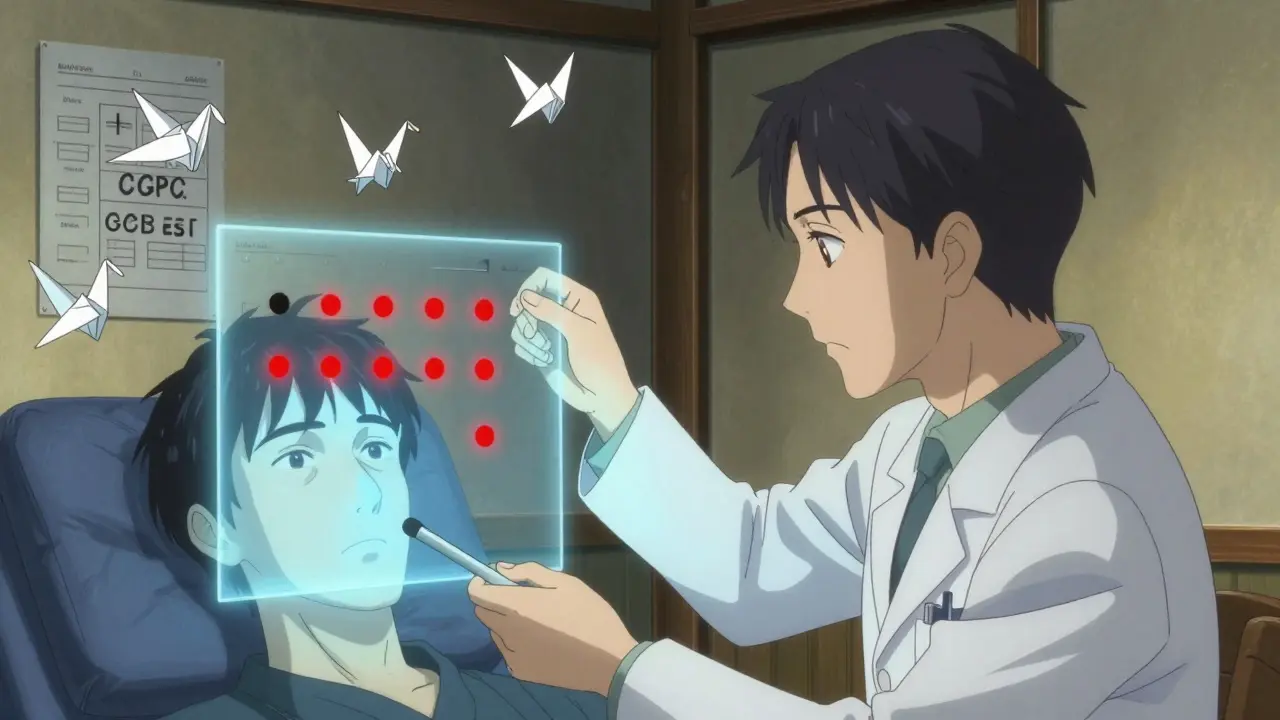
A good neurologist or neuro-ophthalmologist won’t just take your word for it. They’ll ask detailed questions and may order tests:- Visual field testing: You look into a machine and press a button when you see lights. This shows exactly which part of your vision is affected - and whether it’s one eye or both.
- Eye exam with dilation: Checks for signs of retinal damage or inflammation.
- Blood tests: ESR and CRP levels to rule out giant cell arteritis.
- Carotid ultrasound: If retinal symptoms are frequent or brief, this checks for artery blockage.
- Brain imaging (MRI or CT): Especially if symptoms are new, atypical, or you’re over 50.
Don’t let anyone brush this off with a quick "you’re stressed." If your vision changes, get it checked properly. A simple visual field test can confirm whether it’s brain-based or eye-based - and that changes everything.
Treatment: What Works and What Doesn’t
Treatment depends entirely on which type you have.For migraine with aura:
- Acute treatment: Triptans (like sumatriptan nasal spray) work well for many - about 72% of people get relief within two hours. Gepants like rimegepant are newer options with fewer side effects.
- Prevention: If you get aura more than once a month, daily meds like propranolol (a beta-blocker) or topiramate can cut frequency by over half. CGRP monoclonal antibodies (like erenumab) are injectables that reduce aura days by 53% in clinical trials.
- Lifestyle: Regular sleep, magnesium (600mg/day), and mindfulness practices have strong evidence. One study showed mindfulness reduced aura episodes by 32%.
For retinal migraine:
- NO triptans or vasoconstrictors. These narrow blood vessels - and if your vision loss is from poor blood flow to the retina, these drugs could make it worse.
- Focus on underlying causes: If it’s linked to high blood pressure, diabetes, or carotid disease, treat those. Blood thinners or statins might be needed.
- Prevention: Calcium channel blockers like verapamil are often used to prevent retinal vasospasm.
And here’s the good news: if you have migraine with aura and manage it well, your long-term vision is almost certainly fine. A 20-year study showed 98% of patients kept normal vision. Retinal migraine is trickier - if it’s caused by an underlying vascular problem, untreated, it can lead to permanent vision loss in up to 12% of cases.
What Patients Are Saying
On online forums, the frustration is real. Two out of three people say they were misdiagnosed - often told it was stress or anxiety. One woman spent three years being told to "just relax" before a neuro-ophthalmologist confirmed her retinal migraine with visual field testing. "That validation changed my life," she wrote. Another shared how she had three episodes of vision loss in one eye over three weeks. Her doctor dismissed it. Two months later, she had a stroke. "I wish someone had listened," she said.These aren’t just stories - they’re warnings. If your vision changes, don’t wait. Don’t assume it’s "just migraines." Get the right tests. Ask for visual field testing. Push for blood work if you’re over 50. Your eyesight is worth it.
What’s Next in Research
Scientists are making progress. A new drug called tonabersat, which targets the brain wave that causes aura, reduced aura duration by nearly half in early trials. Researchers are also looking at blood markers - like CGRP levels - that spike during aura and could one day help diagnose it faster. Advanced retinal imaging might soon distinguish retinal migraine from carotid disease without invasive tests.But the biggest breakthrough isn’t in the lab - it’s in awareness. More doctors need to know the difference. More patients need to know the red flags. Because when it comes to vision, timing isn’t just important - it’s everything.
Can ocular migraines cause permanent vision loss?
True retinal migraine rarely causes permanent vision loss if it’s isolated and treated properly. But if it’s a sign of an underlying condition like carotid artery disease or giant cell arteritis, and those go untreated, permanent vision damage can happen quickly - sometimes within days. Migraine with visual aura does not cause permanent vision loss. The key is figuring out which type you have and ruling out serious causes.
Should I take a triptan if I think I have an ocular migraine?
Only if you’ve been properly diagnosed with migraine with visual aura - and even then, only if your doctor says it’s safe. If you have true retinal migraine, triptans are dangerous. They constrict blood vessels, and if your vision loss is caused by reduced blood flow to the retina, triptans could make it worse. Never self-diagnose. Always get tested before taking these meds.
Is it normal to have visual aura without a headache?
Yes. About 15% of people with migraine with aura never get a headache - this is called "silent migraine" or "acephalgic migraine." The visual symptoms are real and follow the same pattern: they start in the periphery, spread, last under an hour, and then fade. But if you’re over 50 and this is new, get checked - it could mimic a stroke.
Can stress cause ocular migraines?
Stress is one of the top triggers - cited by 78% of patients. It doesn’t cause the condition, but it can set off an episode in people who are already prone to it. Managing stress with sleep, mindfulness, or exercise can reduce frequency by up to 32%. But stress alone won’t explain sudden, one-eyed vision loss - that needs medical evaluation.
Are ocular migraines more common in women?
Yes. Migraine with aura affects women 3 times more often than men, especially between ages 35 and 45. Hormonal changes, especially around menstruation, pregnancy, or menopause, are major triggers. Retinal migraine is less clearly gender-linked, but because it’s so rare, data is limited. Women using birth control pills and who smoke have a higher stroke risk if they have aura - so this combo requires extra caution.
How do I know if it’s a stroke or a migraine?
Stroke symptoms come on suddenly and don’t improve over minutes. Migraine aura builds slowly over 5-20 minutes and fades completely. Stroke often includes weakness on one side of the body, slurred speech, or confusion - symptoms migraine aura doesn’t cause. But if you’re over 50, have high blood pressure, or the symptoms don’t follow the classic pattern, don’t wait - call emergency services. Better safe than sorry.






Frank Drewery
December 18, 2025 AT 20:54Been dealing with these zigzag lights for years - thought I was going crazy. This post finally put names to the weird stuff I see. No more panic attacks when my vision glitches. Just took a deep breath and grabbed my magnesium. Thanks for the clarity.
mary lizardo
December 20, 2025 AT 01:50It is deeply concerning that the term 'ocular migraine' persists in popular discourse. The conflation of cortical spreading depression with retinal ischemia is not merely imprecise - it is medically negligent. One must distinguish between transient neurological phenomena and vascular occlusion, lest we normalize diagnostic laziness.
Sajith Shams
December 20, 2025 AT 08:54You people don't even know the difference between aura and retinal ischemia? Come on. Retinal migraine is a vascular emergency. If you're over 40 and get one-eyed vision loss, you're one step from a stroke. I've seen it. Doctors ignore it because they're lazy. Get an ultrasound. Stop Googling.
Chris Davidson
December 20, 2025 AT 13:55Triptans bad for retinal migraine. That's it. No need for 10 paragraphs. If your eye goes dark, don't take sumatriptan. Done. Now go see a doctor instead of reading Reddit.
Glen Arreglo
December 22, 2025 AT 11:49I'm from India and we don't talk about this stuff much. My aunt had vision loss and was told it was stress. Turns out she had giant cell arteritis. Took her 6 months to get diagnosed. This article saved my life - I just got my ESR and CRP checked. If you're over 50 and see weird stuff, push for blood tests. Don't wait.
Isabel Rábago
December 23, 2025 AT 23:44How many times do we have to hear 'it's just stress'? I had three episodes in one week. My neurologist said I was anxious. I cried in the parking lot. Then I found a neuro-ophthalmologist who did a visual field test - turned out I had retinal migraine. You don't get to dismiss someone's vision loss because they're a woman. This isn't anxiety. This is medicine.
Monte Pareek
December 25, 2025 AT 17:21Let me break this down real simple. If you see zigzags in both eyes and then get a headache? Migraine aura. Safe. Manageable. Take your triptan. If your whole left eye goes gray and you can still see out the right? That's retinal migraine. That's a red alert. You need a carotid ultrasound. Not a therapist. Not a yoga class. An ultrasound. And if you're over 50 and this is new? Call your doctor now. Not tomorrow. Now. I've seen people lose vision because they waited. Don't be one of them.
Allison Pannabekcer
December 26, 2025 AT 20:15Thank you for writing this. I'm a nurse and I've seen too many patients dismissed. One guy thought his aura was a stroke and drove himself to the ER - they told him he was fine. He came back two weeks later with a 70% carotid blockage. We need better screening. People need to know: visual changes aren't 'just migraines.' They're signals. Listen to your body. Get tested. You're worth it.
anthony funes gomez
December 28, 2025 AT 05:35The neurophysiological underpinnings of cortical spreading depression (CSD) - a self-propagating wave of neuronal depolarization followed by prolonged suppression of activity - are fundamentally distinct from the microvascular occlusive pathophysiology of retinal migraine, which implicates transient vasospasm of the central retinal artery or its branches. The clinical implications are profound: one is a benign, self-limiting encephalopathy; the other, a potential harbinger of systemic vascular catastrophe. Diagnostic arbitrariness is not merely an epistemological flaw - it is a lethal heuristic.
Kathryn Featherstone
December 29, 2025 AT 23:13I used to think I was imagining the flashes. Then I started tracking my triggers in a notebook - sleep, cheese, stress. After three months, I saw the pattern. I started taking magnesium and got better sleep. My aura episodes dropped by 70%. You don't need a pill to fix everything. Sometimes you just need to listen to your body. And yes, it's okay to be scared. Just don't stay scared. Get checked. Then take back your peace.
James Stearns
December 30, 2025 AT 01:49It is profoundly irresponsible to suggest that 'ocular migraine' is a harmless term. This is not a colloquialism - it is a diagnostic trap. The medical community has failed patients by permitting such imprecision. One must not merely 'be aware' - one must demand precision. To call retinal ischemia 'migraine' is to trivialize potential blindness. This is not a blog post. This is a public health failure.
Nina Stacey
December 31, 2025 AT 00:55OMG I had one of these last week and thought I was having a stroke. I was crying in the bathroom. My husband made me go to urgent care and they said it was probably aura. I'm so relieved. I didn't know about the one-eye thing. I'm gonna start tracking my cheese intake now. Also I'm taking magnesium. Thanks for this post. I feel less alone.
Dominic Suyo
January 1, 2026 AT 14:17Let me be brutally honest: 80% of people who say they have 'ocular migraines' are either misinformed or lying to themselves. The rest? They're one missed ultrasound away from permanent blindness. This isn't a wellness blog. This is a countdown clock. You think you're safe because you 'feel fine'? That's the exact mindset that kills people. Get the tests. Or don't. But don't pretend you're not gambling with your sight.
Kevin Motta Top
January 1, 2026 AT 20:40Retinal migraine = one eye. Aura = both. That's the whole thing. If you're not sure, cover one eye. If the vision is still gone, it's not in your brain. Get checked. Simple.