
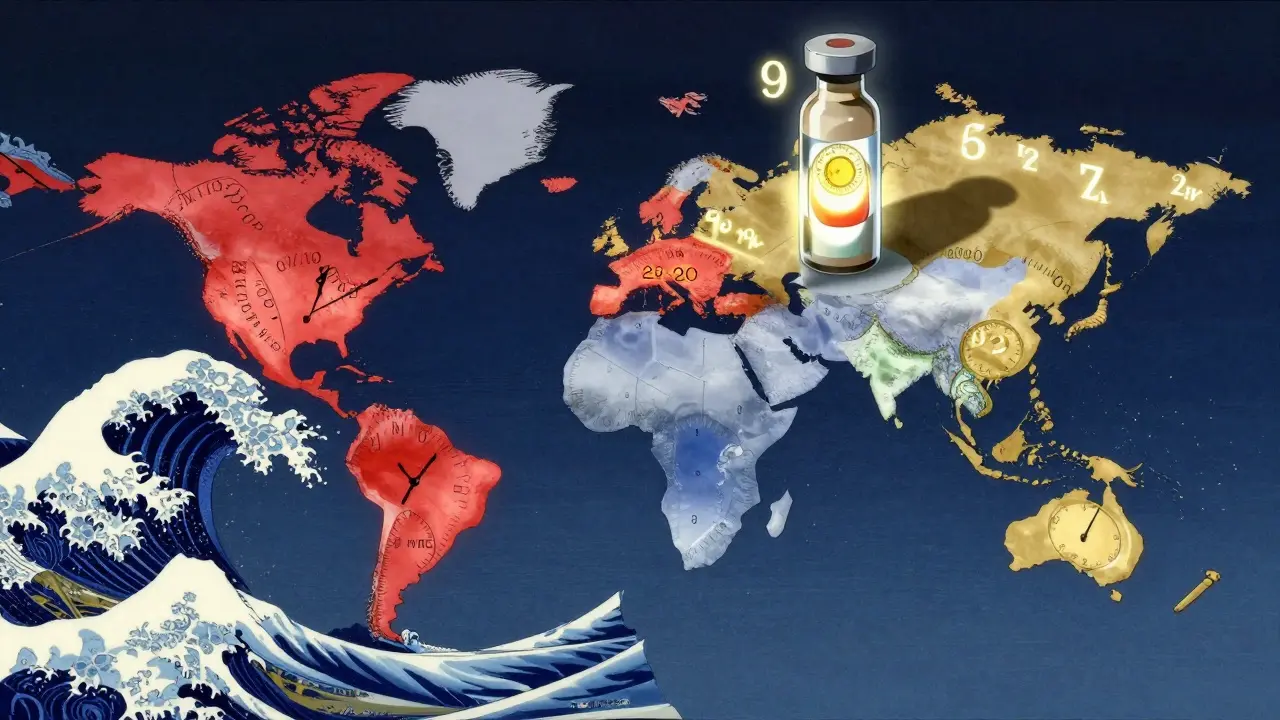
Most people think a patent lasts 20 years-simple, right? But if you’ve ever tracked when a drug or device loses protection in different countries, you know it’s anything but simple. The patent expiration date you see on a U.S. patent might be years off from what’s listed in Brazil, Japan, or Germany. Why? Because while the global standard is 20 years from filing, the real expiration date is shaped by a web of local laws, delays, fees, and exceptions that can stretch or shrink that window by years.
Where the 20-Year Rule Actually Comes From
The 20-year patent term isn’t just a random number. It’s the result of the 1994 TRIPS Agreement, part of the World Trade Organization’s push to standardize intellectual property rules. Before that, countries did whatever they wanted. The U.S. used to give patents 17 years from the issue date-not the filing date. That meant a patent could sit in the U.S. Patent Office for years before being granted, and still get a full 17 years of protection afterward. A patent filed in 1980 might not expire until 2000, even if it was granted in 1983. That system ended on June 8, 1995, when the U.S. switched to 20 years from the earliest filing date to match TRIPS.Today, all 164 WTO member countries follow that 20-year baseline. But here’s the catch: the 20 years don’t always start on the day you file. They start on the priority date-the date of your first patent application in any TRIPS country. Thanks to the Paris Convention (established in 1883), you have 12 months after your first filing to apply in other countries and still claim that original date. That’s how a company in Germany can file a patent in January, then file in the U.S. in November and still get the same expiration date as if they’d filed in the U.S. first.
Patent Term Adjustments: When the System Pays You Back
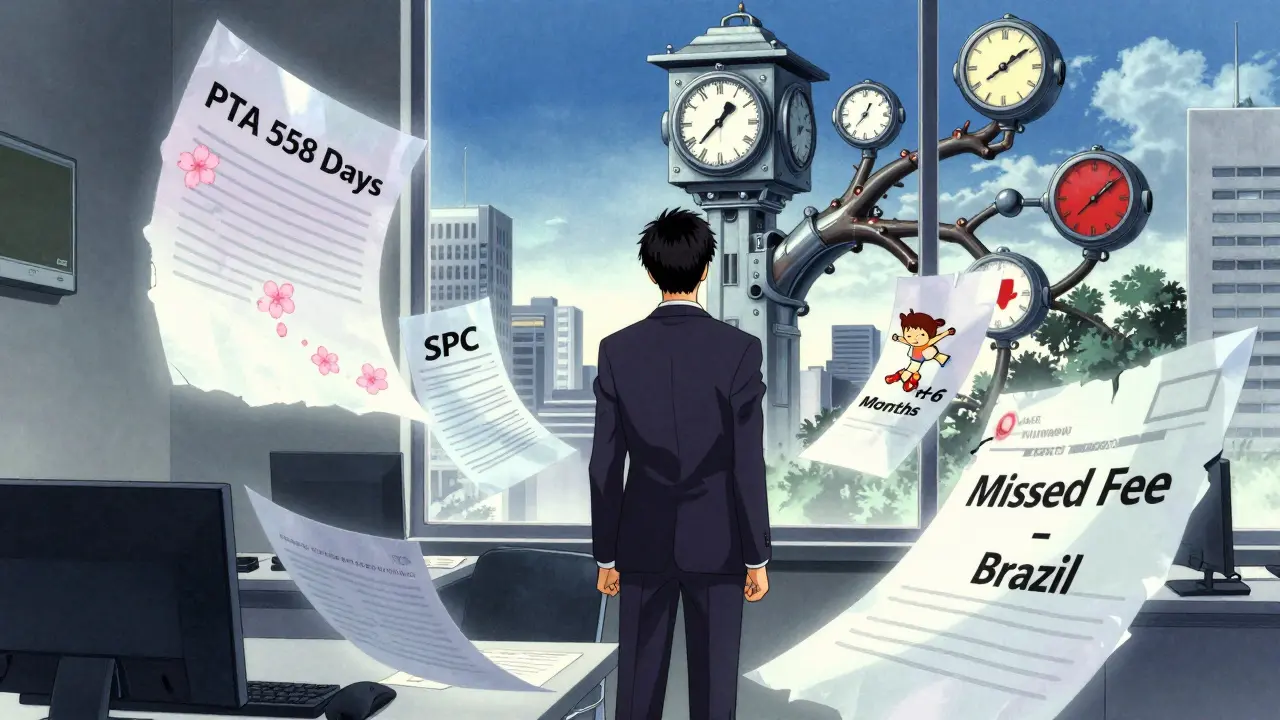
Just because the clock starts ticking doesn’t mean it runs straight. In many countries, if the patent office takes too long to examine your application, you get extra time. In the U.S., this is called a Patent Term Adjustment (PTA). In 2022, the average U.S. patent received 558 extra days-almost 1.5 years-because of USPTO delays. That’s not a bonus. It’s a legal fix. If your patent was delayed by 800 days, your 20-year term becomes 21 years and 9 months. That’s huge for pharmaceutical companies where every extra month of exclusivity can mean hundreds of millions in revenue.But not every country does this. India gives no extensions, no matter how long the patent office takes. Australia offers adjustments for unreasonable delays, but only if you request them. Japan grants extensions if examination takes more than three years. China added similar rules in 2021. The U.S. remains one of the most generous-and complicated-systems. You have to track not just the filing date, but also continuation applications, terminal disclaimers, and appeals. One small error in calculation can cost you years of protection.
Drug Patents and the Extra Years Nobody Talks About
Pharmaceutical patents are where things get wild. Even if a drug patent expires in 20 years, the real clock starts ticking when the drug hits the market. Regulatory approval can take 8 to 12 years. That leaves only 8 to 12 years of market exclusivity before generics show up. To fix that, many countries offer Patent Term Extensions (PTEs) or Supplementary Protection Certificates (SPCs).In the European Union, SPCs can add up to 5 years of protection after patent expiry, plus an extra 6 months if the drug was tested in children. The same applies in Switzerland, Norway, and Iceland. The U.S. allows up to 5 years of extension under 35 U.S.C. § 156, but only if the drug was subject to FDA review and the extension doesn’t push total exclusivity past 14 years from market approval. Japan and China also have drug-specific extensions. But in Canada, you can’t extend drug patents at all-unless you’re lucky enough to have filed under the old system before 2009. And in India? No extensions. Ever.
This is why big pharma companies like Pfizer and Johnson & Johnson don’t just track patent numbers. They track expiration dates by country, by formulation, by indication. One drug might lose protection in the U.S. in 2027, but still be protected in Brazil until 2031 because of a regulatory delay extension. That’s why global patent teams are as important as R&D labs.
Utility Models: The Short-Term Alternative
Not all patents are created equal. In countries like Germany, China, Japan, and South Korea, companies can file for a utility model-a cheaper, faster, shorter-term version of a patent. These don’t require the same level of inventive step, so they’re easier to get. But they last only 6 to 10 years. In Germany, it’s 10 years. In China, it’s 10 years too. In Australia, it’s 8 years. These are perfect for products with rapid innovation cycles-think medical devices, tools, or packaging designs. They’re not meant to protect blockbuster drugs. But they’re a smart way to buy time while waiting for a full patent to be granted.What Happens If You Don’t Pay the Fees?
Even if your patent is legally good for 20 years, it can die early if you miss a payment. Most countries require maintenance fees at 3.5, 7.5, and 11.5 years after grant in the U.S. In Europe, you pay annually starting from the third year. In Mexico, you pay at years 5, 10, 15, and 20. Switzerland? Just one payment at grant. Miss one, and your patent expires-no second chances.The U.S. gives a 6-month grace period with a late fee. The European Patent Office lets you pay up to 6 months late with a surcharge. But in Japan, you have only 2 months to fix a missed payment. And in Brazil, if you miss a fee, the patent is dead unless you file a petition for reinstatement-and even then, it’s not guaranteed. Many small companies lose patents not because they’re invalid, but because they forgot to pay $1,000 in maintenance fees. It’s not rare. It’s routine.
The PCT System: Delaying the Cost, Not the Deadline
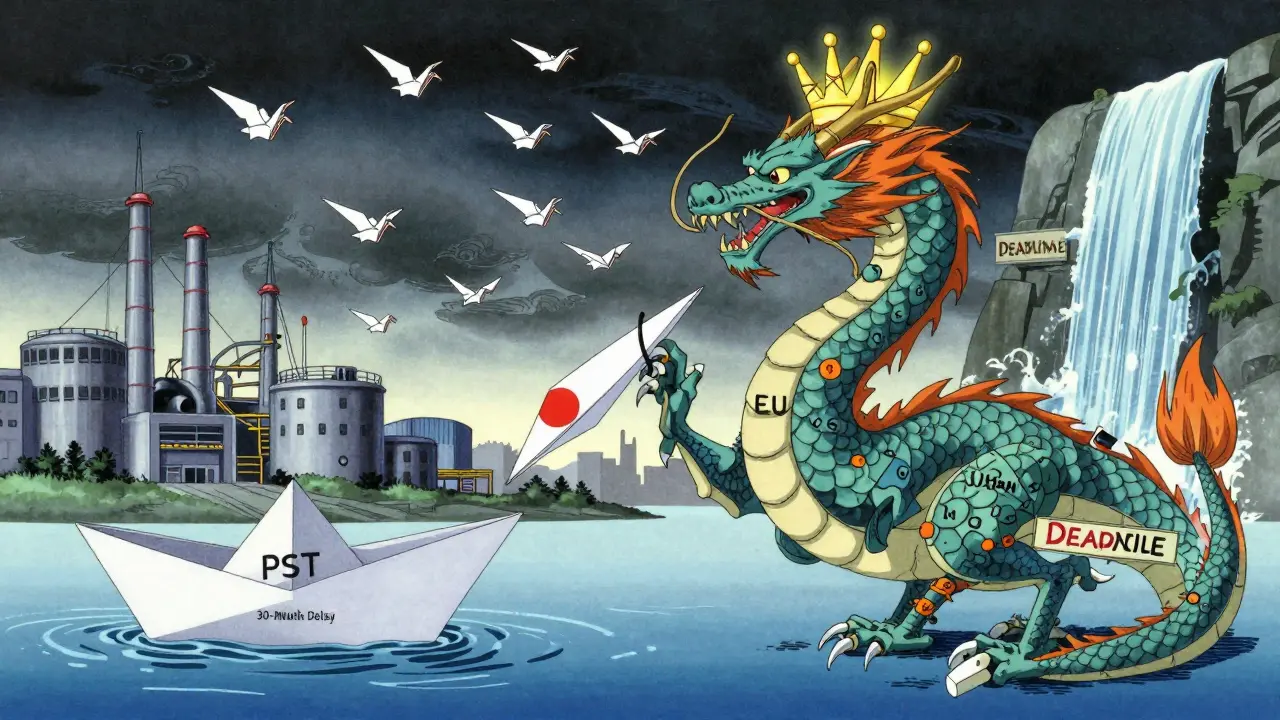
The Patent Cooperation Treaty (PCT) lets you file one application that delays the cost of national filings for up to 30 or 31 months. That’s a huge advantage for startups and small companies. But it doesn’t extend your patent term. Your 20-year clock still starts at your original priority date. The PCT just gives you time to decide where to file. The U.S. and Canada allow 30 months. Most European countries, China, and Japan allow 31 months. Some countries, like Japan, will let you file late with a fee and explanation. Others won’t.What happens if you miss the deadline? Your rights vanish in that country. No patent. No extension. No do-over. That’s why companies with global ambitions hire patent attorneys who track deadlines like a war room. One missed date can cost you a whole market.
What’s Changing Now?
The European Union’s Unitary Patent system, launched in June 2023, is the biggest shift in decades. Instead of validating a European patent in 17 countries separately, you now get one patent covering all of them-with a single expiration date. But here’s the catch: it’s still 20 years from filing. No changes to the term. Just less paperwork.Emerging economies are catching up too. Indonesia raised its patent term from 15 to 20 years in 2016. Vietnam did the same in 2022. Brazil still has a massive backlog-some patents there take over a decade to be granted, so the real term is often less than 10 years, even if the law says 20. China is cracking down on delays and now offers compensation for examination backlogs. The U.S. is trying to reduce PTA by speeding up exams, but that’s led to a drop in average extensions-from 612 days in 2021 to 558 in 2022.
Why This Matters for Everyone
If you’re a researcher, a startup founder, or even a patient waiting for a cheaper drug, patent expiration timelines affect you. A drug patent expiring in the U.S. in 2027 doesn’t mean it’s off-patent everywhere. Generics might not be available in Germany until 2030. That’s why some patients travel to countries where the drug is cheaper. That’s why generic companies don’t launch simultaneously-they wait for the weakest link in the chain.For innovators, it’s a minefield. A patent that looks strong in the U.S. might be worthless in India if it’s not extended. A device that’s protected in Japan might be open for copying in Canada if you didn’t file a utility model. You can’t rely on a single expiration date. You need a global map.
And for the public? The complexity means drugs stay expensive longer than they should. The system was meant to reward innovation. But when patents last 25 years in one country and 12 in another, it’s not innovation being protected-it’s market control.
Do all countries have the same patent expiration date?
No. While most countries use a 20-year term from the filing date, the actual expiration date can vary due to patent term adjustments, regulatory delays, maintenance fee failures, and local laws. For example, a drug patent might expire in 2027 in the U.S. but not until 2031 in Brazil due to regulatory extension and backlog.
Can a patent expire before 20 years?
Yes. If maintenance fees aren’t paid on time, the patent expires early-even if the 20-year term hasn’t passed. In the U.S., missing a fee at year 3.5, 7.5, or 11.5 can kill the patent. Some countries, like Mexico, require payments at years 5, 10, 15, and 20. Failure to pay means loss of rights.
How do pharmaceutical patents get extra time?
Through Patent Term Extensions (PTEs) or Supplementary Protection Certificates (SPCs). The U.S. allows up to 5 extra years if the FDA review delayed market entry. The EU offers up to 5 years plus a 6-month pediatric extension. Japan and China have similar rules. India and Canada do not offer extensions for regulatory delays.
What’s the difference between a patent and a utility model?
A utility model is a shorter-term, less stringent form of protection available in countries like Germany, China, and Japan. It typically lasts 6 to 10 years, requires less inventive step, and is faster and cheaper to obtain. It’s often used for mechanical devices or incremental improvements, not complex pharmaceuticals.
Does filing a PCT application extend my patent term?
No. The PCT only delays the cost and deadline for entering national patent offices. Your 20-year term still starts at your original priority date. You get up to 30 or 31 months to decide where to file, but the expiration clock doesn’t pause.
Why does the U.S. have such long patent term adjustments?
The U.S. grants automatic extensions (PTA) when the USPTO causes delays in examination, such as taking over 3 years to issue a first office action or more than 14 months to respond to an applicant’s reply. In 2022, the average patent received 558 extra days of protection due to these delays. This is designed to compensate inventors for government-caused slowdowns.
Can I extend a patent in India?
No. India does not offer any patent term extensions, even for pharmaceuticals or regulatory delays. Patents expire exactly 20 years from the filing date, regardless of how long it took to get approval. This makes India a key market for generic drug manufacturers.
What happens if I miss the 30-month PCT deadline?
You lose the right to file for a patent in that country. There is no automatic recovery. Some countries, like Japan and the U.S., allow a 2-month late entry with a fee and justification. Others, like Brazil, don’t allow any extensions. Missing the deadline means giving up your patent rights in that jurisdiction permanently.




Tom Swinton
January 7, 2026 AT 05:46Okay, so let me get this straight-patents aren’t even 20 years? I thought it was simple, but now I’m sitting here with my coffee, staring at my phone, wondering if my grandma’s old knee brace patent expired in 2017 or 2023?!!?? The USPTO took 5 years just to look at it, then gave me 1.5 extra years?? I mean… that’s wild. I’ve got a cousin who works at a med device startup, and they’re basically playing chess with deadlines and maintenance fees like it’s a video game. Miss one payment? Bye-bye, billion-dollar idea. And India? No extensions? That’s why generics are cheaper there, right? I’m not mad, I’m just… impressed. And slightly terrified.
Vinayak Naik
January 9, 2026 AT 01:34bro in india we dont even get patent in 20 yrs lmao. my uncle filed a device patent in 2015 and still waiting for first office action. the ipo is like a sleepy uncle who forgets his own birthday. no extensions? no prob. we dont need em. if your patent lasts 10 yrs in real time, you’re lucky. generics? they’re already on the shelf before your patent even gets a stamp. #indianpatentgame
Kiran Plaha
January 10, 2026 AT 12:44So if I file in the US and then in Japan a year later, the clock still starts from the US date? That’s actually kind of fair. I always thought patents were country-by-country from scratch. Makes sense though-why punish someone for thinking globally? Still, the maintenance fees sound like a trap. One missed payment and poof. No wonder small inventors give up.
Matt Beck
January 12, 2026 AT 09:3720 years? More like 25 if you’re lucky 🤯 and 12 if you’re broke 😭. The system is a glitch in the matrix. We’re supposed to reward innovation, but it’s really just a tax on patience and a lottery for lawyers. Also, why does the US give extra time for its own delays? That’s like a teacher giving you bonus points because they were late grading your test. 🤦♂️
Kelly Beck
January 14, 2026 AT 01:52This is actually so fascinating-I didn’t realize how much nuance there was! It’s like a global puzzle where every country has its own piece, and if you miss one, the whole picture falls apart. I love how the US tries to make up for bureaucracy with PTA, but then India just says ‘nope’ and lets generics in. It’s not about being right or wrong-it’s about what each society values. Innovation? Access? Profit? All of it. And honestly? Kudos to the people who track all this. You’re the unsung heroes of modern medicine 💪❤️
Venkataramanan Viswanathan
January 14, 2026 AT 18:01It is important to note that the Paris Convention of 1883 established the principle of priority, which remains one of the most enduring pillars of international intellectual property law. The 12-month grace period allows for strategic global filing without compromising novelty. However, the disparity in patent term adjustments, particularly the absence of extensions in India, reflects broader policy priorities regarding public health and access to essential medicines. One cannot overlook the ethical implications of such divergences.
Wesley Pereira
January 16, 2026 AT 07:45so the us gives you extra time because the uspto is slow? lol. and india says no? yeah that’s why we all know india is the ‘generic capital of the world’ 🤡. you file a patent in the us, wait 7 years for approval, get 5 extra years because the gov is lazy, then india just says ‘cool, we’re making it tomorrow’. and you’re supposed to be mad? nah. the system’s rigged. and i’m not even mad. i’m just… amused. 🤷♂️
Joann Absi
January 16, 2026 AT 15:27AMERICA GAVE YOU 5 EXTRA YEARS BECAUSE THEY COULDN’T GET THEIR ACT TOGETHER?? AND INDIA JUST LETS GENERIC DRUGS FLOOD IN?? WHAT IS THIS, A THIRD WORLD COUNTRY?? WE BUILT THE MODERN PHARMA INDUSTRY AND NOW WE’RE BEING OUTMANEUVERED BY A NATION THAT CAN’T EVEN PROCESS A PATENT IN 10 YEARS?? THIS IS WHY WE LOSE COMPETITIVE ADVANTAGE!! 🇺🇸💪 #PATENTPatriot #AMERICAFIRST
Mukesh Pareek
January 17, 2026 AT 11:17The utility model mechanism in jurisdictions such as Germany and China represents a pragmatic approach to incremental innovation, particularly in mechanical and industrial domains. However, the absence of equivalent provisions in common law systems reflects a structural bias toward high-inventive-step patents, which may inadvertently stifle SME innovation. The PCT is not a term extender but a strategic delay tool-misunderstanding this leads to catastrophic jurisdictional losses.
Jeane Hendrix
January 18, 2026 AT 22:32Wait so if I file in the US and then in Japan 11 months later, I still get the same expiry date? That’s actually kind of genius. But then… why do some countries even have maintenance fees? Like, if I paid for 20 years, why do I have to pay again at year 3.5? Is it just to make sure you’re serious? Or is it a cash grab? I’m confused. And also, why does the US have a 6-month grace period but Japan only 2 months? That’s not fair. 🤔
Rachel Wermager
January 20, 2026 AT 22:06People don’t realize that the 20-year term is a baseline, not a ceiling. The real value lies in PTA, SPC, and utility model stacking. In pharma, it’s not about the patent-it’s about the extension stack. If you’ve got a PTA of 500 days, an SPC of 5 years, and a utility model covering the delivery mechanism for 8 years? You’ve got 28 years of exclusivity. That’s not innovation protection-that’s monopolistic engineering. And don’t get me started on terminal disclaimers.
Katelyn Slack
January 22, 2026 AT 15:26wait so if you miss a fee in brazil your patent just dies? no second chances? that’s brutal. i just hope i never have to file a patent… i’d probably forget to pay and then cry for a week. also, i think i spelled ‘patent’ wrong in my head like 3 times already. oops.