
When you pick up a generic pill at the pharmacy, you expect it to work just like the brand-name version. But have you ever wondered what’s printed on the label? The FDA doesn’t just require generic drugs to be chemically identical-they demand the labeling be a near-perfect copy of the brand-name drug’s label. This isn’t a suggestion. It’s the law.
Identical Labeling Is the Rule
Under Section 505(j)(2)(A)(v) of the Federal Food, Drug, and Cosmetic Act, generic drug manufacturers must submit an Abbreviated New Drug Application (ANDA) that proves their product is bioequivalent to the brand-name drug, called the Reference Listed Drug (RLD). That includes matching the labeling word-for-word-except for a few specific exceptions.
The label must include the same active ingredient, dosage form, strength, route of administration, and medical indications. Every warning, contraindication, dosage instruction, and clinical pharmacology detail must match. If the brand-name label says, “May cause dizziness,” the generic must say the exact same thing. No paraphrasing. No simplifying. No removing.
The only allowed differences are the manufacturer’s name, address, and National Drug Code (NDC) number. Even font size or spacing can’t be changed unless it’s required by the physical packaging process. The FDA’s Division of Labeling Review (DLR) reviews about 1,200 ANDA submissions each year. In 2024, labeling errors were the reason behind 37% of all complete response letters-meaning nearly four in ten generic applications were delayed because the label didn’t match.
The Physician Labeling Rule (PLR) Format
All prescription drug labels must follow the Physician Labeling Rule (PLR), introduced in 2006. This isn’t just about content-it’s about structure. The PLR requires a strict 24-section format, including:
- Highlights of Prescribing Information
- Recent Major Changes
- Indications and Usage
- Dosage and Administration
- Contraindications
- Warnings and Precautions
- Adverse Reactions
- Drug Interactions
- Use in Specific Populations
- Clinical Pharmacology
- Boxed Warning (if applicable)
Generic manufacturers must switch to this format as soon as the RLD does. If the brand updates its label to include a new boxed warning about liver toxicity, the generic must follow-within the timeline set by the FDA. There’s no room for delay. And if the RLD is updated to include a new section on pediatric use, the generic label must include it too.
What Happens When the Brand Label Changes?
This is where things get complicated-and risky.
Brand-name manufacturers can update their labels independently using a “Changes Being Effected” (CBE) supplement. That means if new safety data emerges, they can change the label and start distributing it within 30 days, even before the FDA formally approves the change. They’re allowed to act first, notify later.
Generic manufacturers can’t do that. They must wait. They must monitor Drugs@FDA, the FDA’s official database of approved labeling documents, for updates to the RLD. Only after the brand’s label is officially changed can the generic company submit their own update request. Even then, the FDA has to review it.
The result? A dangerous lag. A 2024 study in JAMA Internal Medicine found that 89% of all prescriptions in the U.S. are for generic drugs-and for nearly all of them, safety updates are delayed by 6 to 12 months. That’s not a glitch. It’s the system.
Take the 2022 valsartan recall. Contaminants were found in the blood pressure medication. The brand-name manufacturer updated its label with new warnings. But generic manufacturers couldn’t follow until weeks later-after the FDA approved the RLD change. During that gap, patients were still getting the same pills with outdated labels, unaware of the risk.
How Generic Manufacturers Track Changes
Keeping up is a full-time job. Leading generic drug companies assign 3 to 5 regulatory affairs staff for every 50 approved products. That’s not just checking a website-it’s setting up alerts, cross-referencing databases, and auditing internal systems.
The FDA recommends subscribing to CDER’s electronic notifications, which send email alerts when labeling changes affect specific drug classes. According to a 2024 survey, 82% of companies use this as their primary monitoring tool. But it’s not foolproof.
A 2024 FDA audit found that 17% of Reference Listed Drug entries in the Orange Book had temporary mismatches with Drugs@FDA during transitions. That means manufacturers had to check both sources-and sometimes even call the FDA directly-to confirm what the correct label should be.
Some companies use third-party software that scrapes FDA databases and flags changes automatically. But these tools aren’t perfect. One pharmacist on Reddit described how her pharmacy’s system flagged a label change that never actually happened-causing a warehouse full of pills to be quarantined for weeks.
What About Discontinued Brand Drugs?
Here’s a hidden problem: over 1,200 brand-name drugs have been pulled from the market. But their generic versions are still being sold-sometimes by dozens of companies. What label do those generics use?
Before 2020, they were stuck with outdated, sometimes obsolete, labeling. That’s where the MODERN Labeling Act came in. Passed in 2020 and implemented in early 2025, it allows generic manufacturers to update labels even when the RLD is no longer on the market. They can now use the most recent approved label from the RLD’s final version-or even propose a new one based on current scientific evidence, with FDA approval.
But the process is slow. As of January 2025, the FDA has only finalized guidance for about 200 of the 3,500 affected generic products. Many companies are still waiting, unsure what to do.
Electronic Labels and QR Codes
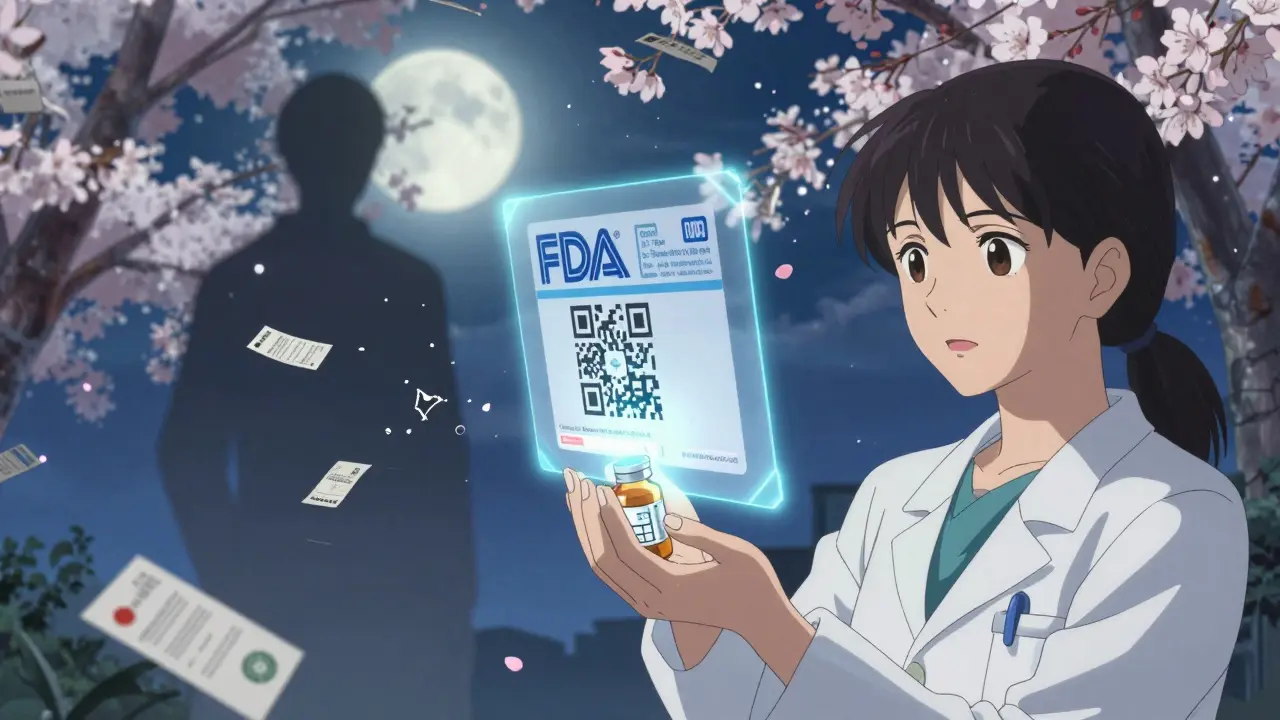
Starting in 2025, the FDA requires medication guides for generics to include either a URL or a QR code that links directly to the current FDA-approved labeling in PDF format. The link must use HTTPS for security. No redirecting to homepages. No landing pages. Just a direct, unbroken link to the official label.
This is meant to make it easier for patients and pharmacists to access the most up-to-date information. But it’s another layer of compliance. If the link breaks, if the PDF isn’t updated, or if the URL changes, the label becomes noncompliant.
One manufacturer told the FDA’s Industry Labeling Listserv that they had to redesign 87 different medication guides just to meet this new requirement-each one needing legal review, QA approval, and printing updates.
Why This System Still Exists
Some argue that identical labeling ensures consistency. If every version of metformin has the same warnings, doctors and pharmacists don’t have to learn multiple versions. That’s true.
But the cost is patient safety. Dr. Robert Temple, former deputy director at the FDA’s Center for Drug Evaluation and Research, wrote in the New England Journal of Medicine in January 2025: “The current labeling framework creates an unacceptable safety gap for the 6 billion generic prescriptions filled annually in the United States.”
Dr. Janet Woodcock, former FDA principal deputy commissioner, echoed this in a February 2025 Senate hearing: “The MODERN Labeling Act provides the necessary tools to address outdated labeling, but implementation challenges remain.”
The FDA has proposed rules to let generic manufacturers update labels for new safety concerns without waiting for the RLD. But as of January 2026, those rules are still pending. Until they’re finalized, the system stays broken.
What’s Next?
The FDA is building a new system called the Next Generation Generic Drug Labeling System, set to launch in Q3 2025. It will use AI to automatically detect changes in RLD labels and notify generic manufacturers in real time. Beta testing began in April 2025 with 15 major manufacturers.
If it works, it could cut the 6-12 month delay down to days-or even hours. But it’s not a magic fix. The underlying legal framework still requires the FDA to approve every change. The system is still reactive, not proactive.
For now, the burden falls on generic manufacturers to stay on top of a moving target. And for patients? They’re still trusting a label that may not reflect the latest safety information.
Colin Pierce
January 27, 2026 AT 17:25Just had a patient ask me why her generic metformin label says 'may cause diarrhea' but the brand version says 'commonly causes diarrhea.' I had to explain that the FDA forces them to be identical, even if the real-world data says otherwise. It’s wild how bureaucracy overrides clinical reality.
Kevin Kennett
January 28, 2026 AT 13:07This system is a death sentence waiting to happen. I’ve seen patients get prescribed generics with outdated warnings because the brand label changed six months ago and the generic hasn’t caught up. People die because of this. The FDA could fix this tomorrow if they wanted to. They just don’t care enough.
Jess Bevis
January 28, 2026 AT 22:04Label match = legal requirement. No exceptions. Simple.
Howard Esakov
January 30, 2026 AT 15:43Wow. So we’re still living in the Stone Age of pharma regulation? 😒 The fact that we rely on human beings to manually check Drugs@FDA in 2026 is honestly embarrassing. I’m paying $12 for my blood pressure med and I’m supposed to trust a label that’s *possibly* outdated? Please. 🤦♂️
Kathy Scaman
January 31, 2026 AT 05:09I work at a pharmacy and I swear, half the time I don’t even know which label is the right one. We get alerts, then the pharmacist has to Google it, then we call the rep. It’s chaos. And patients just assume the label is accurate. Spoiler: it’s not always.
Anna Lou Chen
February 1, 2026 AT 09:44The entire regulatory framework is a performative illusion of safety. The FDA’s insistence on lexical homology between branded and generic labels is a linguistic fetish - a symbolic gesture that masks the epistemological rupture between pharmaceutical capitalism and clinical episteme. We’re not regulating drugs; we’re ritualizing compliance. The QR code mandate? A digital placebo. 🌐🪞
Lance Long
February 2, 2026 AT 21:38It’s not just about the labels - it’s about trust. Patients think ‘generic’ means ‘cheaper but same.’ But when the warning on the bottle is months behind what’s really happening in the data? That trust breaks. And once it’s gone, it’s hard to rebuild. We need to fix this - not because it’s easy, but because people’s lives depend on it.
fiona vaz
February 4, 2026 AT 16:39My cousin’s doctor switched her to a generic lisinopril last year. The label didn’t mention the new risk of angioedema in Black patients - even though the brand label had updated it 8 months prior. She ended up in the ER. Thankfully she’s fine now. This isn’t theoretical. It’s happening every day.
Sue Latham
February 4, 2026 AT 17:48Oh honey, you think this is bad? Wait till you find out some generics have labels printed in 2012 because the brand was discontinued and no one bothered to update it. 😬 I’ve seen pills with warnings about side effects that were disproven in 2018. And the FDA just… shrugs? I’m not even mad. I’m just disappointed.
John Rose
February 6, 2026 AT 11:40One thing that’s rarely discussed: what happens when the RLD is discontinued and no generic manufacturer submits a label update under the MODERN Labeling Act? The product stays on shelves with obsolete labeling indefinitely. That’s not a loophole - it’s a systemic failure. We need mandatory sunset clauses for unlabeled generics.
Lexi Karuzis
February 7, 2026 AT 07:21Wait… so the FDA is letting companies print labels that could be LIES?!!?? And the QR code? What if the link is hacked? What if the PDF is replaced with a fake? What if the government is using this to track us?? I’ve got a friend who works at a warehouse and he says they’ve seen labels with hidden barcodes that scan to a .gov server… I’m not joking. This is bigger than you think. 🕵️♀️💣
Mark Alan
February 8, 2026 AT 18:47AMERICA IS BEING POISONED BY FOREIGN GENERIC MANUFACTURERS WHO DON’T CARE ABOUT OUR KIDS!!! 🇺🇸😭 The FDA lets Chinese factories print labels with outdated warnings because they’re ‘too cheap to fix’! We need to ban all generics and bring back American-made drugs - or we’re all gonna die from a pill that says ‘maybe causes dizziness’ when it’s actually killing people! #AmericaFirst #GenericDrugsAreKillingUs