

Supplement Interaction Checker
How to Use This Tool
Select the medications and supplements you take. The tool will check for timing conflicts and show you optimal schedules to maximize absorption.
Check results
Results will appear here when you click 'Check Timing Conflict'
Optimal Timing Schedule
Many people take calcium and iron supplements to support bone health or fix low iron levels. But if you’re also on medication, taking them together could be making your pills less effective-sometimes dangerously so. It’s not about avoiding supplements. It’s about timing.
Why Calcium and Iron Fight for Absorption
Your body doesn’t absorb minerals like calcium and iron the same way it absorbs sugar or vitamins. Both use the same tiny transporters in your small intestine to get into your bloodstream. When you take them together-whether in a multivitamin, a meal, or back-to-back pills-they compete. One wins. Usually, it’s calcium. A 1991 study from the American Journal of Clinical Nutrition showed that just 600 mg of calcium (about two Tums tablets) cut iron absorption by nearly half. Even worse, when calcium was taken with food, iron absorption dropped by up to 62%. That’s not a small effect. For women who need 18 mg of iron a day, regular calcium with meals can make it nearly impossible to meet that need. Iron from supplements (non-heme iron) is already harder for your body to absorb than iron from meat. Calcium makes it worse. And it’s not just calcium. Aluminum and magnesium supplements do the same thing. So if you’re taking a calcium-based antacid like Tums, you’re not just calming your stomach-you’re blocking iron.Antibiotics and Mineral Supplements Don’t Mix
If you’re on antibiotics like ciprofloxacin (Cipro) or doxycycline, calcium and iron can turn your treatment into a waste of time. These antibiotics belong to two classes: fluoroquinolones and tetracyclines. Both bind tightly to calcium, iron, aluminum, and magnesium in your gut. The result? The antibiotic doesn’t get absorbed. The infection doesn’t clear. Pharmacists report real cases where patients took their antibiotic with a calcium supplement and ended up back in the clinic because the infection didn’t improve. The fix? Don’t take them together. The rule is simple: wait at least 2 hours after your antibiotic before taking any mineral supplement. For tetracycline antibiotics, some experts recommend waiting 4 hours after the supplement to take the antibiotic. This isn’t just theory. A 2022 study in ACS Omega confirmed that adding calcium to a meal dropped iron absorption from 10.2% to just 4.8%. Imagine taking a full dose of antibiotics, but only half of it ever reaches your bloodstream. That’s what happens when you mix them with minerals.Thyroid Medication and Iron: A Silent Conflict
If you take levothyroxine for hypothyroidism, calcium and iron are silent saboteurs. These minerals bind to the thyroid hormone in your gut and stop it from being absorbed. The effect? Your TSH levels stay high, your fatigue doesn’t improve, and your doctor keeps increasing your dose-because they don’t know you’re taking your iron at breakfast. University Hospitals Cleveland Medical Center’s 2025 guidelines say it clearly: calcium, magnesium, and iron all interfere with levothyroxine. The solution? Take your thyroid pill first thing in the morning on an empty stomach. Wait at least 4 hours before taking any calcium or iron supplement. Many people find it easiest to take their thyroid pill at bedtime instead-after dinner and at least 3-4 hours after their last supplement. This timing isn’t optional. One study showed that taking levothyroxine with calcium reduced its absorption by up to 40%. That’s enough to push someone from being “well-controlled” to “under-treated” without any change in dosage.
Stomach Acid Matters More Than You Think
Iron needs acid to dissolve and be absorbed. If your stomach acid is low, iron doesn’t get absorbed well. That’s why proton pump inhibitors (PPIs) like omeprazole (Prilosec) or pantoprazole (Protonix) can cause iron deficiency over time. H2 blockers like famotidine (Pepcid) do the same thing. If you’re on one of these medications for heartburn or GERD and you’re also taking iron, you’re fighting two problems: low acid and mineral competition. The best fix? Take your iron supplement at least 2 hours before your PPI or H2 blocker. If you’re taking the PPI at breakfast, take your iron at bedtime instead. Iron absorption can also be boosted by vitamin C. A single 100 mg dose of vitamin C (about the amount in a glass of orange juice) can increase iron absorption by up to 300%. That’s why many doctors recommend taking your iron pill with a glass of orange juice or a vitamin C tablet.How to Time Your Supplements Right
You don’t have to stop taking calcium or iron. You just need to space them out. Here’s a simple, practical plan:- Iron: Take on an empty stomach, first thing in the morning. Wait 30-60 minutes before eating or drinking anything except water. Add vitamin C.
- Calcium: Take with dinner or at bedtime. Food helps reduce stomach upset and improves calcium absorption.
- Thyroid meds: Take alone, 30-60 minutes before breakfast, or at bedtime 4 hours after your last meal or supplement.
- Antibiotics: Take 2 hours before or 4 hours after any calcium, iron, or antacid.
- PPIs or H2 blockers: Take at least 2 hours after your iron dose.
Who’s at Highest Risk?
Not everyone needs to stress about this. But some people are far more vulnerable:- Women of childbearing age: Need more iron. Calcium with meals makes it harder to meet daily needs. Iron deficiency anemia is common here.
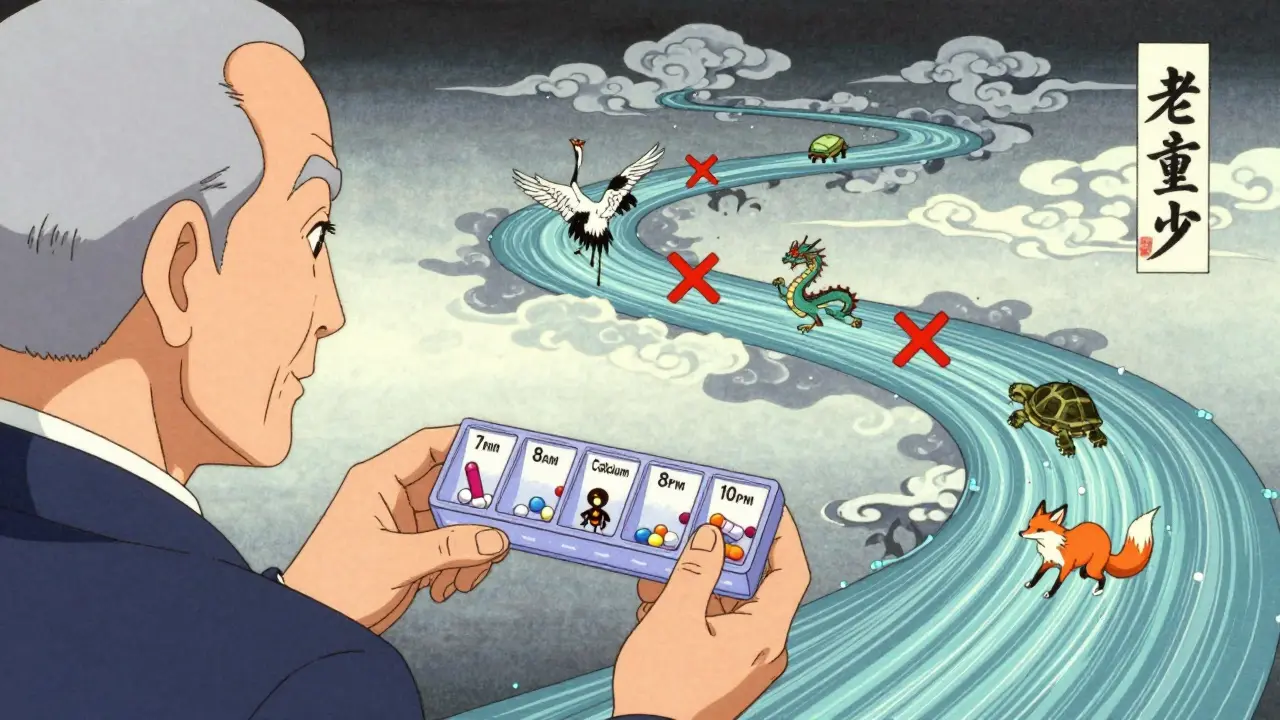
- Older adults: Often take multiple supplements and medications. Thyroid meds, PPIs, and calcium supplements are common. The risk of interactions multiplies.
- People with chronic conditions: Those with GERD, Crohn’s disease, or celiac disease already absorb nutrients poorly. Adding mineral supplements without timing can make it worse.
- Children: Iron overdose is the leading cause of fatal poisoning in kids under 6. Keep supplements locked up. If a child swallows even one iron pill, call poison control immediately.
What to Watch For
Some side effects are normal. Some are red flags.- Black stools: Normal with iron supplements. Don’t panic.
- Tarry or red-streaked stools: Could mean bleeding. See a doctor.
- Dental staining: Liquid iron can stain teeth. Use a straw. Brush with baking soda or hydrogen peroxide to remove stains.
- Stomach cramps or nausea: Common with iron on an empty stomach. If it’s unbearable, try taking it with a small piece of fruit-just not calcium-rich ones.
What You Can Do Today
1. Check your supplement labels. Do you have calcium, iron, or magnesium in your daily pills? 2. Check your medications. Are you on antibiotics, thyroid meds, or heartburn drugs? 3. Write down your schedule. When do you take each one? Are any within 2-4 hours of each other? 4. Adjust one thing. Move your calcium to bedtime. Take your iron with orange juice in the morning. Wait 4 hours before your thyroid pill. You don’t need to overhaul your whole routine. Just fix the biggest conflict. That’s where the biggest gain happens.When to Talk to Your Doctor
If you’re taking any of these:- Levothyroxine or other thyroid meds
- Antibiotics like ciprofloxacin or doxycycline
- Proton pump inhibitors (omeprazole, pantoprazole)
- Iron or calcium supplements
Can I take calcium and iron together in one supplement?
No. Most combination supplements that include both calcium and iron are ineffective because the minerals block each other’s absorption. Even if the label says “enhanced absorption,” the science doesn’t support it. Take them separately with at least 4 hours between doses.
Does it matter what form of calcium I take?
Yes. Calcium carbonate (found in Tums) is the most common and the most problematic for iron absorption because it raises stomach pH. Calcium citrate is slightly less interfering, but still blocks iron. Neither is safe to take with iron. Always space them out.
Can I take iron with tea or coffee?
No. Tea and coffee contain tannins that bind to iron and reduce absorption by up to 60%. Even if you take iron on an empty stomach, drinking tea or coffee with it defeats the purpose. Wait at least 2 hours after your iron dose before drinking these.
How long should I wait after taking iron before eating?
Wait at least 30-60 minutes. Food, especially dairy, whole grains, or high-fiber meals, can reduce iron absorption. A small snack like a banana or a few strawberries is okay if you’re nauseous, but avoid calcium-rich foods like milk, yogurt, or fortified cereals.
What if I forget and take them together?
Don’t panic. One accidental mix won’t cause harm, but it will reduce the effectiveness of your medication or supplement. Just go back to your correct schedule next time. If it happens often, set alarms or use a pill organizer with time slots.
Is liquid iron better than pills?
Liquid iron can be easier to absorb and allows for more precise dosing, but it stains teeth. Use a straw and rinse your mouth afterward. Pills are fine if taken correctly. The form matters less than the timing.
Can I take iron with vitamin D?
Yes. Vitamin D does not interfere with iron absorption. In fact, vitamin D helps with overall mineral balance. You can take them together safely.
Should I get my iron levels checked if I take supplements?
Yes. Especially if you’re taking iron long-term, have a chronic condition, or are on medications that affect absorption. Blood tests (ferritin, hemoglobin, TIBC) tell you if your supplements are working-or if you need to adjust timing or dosage.




bhushan telavane
December 20, 2025 AT 01:59Man, I never knew calcium could mess with iron like that. I’ve been taking my Tums with dinner and my iron at breakfast-guess I’m lucky it hasn’t backfired yet. Gonna switch my calcium to bedtime now.
Vicki Belcher
December 21, 2025 AT 04:07This is LIFE-CHANGING info 🙌 I’ve been taking my levothyroxine with my morning smoothie (calcium-fortified almond milk, ugh) and wondering why I’m still exhausted. No more smoothies before 1 PM. Thank you for this. 💪
Alex Curran
December 21, 2025 AT 11:54Iron absorption drops to 4.8% with calcium? That’s wild. I’ve been taking my iron with orange juice since my last blood test showed ferritin at 8. Still low. Now I’m thinking maybe my PPI is the real culprit. Should I try switching to H2 blocker? Or just go off the acid stuff altogether
Kitt Eliz
December 22, 2025 AT 20:20STOP. RIGHT. NOW. If you’re on levothyroxine and taking a multivitamin with iron or calcium at breakfast you’re basically throwing money and health down the drain. This isn’t ‘maybe’-it’s a pharmacokinetic disaster waiting to happen. Schedule it like your life depends on it. Because it does. Use alarms. Use pill organizers. Use your damn phone. You’re not too busy for this.
Dikshita Mehta
December 22, 2025 AT 23:24Great breakdown. I’ve been taking my iron at night with vitamin C and avoiding dairy for 3 months now. My hemoglobin went from 10.2 to 12.8. Timing really is everything. Also, tea and coffee after iron? Yes, I wait 2 hours. No more morning chai with my pill. Small change, big difference.
James Stearns
December 24, 2025 AT 14:23It is deeply concerning that the general public is left to self-educate on such critical pharmacological interactions. One would assume that pharmacists, physicians, and electronic prescribing systems would enforce these contraindications. The fact that they do not is a systemic failure of medical infrastructure. I am appalled.
Dominic Suyo
December 25, 2025 AT 23:12So let me get this straight-I’ve been taking my cipro with my calcium pill for two years and now you’re telling me my sinus infection never cleared because I was basically swallowing chalk and antibiotics at the same time? Bro. I’m not mad. I’m just… disappointed. Like, I paid $80 for that script and got zero results. My body’s been a science experiment and no one told me.
Alisa Silvia Bila
December 27, 2025 AT 16:16My mom took her thyroid med with her calcium and ended up with a TSH of 12.5. They upped her dose three times before someone asked about her supplements. She’s fine now. Just wait four hours. It’s not hard.
Chris porto
December 29, 2025 AT 13:21It’s interesting how we treat nutrients like they’re interchangeable parts. But the body doesn’t work like a pharmacy shelf. It’s a dynamic system. Calcium doesn’t just ‘block’ iron-it changes the ionic environment in the gut. Maybe the real issue isn’t timing, but that we’ve normalized taking isolated nutrients without context. We’re treating symptoms, not systems.
benchidelle rivera
December 29, 2025 AT 15:39I’ve been taking my iron and calcium together for years because the bottle says ‘for bone and blood health.’ Now I realize I’ve been lying to myself. I’m not helping my anemia-I’m sabotaging it. I’m changing my routine today. No more excuses.
William Liu
December 31, 2025 AT 10:26Just moved my calcium to bedtime. Took my iron with orange juice this morning. Feels good to finally be doing this right. Small steps, big results.