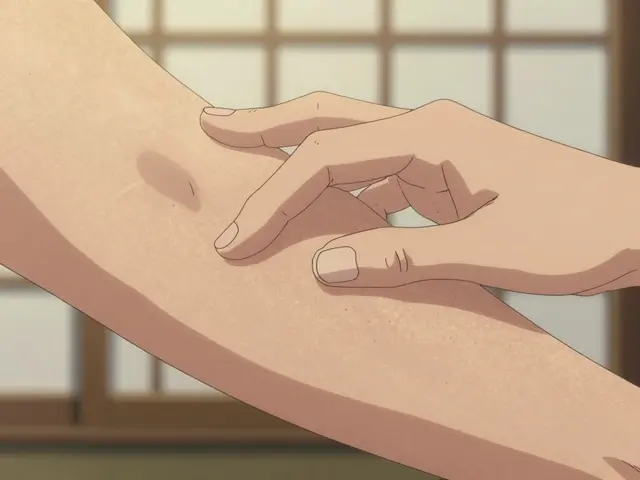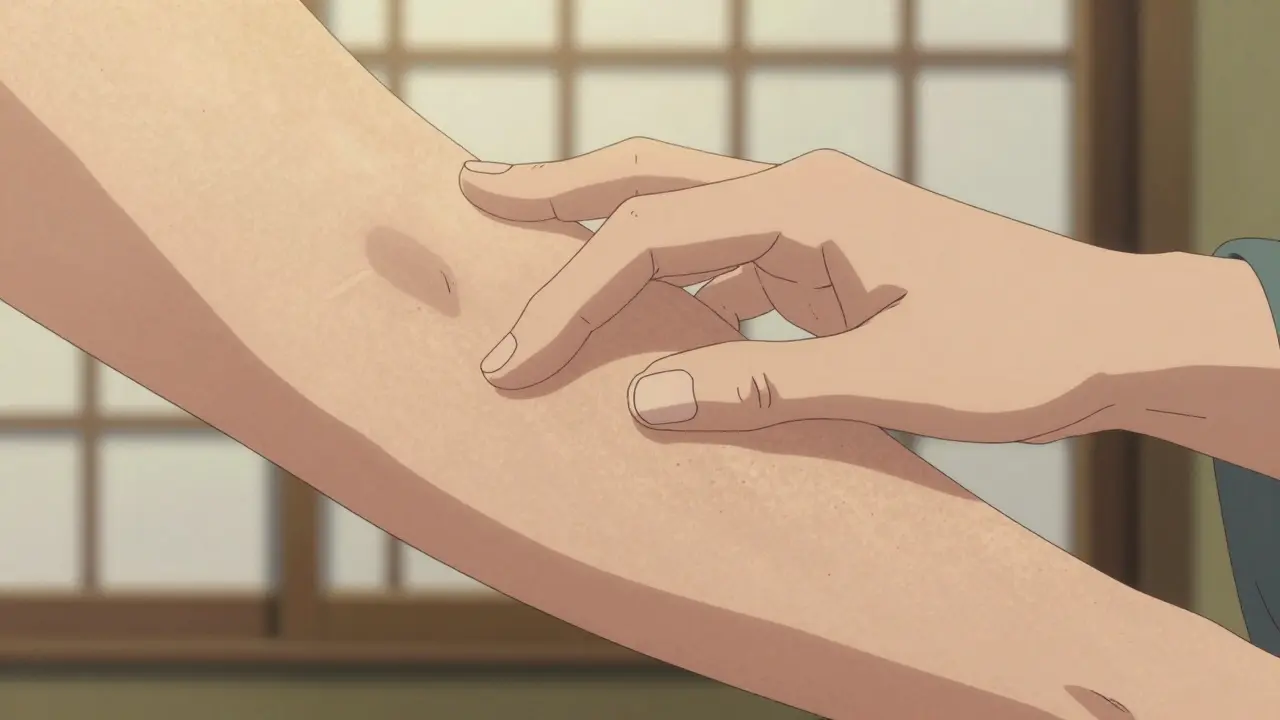
Imagine running your hand over your forearm or scalp and feeling something that feels exactly like coarse sandpaper, even though the skin looks relatively normal. That rough, gritty texture is often the first real warning sign of Actinic Keratoses is a precancerous skin condition caused by cumulative ultraviolet (UV) radiation damage that creates rough, scaly patches on sun-exposed skin. Also known as solar keratosis, these spots aren't just a cosmetic nuisance-they are an early warning system for your skin.
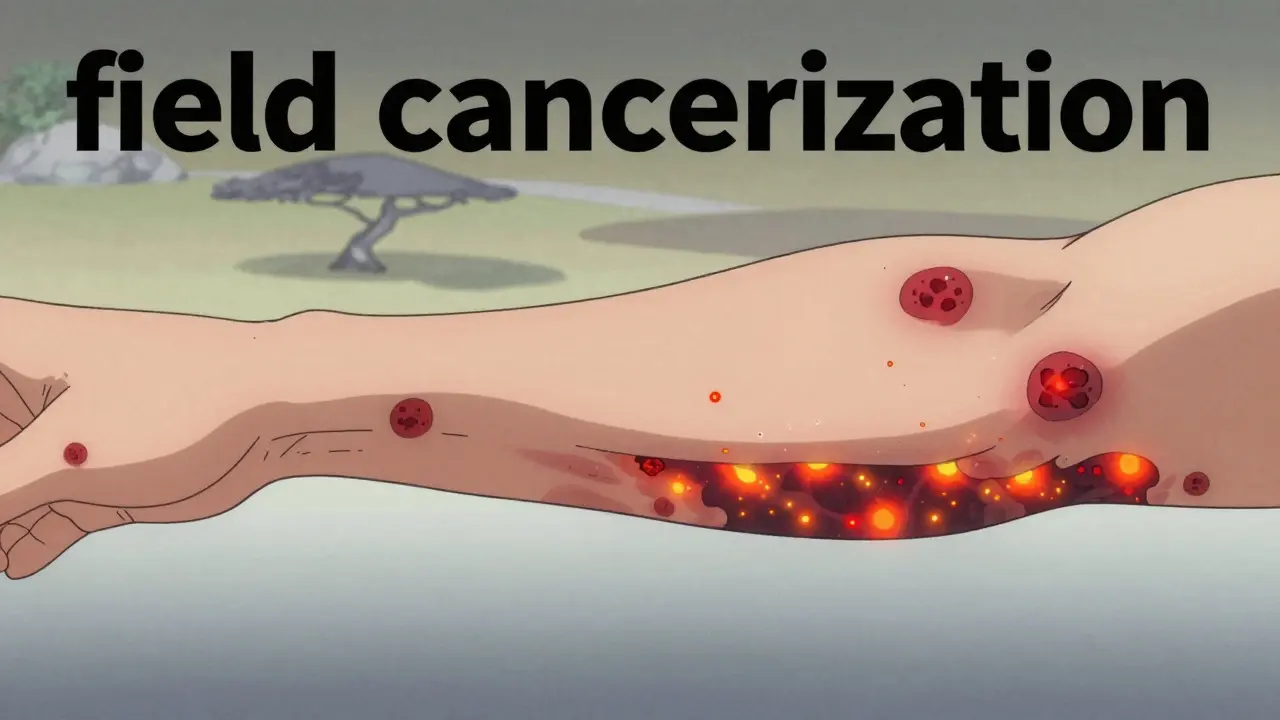
The real danger isn't the spot you can see, but the invisible damage surrounding it. Many people think they just have a few "dry patches," but in reality, they are dealing with field cancerization. This means the entire area of skin has been damaged by the sun, and while only a few spots are visible now, dozens more are brewing just beneath the surface. If ignored, these lesions can evolve into Squamous Cell Carcinoma, a more aggressive type of skin cancer. The good news? Because these are precancers, treating them now can stop invasive cancer from ever starting.
How to Spot the Warning Signs
Actinic Keratoses (AKs) are often "more easily felt than seen." You might not notice a change in the mirror, but your fingers will pick up the grit. These patches typically range from tiny spots to about an inch in diameter. While we often associate them with red or pink tones, they can actually appear in a variety of colors, including gray, yellow, brown, or even silvery hues. For people with darker skin tones, they may look more like typical age spots.
You'll most likely find these in areas that have spent years soaking up the sun. According to clinical data, about 85% appear on the face and scalp, while 70% are found on the hands and forearms. If you notice a patch that is suddenly becoming tender, growing rapidly, or starting to ulcerate, it's time to move from "watching it" to "getting it checked," as these can be signs that the precancer has already progressed to an invasive state.
The Logic of Field Treatment vs. Spot Treatment
In the past, doctors might have just frozen off a single visible spot with liquid nitrogen. This is called spot treatment. While it works for the visible lesion, it ignores the "field" of damage. If you have ten visible spots, you likely have fifty invisible ones. This is why dermatologists now push for field treatments.
Field therapy treats the entire area of sun-damaged skin, essentially "cleaning house" by targeting both the visible keratoses and the subclinical damage. This approach significantly reduces the chance of new spots popping up in the same area. It's the difference between pulling a few weeds and treating the entire soil to prevent the weeds from returning.
| Treatment Type | Common Examples | Typical Timeline | Pros & Cons |
|---|---|---|---|
| Topical Chemo | Fluorouracil (5-FU) | 2-4 weeks | High clearance rate; causes significant redness/inflammation. |
| Immune Response | Imiquimod | 16 weeks | Effective for thicker lesions; longer treatment duration. |
| Fast-Acting Topicals | Tirbanibulin | 5 days | Very fast; much higher cost than generics. |
| Light Therapy | Photodynamic Therapy (PDT) | 1-2 sessions | Quick clinical application; requires a light source. |
What to Expect During Treatment
If you choose a field treatment like 5-fluorouracil, be prepared: the process is often counterintuitive. To get the skin clear, the medication first makes the area look much worse. You'll likely experience an inflammatory phase characterized by intense redness, crusting, and sometimes a burning sensation. Many patients describe this as a "purge."
It can be tempting to stop the cream the moment your skin looks red and angry, but this is actually the sign that the medication is working. The goal is to trigger an immune response that kills the abnormal cells. Those who push through the 4-week inflammatory cycle often report complete clearance of the sandpaper texture, effectively resetting their skin's health.

Preventing New Lesions from Forming
Treating existing AKs is only half the battle. Since these are caused by a lifetime of UV exposure, your skin has a "memory" of that damage. Without strict prevention, new spots will inevitably appear. The most effective way to slow this down is through a combination of broad-spectrum sunscreen and physical barriers.
For those at high risk-such as people with fair skin or those who are immunosuppressed-annual skin checks are non-negotiable. Using total body photography can help your doctor track whether a spot is truly gone or if it's slowly creeping back. Consistent sun protection doesn't just prevent sunburns; it actively reduces the rate at which new precancers develop by roughly a third over a two-year period.
Are actinic keratoses contagious?
No, not at all. Actinic keratoses are caused by DNA damage from ultraviolet rays, not by a virus or bacteria. You cannot spread them to other people through touch.
Will these spots go away on their own?
While some individual spots may seem to disappear, the underlying sun damage remains. Because they are precancerous, leaving them untreated carries a risk-roughly 5-10% of individual lesions can progress to squamous cell carcinoma over a decade.
How do I know if a spot is a precancer or just a dry patch?
The "sandpaper test" is a great clue. If a patch feels rough and scaly even when you apply moisturizer, it's more likely to be an AK. However, the only way to be sure is a professional exam using a dermatoscope.
Which treatment is the most effective?
Effectiveness depends on the goal. For high clearance rates, 5-fluorouracil is a gold standard, often achieving 75-85% clearance. For those who cannot tolerate weeks of redness, newer options like Tirbanibulin offer fast results in just five days.
Can I treat these at home with over-the-counter creams?
No. Field treatments require prescription-strength medications that can cause severe reactions if used improperly. You need a dermatologist to confirm the diagnosis and monitor your skin's reaction to ensure you aren't treating a more advanced cancer.
Next Steps for Your Skin Health
If you suspect you have rough patches, your first move should be a full-body skin map with a board-certified dermatologist. Don't just point to one spot; ask them to check for "field damage" on your scalp, ears, and hands. If you are prescribed a topical field treatment, prepare your skincare routine by removing any harsh exfoliants or acids a week before starting, as your skin will be extremely sensitive during the process.
For those with a history of severe sunburns, consider incorporating a daily SPF 50+ sunscreen and a wide-brimmed hat into your wardrobe. The goal isn't just to clear the spots you have today, but to protect the skin you'll have ten years from now.