
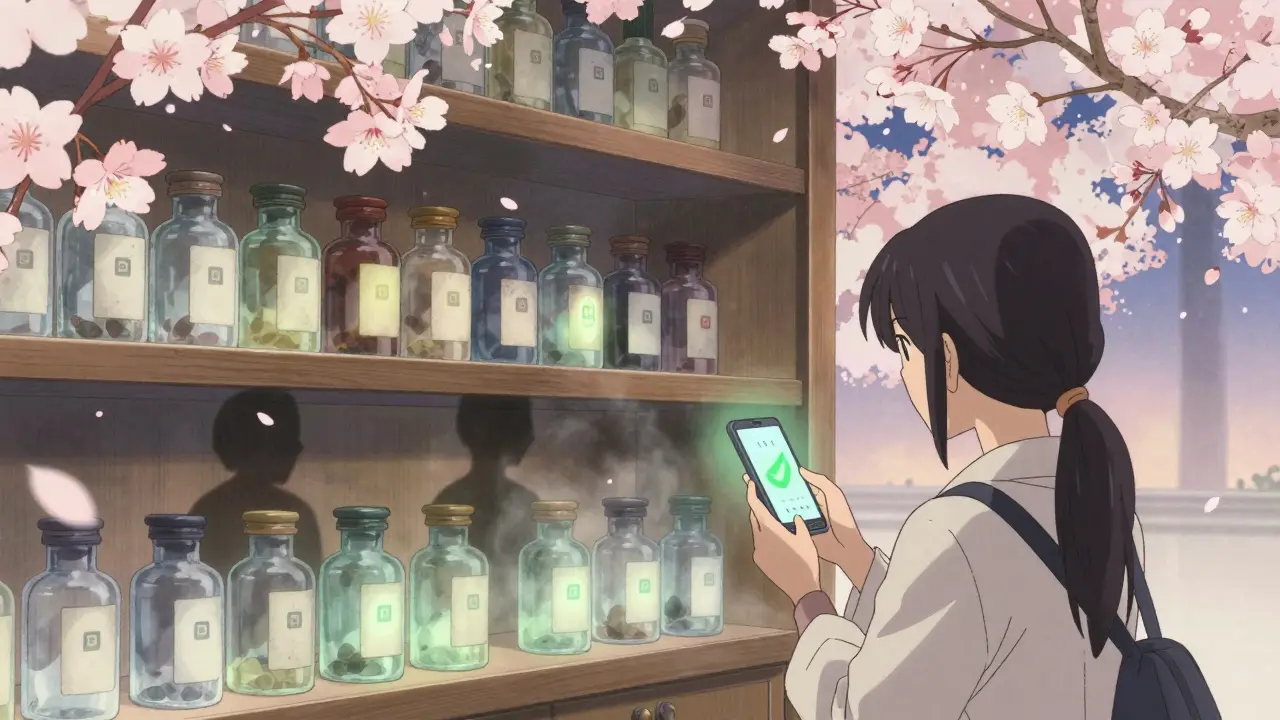
Every year, millions of people around the world take pills that aren’t what they claim to be. Fake drugs don’t just waste money-they kill. A fake drug might contain no active ingredient, the wrong dose, or even toxic chemicals. The World Health Organization estimates that 1 in 10 medical products in low- and middle-income countries are counterfeit. In some regions, that number climbs to 1 in 3. This isn’t a distant problem. With global supply chains stretched thin and digital forgery tools getting cheaper, the threat is growing faster than ever.
Why Fake Drugs Are Getting Harder to Catch
Counterfeiters aren’t using old-school methods anymore. They’re not just printing fake labels and stuffing bottles with flour. Today’s fraudsters use high-resolution printers, AI-generated packaging designs, and even cloned QR codes that look identical to the real thing. In 2025, a major U.S. pharmaceutical company had to recall $147 million worth of medication after fraudsters copied its QR code without any encryption. The code scanned fine. The product? Poison.
Traditional barcodes and simple QR codes are now useless against skilled forgers. They’re easy to replicate, and most don’t link to secure databases. Even if a pharmacy scans a code and sees a match, that doesn’t mean the product is real-it just means the code exists somewhere in the system. That’s why the industry is shifting to technologies that don’t just identify a product, but prove it’s genuine.
Serialization: The Foundation of Modern Anti-Counterfeiting
The most widely adopted solution today is serialization. This means every single pill bottle, blister pack, or vial gets a unique digital identifier-like a fingerprint for medicine. That code is registered in a central database, so when the product moves from factory to warehouse to pharmacy, every step is recorded. By November 2025, all prescription drugs in the U.S. must be serialized under the Drug Supply Chain Security Act (DSCSA). The EU’s Falsified Medicines Directive already requires this.
Serialization isn’t just about compliance. It cuts recall times by nearly 60%. If a batch turns out to be contaminated, companies can pull only the affected units instead of recalling entire shipments. That saves lives and millions in losses. But it’s expensive. Implementing serialization requires new labeling machines, upgraded software, and staff training. One European distributor spent €2.3 million and 14 months just to get their warehouse systems working with the new standards. Small manufacturers still lag behind-only 43% have adopted it.
NFC: The Smartphone That Checks Your Medicine
Imagine tapping your phone on a medicine bottle and instantly seeing if it’s real. That’s NFC (Near Field Communication) technology in action. Unlike QR codes, NFC chips are embedded in the packaging and can’t be copied. They use cryptographic authentication-meaning only the original chip can respond correctly to a verification request. ForgeStop’s 2025 tests showed NFC verification is 37% faster than barcode scanners and reduces false positives by 92%.
It’s simple: your phone reads the chip, connects to the manufacturer’s secure server, and returns a green checkmark or red alert in under two seconds. No apps needed. Just tap. In Latin America, a chain of 200 pharmacies adopted NFC authentication and saw a 98% drop in counterfeit incidents within six months. Pharmacists now verify 1,200+ products daily without slowing down service.
Smartphones today support NFC. Over 89% of phones shipped in 2025 have it built in. That’s why experts call NFC the most practical upgrade for real-world verification. It doesn’t require special hardware at the pharmacy-just a phone most people already carry.
Blockchain: The Unbreakable Ledger
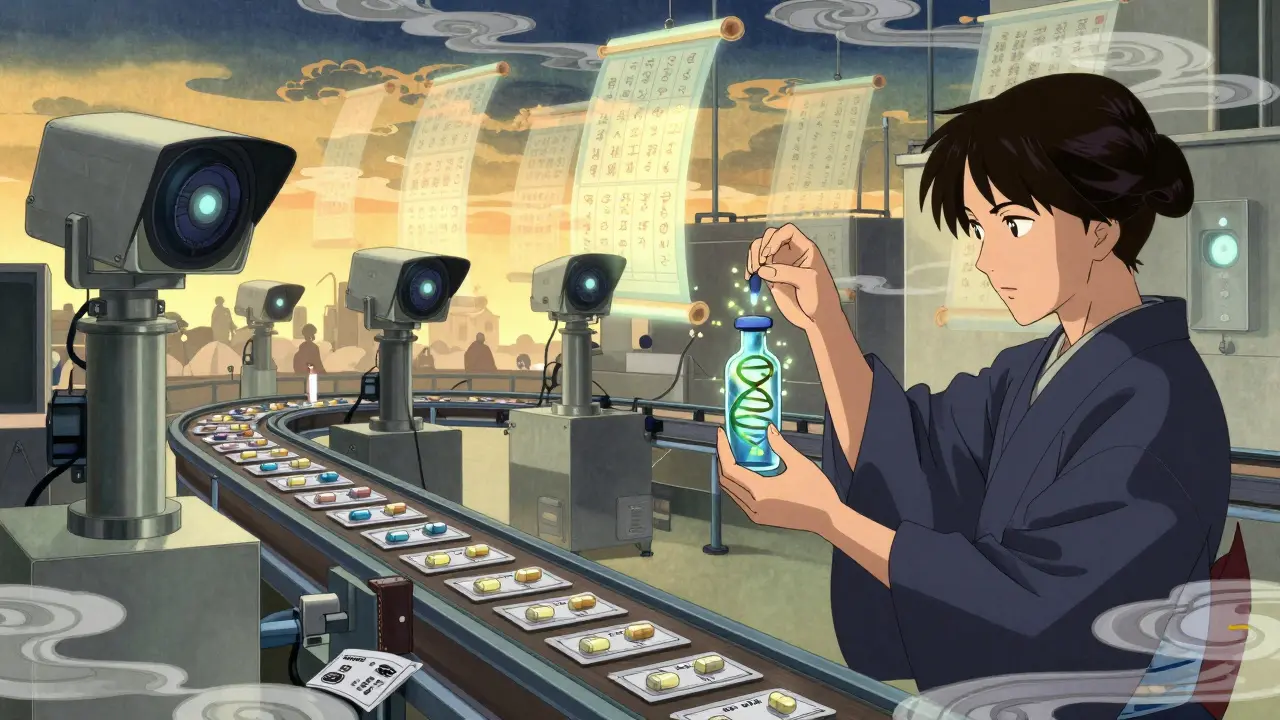
Think of blockchain as a digital logbook that no one can edit. Every time a drug changes hands-manufacturer to distributor to wholesaler to pharmacy-it’s recorded on this shared ledger. Temperature, humidity, location, and time stamps are all saved. If someone tries to sneak in a fake batch, the system flags the gap.
Companies like De Beers used blockchain to track diamonds. Now, pharma companies are doing the same for medicines. The technology ensures the entire cold chain is intact. If a vaccine was exposed to heat during transport, the blockchain record shows it. That’s critical for life-saving drugs that can’t tolerate temperature swings.
But blockchain isn’t quick to set up. Gartner estimates full integration takes 18 to 24 months. It needs buy-in from every player in the chain-manufacturers, logistics firms, pharmacies. That’s why it’s mostly used by big players right now. But for those who can afford it, it’s the gold standard for audit-proof traceability.
DNA Markers and Forensic Inks: The Hidden Layers
Some companies are going beyond digital codes. They’re embedding physical, molecular-level security. DNA-based authentication works by adding a unique biological signature to the packaging or even the drug itself. This marker can’t be seen, but a lab can test for it using a simple swab and analyzer. It’s nearly impossible to copy without access to the original DNA sequence.
Then there are covert inks-thermochromic (changes color with heat), UV-reactive (glows under black light), and iridescent inks that shift hue when tilted. These are used on labels or seals. A pharmacist might shine a cheap UV light on a bottle and instantly spot a fake because the ink doesn’t glow right.
The catch? These are expensive. DNA markers cost $0.15 to $0.25 per unit. Standard serialization runs $0.02 to $0.05. So while DNA offers the highest security, it’s reserved for high-value drugs like cancer treatments or rare disease therapies-not everyday painkillers.
AI and Smart Packaging: The Eyes of the Supply Chain
At manufacturing plants, AI-powered cameras now scan every package as it rolls off the line. These systems don’t just read codes-they analyze texture, color gradients, label alignment, and even the way ink sits on plastic. In controlled tests, AI systems have hit 99.2% accuracy in spotting fakes. Real-world use is trickier. Lighting, dust, and packaging variations can throw them off.
But they’re improving fast. Accuracy jumped from 89.7% in 2024 to 94.3% by mid-2025. Some companies are now embedding IoT sensors into packaging. These tiny chips record temperature, shock, and light exposure throughout transit. If a box gets dropped or left in a hot truck, the data is stored and sent to the pharmacy. If the drug wasn’t kept cold, it’s flagged before it reaches a patient.
And here’s a new twist: more than 62% of new anti-counterfeit packaging now uses recyclable materials. The goal? Security without waste. Companies are embedding traceable markers into biodegradable films and plant-based inks. It’s not just about stopping fakes-it’s about doing it responsibly.

What’s Holding Back Widespread Adoption?
Not all technologies are created equal. QR codes are cheap but easily copied. Blockchain is powerful but slow to deploy. NFC is secure and fast, but requires smartphone support. DNA is unbreakable but too pricey for mass use.
Then there’s the cost of change. The U.S. and EU have strong rules, but many countries don’t. In Africa and parts of Asia, counterfeit drugs still flood markets because there’s no enforcement. Even where laws exist, small manufacturers can’t afford the upgrades. And now, new tariffs-like the U.S. ‘Liberation Day Tariffs’ introduced in April 2025-are adding 12-18% to production costs for drugs and packaging from China and India. That’s causing delays of 3 to 6 weeks in global supply chains.
Training is another hurdle. Staff need to know how to use new systems. TraceLink’s software gets high marks for compliance but has a steep learning curve. SAP’s tools integrate well but often clash with old systems. Support matters too. ForgeStop offers 24/7 help with 8-minute response times. Most competitors average 22 minutes.
The Future Is Multi-Layered
There’s no single solution. The most effective systems combine multiple layers. A bottle might have:
- An overt hologram visible to the naked eye
- A covert UV ink pattern only visible under a simple light
- An NFC chip for smartphone verification
- A blockchain record of its journey
- A DNA marker for forensic lab testing
By 2027, 83% of pharmaceutical executives plan to use this multi-layered approach. Why? Because counterfeiters are getting smarter. If one layer fails, another catches it. It’s like a security system with alarms, cameras, locks, and guards.
Regulators are pushing for it. The EU’s Digital Product Passport, launching in 2027, will require every drug to link to a digital file showing its full history-from raw materials to patient use. That’s the future: transparency, not secrecy.
What You Can Do
If you’re a patient: Always check your medicine. Use your phone to scan NFC tags if available. Look for tamper-evident seals. If a pill looks different than before, ask your pharmacist. Don’t buy from unlicensed online sellers-even if the price seems too good to be true.
If you’re in healthcare or supply: Start with serialization. It’s the baseline. Then add NFC where possible. Don’t rely on QR codes alone. Work with vendors who offer strong support and clear documentation. Join communities like the Pharmaceutical Serialization Community on LinkedIn. Learn from others’ mistakes.
The fight against fake drugs isn’t over. But the tools are getting better. The question isn’t whether we can stop them-it’s whether we’ll use the tools we already have.


Gina Beard
January 23, 2026 AT 07:02It’s not about the tech. It’s about who controls it.
Every layer added is another gatekeeper.
Pharma gets richer. Patients get more complicated checks.
We call it security. It’s just another subscription model.
And someone’s always left out.
Don Foster
January 24, 2026 AT 09:22QR codes are dead but nobody told the FDA
NFC is the only thing that matters if you’re not living in 2012
Blockchain is overhyped and serialization is just compliance theater
DNA markers? That’s sci-fi with a price tag
AI cameras? Cute but lighting ruins everything
And don’t get me started on recyclable packaging-greenwashing with a chip
siva lingam
January 25, 2026 AT 01:54So we spend billions to stop fakes
But still let people die because they can’t afford the real stuff
Classic
Shelby Marcel
January 26, 2026 AT 19:44wait so if i tap my phone on my advil and it says green… does that mean it wont give me a headache or is that just if its real??
also why do i need 5 different layers?? my eyes are tired
blackbelt security
January 28, 2026 AT 14:04Every single one of these technologies is a win.
Not because they’re perfect.
But because they’re progress.
Start with serialization. Then NFC.
Don’t wait for the perfect system.
Build the better one, one layer at a time.
This isn’t optional anymore.
It’s survival.
Patrick Gornik
January 30, 2026 AT 12:32Let’s be real-the entire anti-counterfeit industrial complex is a beautifully engineered racket.
They weaponize fear, then sell you the antidote as a proprietary SaaS subscription.
Serialization? Mandatory compliance dressed as innovation.
NFC? A corporate loyalty program disguised as public safety.
Blockchain? A vanity project for C-suite execs who think distributed ledgers are the new blockchain pizza.
DNA markers? That’s not security, that’s biopiracy with a patent.
And don’t even get me started on ‘recyclable packaging with embedded traceables’-it’s not sustainability, it’s green capitalism with a QR code tattoo.
We’re not fighting counterfeiters.
We’re fighting the illusion that security can be commodified.
The real counterfeit? The belief that technology alone can fix a system built on profit over people.
Tommy Sandri
January 30, 2026 AT 23:15While the technological advancements described are impressive, the cultural and infrastructural disparities across regions remain a significant barrier.
In many low-resource settings, the challenge is not the absence of innovation but the absence of basic supply chain infrastructure.
Without reliable electricity, internet connectivity, or trained personnel, even the most advanced NFC or blockchain system becomes a luxury.
Therefore, any global solution must prioritize scalability, low-tech fallbacks, and local capacity building-not just cutting-edge features.
Technology is a tool, not a cure.
Luke Davidson
January 31, 2026 AT 08:40Man I never thought about how much goes into just making sure your aspirin isn’t made of chalk and lead
But like… imagine being a pharmacist in Nigeria and having to scan 200 bottles a day with a phone that dies after 3 hours
And then there’s the guy who just wants his blood pressure meds without a PhD in tech
It’s wild how we’re building this whole fortress of security
But forgetting the person trying to walk through the door
Maybe the real win isn’t the NFC chip
But making sure everyone can use it without a manual
And honestly? If your medicine’s safe and cheap
People won’t risk buying from sketchy websites
Fix the cost first
The tech can catch up